.png)
 Korean
  English
  Spanish
  Japanese
  Russian
  Chinese
German SMT Lines: What Makes a High-Quality PCB Depaneling System?
German SMT production environments are known for their strict expectations on precision, durability, and process repeatability. When evaluating a PCB depaneling system, engineers focus not only on cutting performance but also on long-term stability, integration capability, and predictable cost of ownership. This article summarizes the practical criteria observed in German automotive, industrial control, and medical electronics workshops. 🔧 Router Solutions — Mechanical Stability and Tool Management Router-type depaneling remains common in high-mix SMT lines. German engineers frequently emphasize spindle rigidity, vibration control, and tool wear consistency. A stable Z-axis design helps maintain predictable kerf width, which is essential for dense PCBA layouts. Common pain points include: In many German factories, tool-life monitoring combined with fiducial-based correction is used to control long-term dimensional drift. It reduces scrap risk and prevents unexpected downtime. ⚡ Laser Cutting — Precision, Edge Quality, and Cleanliness Laser depaneling has gained adoption where reliability requirements are high. Engineers in Germany often highlight two evaluation points: A well-designed laser system should provide: The long-term cost challenge is usually the laser source lifetime and maintenance intervals. Several automotive plants share that stable micron-level cuts significantly reduce rework, despite higher initial investment. ✂️ V-Cut Solutions — Durability and Cost Efficiency

PCB Depaneling Equipment: Router vs Laser vs V-Cut vs Saw Blade — What Works Best?
PCB Depaneling Equipment has evolved rapidly over the past decade as electronics manufacturers strive for higher-density boards, tighter tolerances, and a wider range of materials. Across Europe, North America, and Asia, factories have adopted different depaneling technologies based on volume demands, quality requirements, component sensitivity, and long-term equipment cost.This article shares real shop-floor observations, user pain points, cost considerations, and practical case insights to help engineers compare the four major methods: Router, Laser, V-Cut, and Saw Blade. 🔧 Router Depaneling — Flexible and Precise for Complex Designs Router systems remain popular in automotive, industrial control, and IoT PCB assembly lines.What technicians appreciate: Challenges reported from European SMT lines: Best fit: Medium-to-high-precision PCBs with heavier components or complex outlines. 🔥 Laser Depaneling — Ultra-Clean but Higher Investment CO₂ and UV lasers have seen rapid adoption in smartphones, medical, and high-density PCBs. Advantages heard from German and French engineers: Limitations shared across global factories: Best fit: High value, high precision, thin or flexible PCBs where stress control matters. ✂️ V-Cut Scoring — Fast and Cost-Effective V-Cut remains the most economical depaneling solution and is still widely used in household appliances, lighting, and general consumer electronics. Why small factories like it: Common issues
PCB Milling Cutter Machine vs V-Cut Method: What Global SMT Lines Prefer
PCB Milling Cutter Machine technology has increasingly replaced traditional V-cut separation in global SMT factories, especially as PCBs become thinner, denser, and more mechanically sensitive. While the V-cut method remains widely used in cost-driven or legacy production lines, manufacturing teams in Europe, North America, and Southeast Asia are reconsidering which depaneling approach brings better stability, reliability, and long-term yield. Below is a practical comparison based on insights shared by engineers, maintenance technicians, and line supervisors from Germany, France, the United States, and key Asian manufacturing hubs. 🏭 H1 — Why Factories Reevaluate PCB Separation Methods The core issue for modern SMT lines is mechanical stress. V-cut’s simplicity is appealing, but it introduces bending forces that many OEMs now consider unacceptable. Milling cutters, in contrast, reduce stress significantly but bring higher equipment and tool costs. Manufacturers are now weighing precision, durability, and long-term reliability over pure cycle time. 🔧 H2 — Pain Points: What Engineers Report from Daily Production V-Cut Common Pain Points PCB Milling Cutter Machine Pain Points Teams across Germany and France emphasize that defect predictability matters. V-cut-related failures often appear months later in the field, increasing warranty burden. ⚙️ H3 — Cost Analysis: Short-Term Savings vs Long-Term Reliability
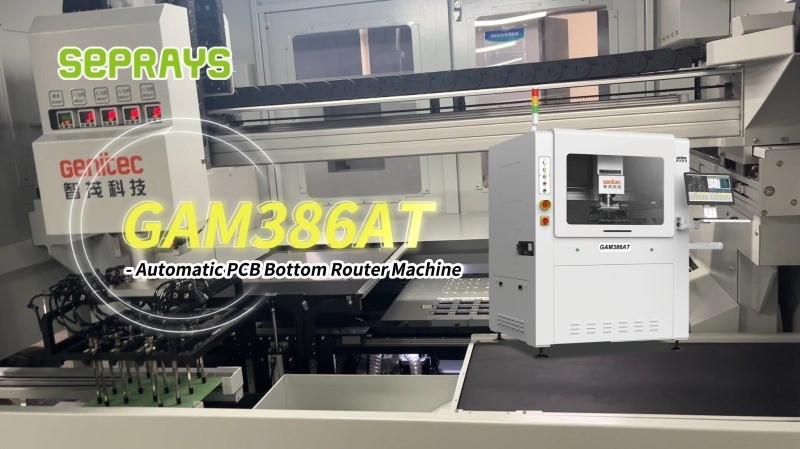
Automatic PCB Bottom Router Machine: How to Ensure That Components Are Not Damaged During PCB Cutting?
Automatic PCB Bottom Router Machine technology has become a core process in PCB depaneling for factories dealing with dense component layouts, fragile materials, and increasingly complex structures. A recurring question among European production engineers is straightforward but critical: How can we guarantee that components are not damaged during high-speed routing? Across different SMT lines in Germany and France, technicians share similar pain points — vibration affecting tall components, micro-cracks forming under thermal or mechanical stress, and unpredictable panel movement during cutting. Below is a collection of field-tested insights from daily production. 🔧 H1 — The Real Challenges Behind Component Safety in Bottom Routing Damage rarely occurs “suddenly.” Instead, it results from small, accumulated mechanical forces. The most common factors include: Engineers in high-reliability industries (e.g., automotive, industrial controls, aerospace) emphasize that even a 0.1–0.2 mm deflection can cause hidden cracking around sensitive components such as ceramic capacitors. A bottom-routing approach reduces these issues by isolating cutting forces away from top-side components. ⚙️ H2 — Cost Analysis: The Hidden Financial Impact of Component Damage Component damage doesn’t always show up immediately. Many plants report long-term costs that appear later in the product lifecycle: A German EMS provider noted that one cracked
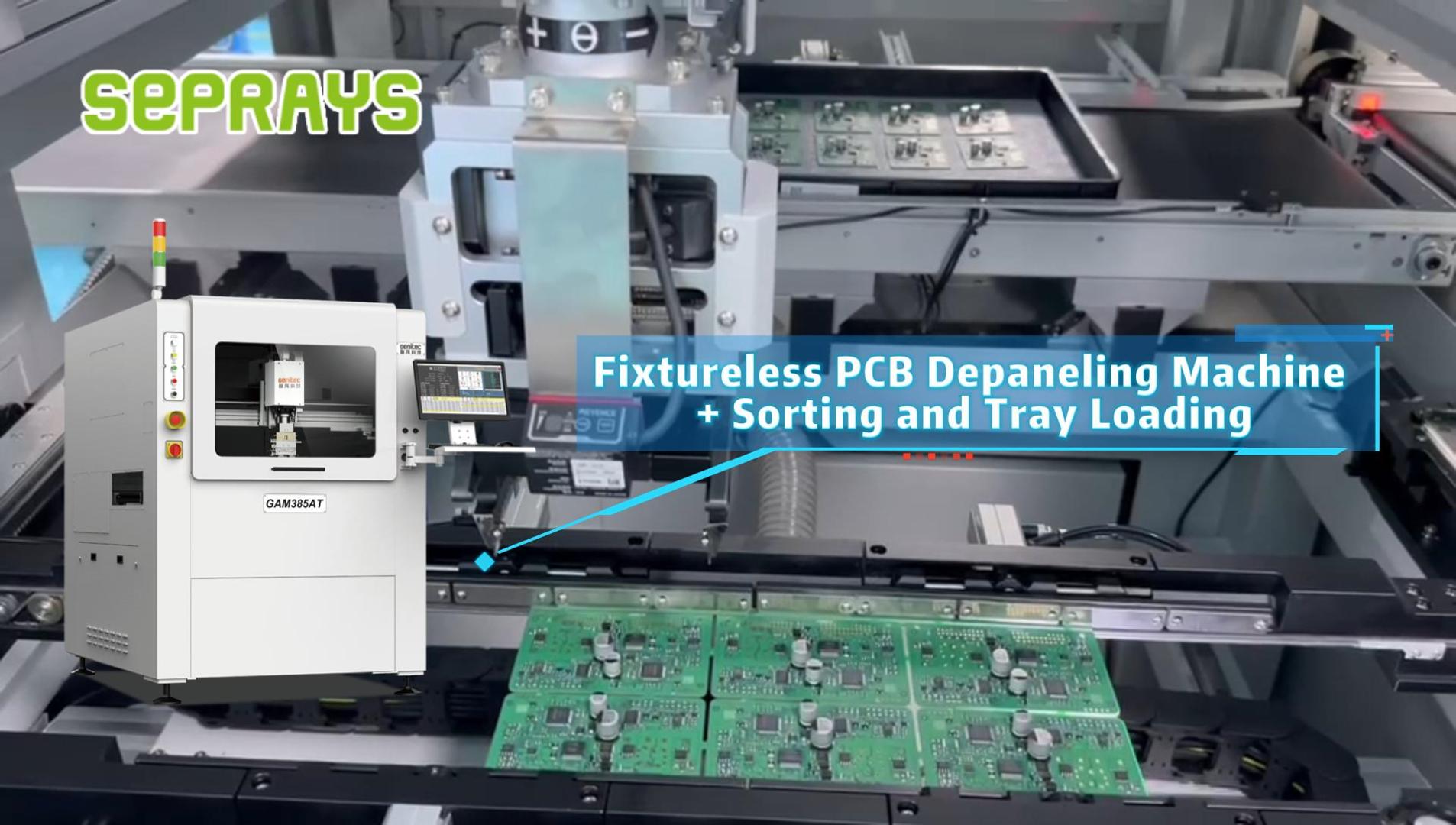
Fixtureless PCB Depaneling Machine: Handling Warping, Thin Panels, and Complex Shapes
Fixtureless PCB Depaneling Machine solutions have become essential in modern SMT lines where board materials, component density, and outline geometry are more challenging than ever. Many production teams in Europe and North America continue to share similar questions: How do you keep panel stability under control? How do you avoid micro-cracks, edge stress, and material distortion when the PCB structure itself is fragile?Below are field-tested insights gathered from different factories running daily high-precision operations. 🔧 H1 — The Real Pain Points Behind Warping and Thin PCB Panels Warping is not only a material issue; it often increases when the panel size becomes larger or when the copper distribution is uneven. In Germany and France, engineers frequently point out three recurring problems: In a fixture-based system, these variations often require dedicated jigs. With thin or flexible panels, jig tolerances can’t fully suppress deformation, leading to inconsistent cut depth and uneven tool pressure. A fixture-free approach reduces constraint points and lets the machine adapt dynamically to the PCB’s natural condition instead of forcing it into a rigid shape. ⚙️ H2 — Cost Analysis: Where Manufacturers Lose Money Without Noticing Across multiple SMT sites, costs typically accumulate in four quiet but critical places:
PCB Milling Machine: Real-World Insights on Reducing Burrs and Edge Chipping
PCB Milling Machine performance is a frequent discussion point among manufacturers aiming to reduce burrs, edge chipping, and downstream defects. Across Europe—especially Germany and France—engineers tend to favor high-precision, low-variance machining. From spindle behavior to bit selection, fixture stability, feed rates, and routing paths, each factor affects how cleanly a PCB can be milled. This article summarizes real factory insights, case studies, and practical lessons gathered from SMT lines worldwide, with an emphasis on EU-style industrial standards: durability, consistent quality, and engineering logic over marketing. ⭐ H1 — Why Burrs and Edge Chipping Occur More Often Than Expected Even with modern PCB milling machines, manufacturers still report: Key observation from SMT lines:Most issues are not caused by the PCB material itself, but by tooling conditions and routing dynamics. In one German automotive electronics factory, over 50% of milling-edge defects were traced back to incorrect spindle torque compensation rather than the router bit. ⚙️ H2 — Router Bit Material and Geometry: The Foundation of a Clean Cut Tooling quality is a major differentiator. ✔ What engineers have learned: Case example: A French telecom PCB factory cut burr size by 32% simply by switching from a 1.5-mm two-flute bit to a 1.2-mm


