.png)
 English
  Spanish
  Japanese
  Korean
  Russian
  Chinese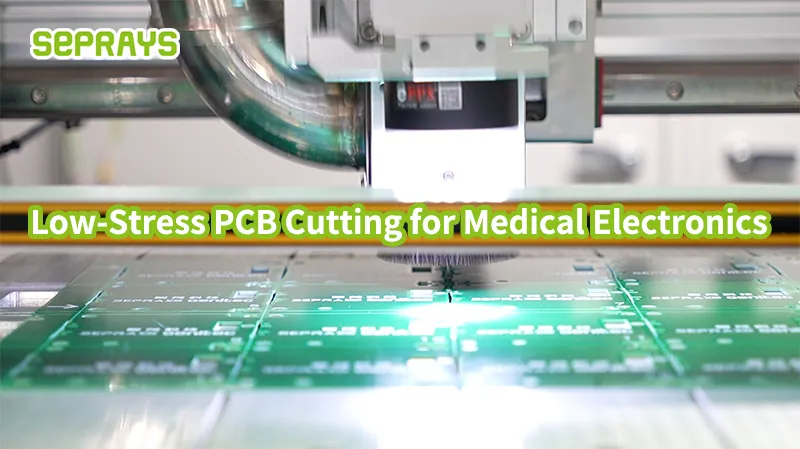
Low-stress PCB cutting is no longer optional in modern medical electronics production.
Devices such as wearable monitors, implantable sensors, diagnostic instruments, and portable imaging systems demand not only precision but also extreme care during PCB separation.
Even a small crack, micro-fracture, or stress-induced defect can compromise device reliability, regulatory compliance, and patient safety.
In 2026, medical electronics manufacturers are focusing on cutting techniques that preserve PCB integrity while supporting high-throughput production.
🩺 Why Low-Stress PCB Cutting Matters in Medical Devices
Medical electronics PCBs often have:
- High component density
- Thin and flexible substrates
- Sensitive ICs and MEMS devices
- Miniaturized connectors
High mechanical stress during depaneling can lead to:
- Solder joint failure
- Component detachment
- Warping of flexible circuits
- Reduced functional lifetime
Factories that underestimate stress management risk:
- Higher warranty claims
- Production recalls
- Compliance failures
- Increased rework costs
A low-stress cutting approach safeguards both quality and regulatory adherence.
⚙️ Common PCB Stress Points in Medical Production
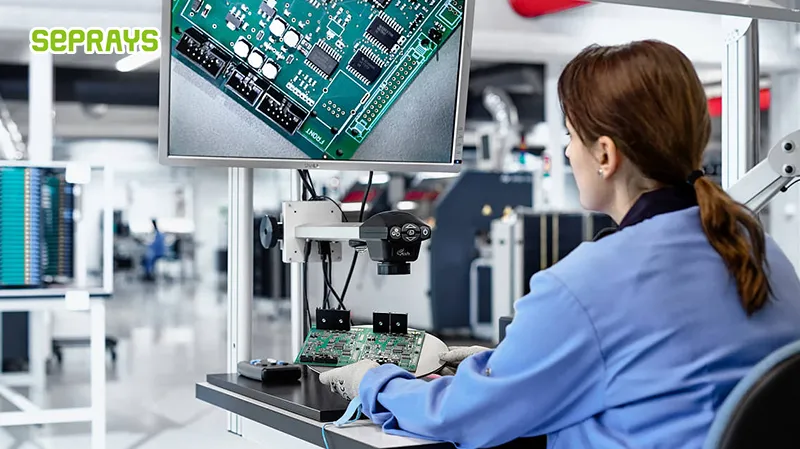
Even minor errors in depaneling can have outsized consequences.
| Stress Factor | Production Impact |
|---|---|
| Blade vibration | Micro-cracks in FR4 or polyimide |
| Excessive cutting force | Component lifting or warping |
| Poor alignment | Misaligned traces, defective connections |
| Manual handling | Surface scratches, accidental flex |
| High throughput without compensation | Thermal stress, cumulative fatigue |
Interestingly, stress-induced failures are often invisible during visual inspection but become evident during reliability testing or after long-term use.
🔬 Seprays Case Study: High-Density Sensor Boards
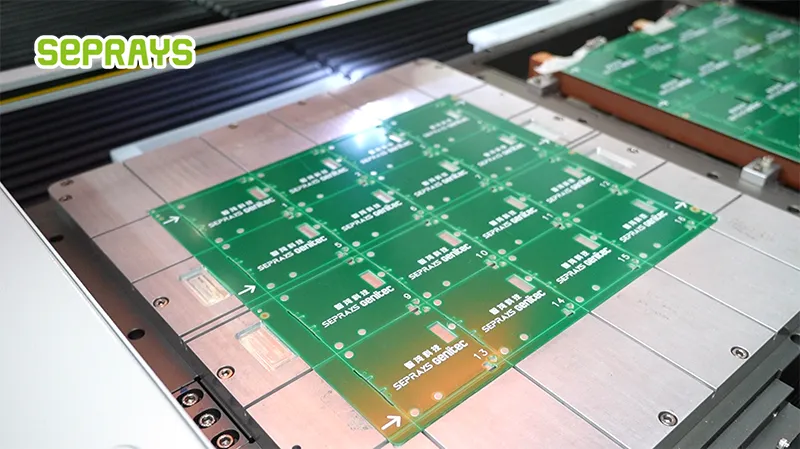
A leading medical electronics supplier producing multi-layer sensor boards struggled with yield issues.
Problem: Standard router depaneling introduced micro-cracks along critical traces.
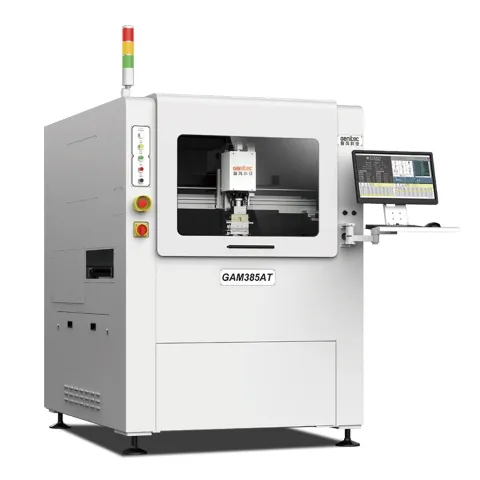
Solution: Seprays implemented a GAM385AT low-stress routing system with CCD vision alignment.
Results:
- Consistent stress-free cutting
- Reduced rework by 30%
- Improved yield for high-density boards
- Shorter setup times due to fixture-less operation
This demonstrates that cutting strategy, not just component quality, determines final device reliability.
🛠️ Comparing Low-Stress PCB Cutting Methods
Different depaneling approaches vary widely in their impact on sensitive medical PCBs.
| Method | Pros | Cons | Suitability for Medical Electronics |
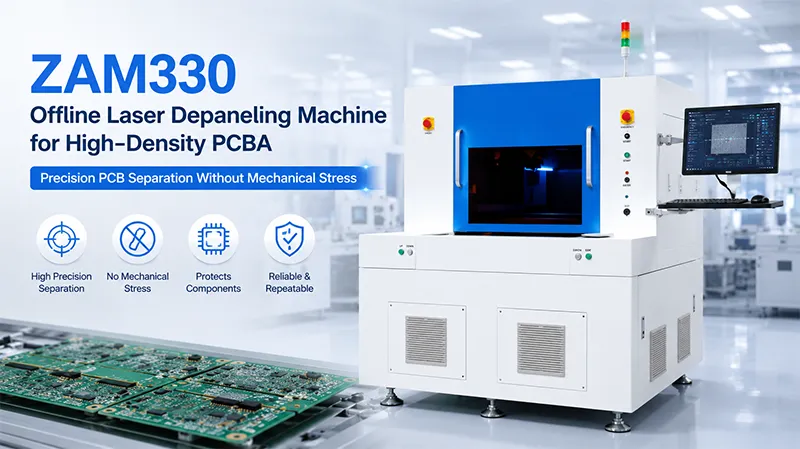
| Laser cutting | Minimal mechanical stress, precise | Potential thermal effect on sensitive ICs | Flexible circuits, micro-sensors |
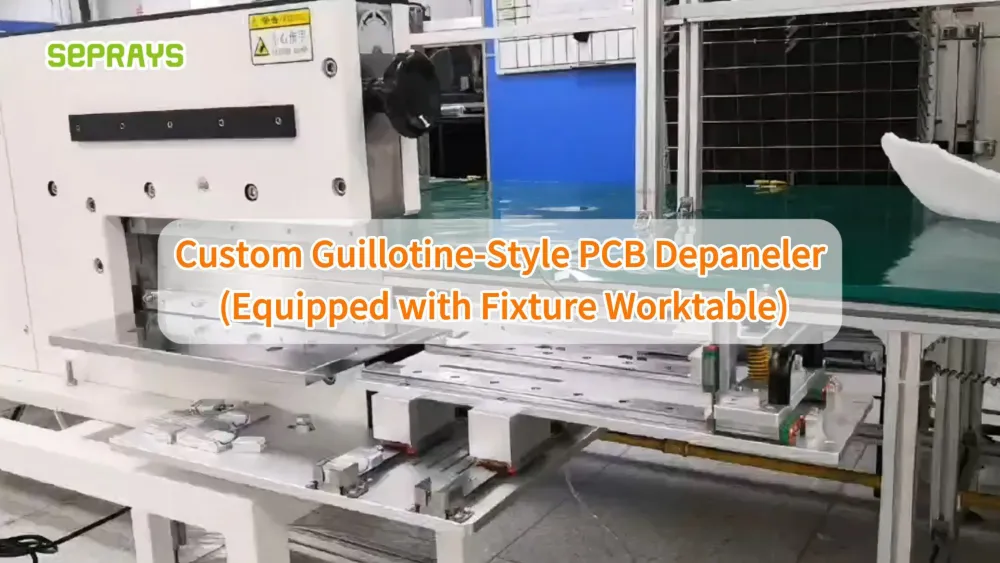
| V-groove depaneling | Fast, cost-effective | Risk of mechanical stress on thin boards | Rigid, moderately dense PCBs |
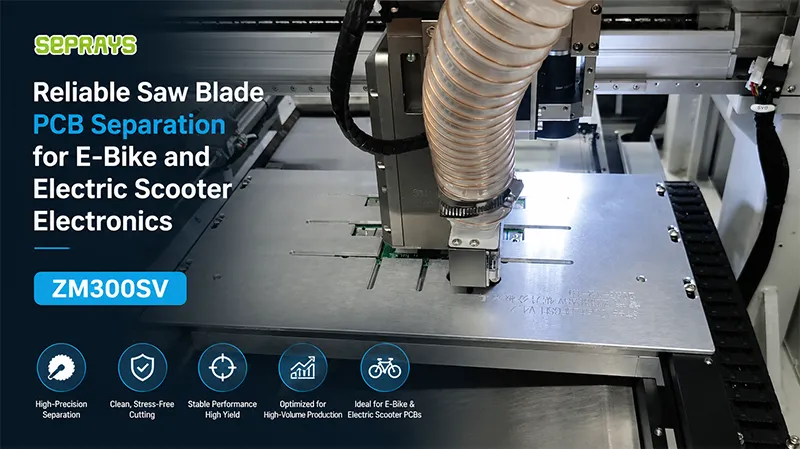
| Saw depaneling | High throughput | Blade vibration may stress components | Standard FR4 with less sensitive ICs |
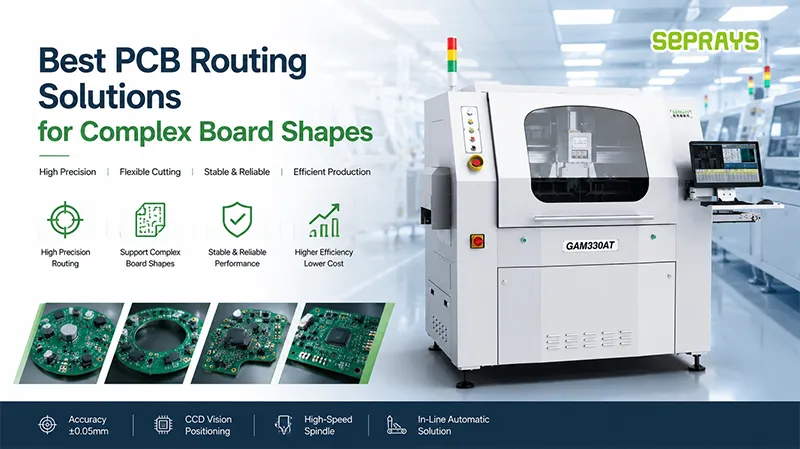
| Router depaneling (vision-guided) | Fixture-less, precise, low-stress | Slower than laser in some cases | High-density, mixed material PCBs |
The optimal method often involves evaluating:
- PCB substrate
- Component density
- Batch size
- Regulatory requirements
A hybrid approach sometimes yields the best balance between stress management and production efficiency.
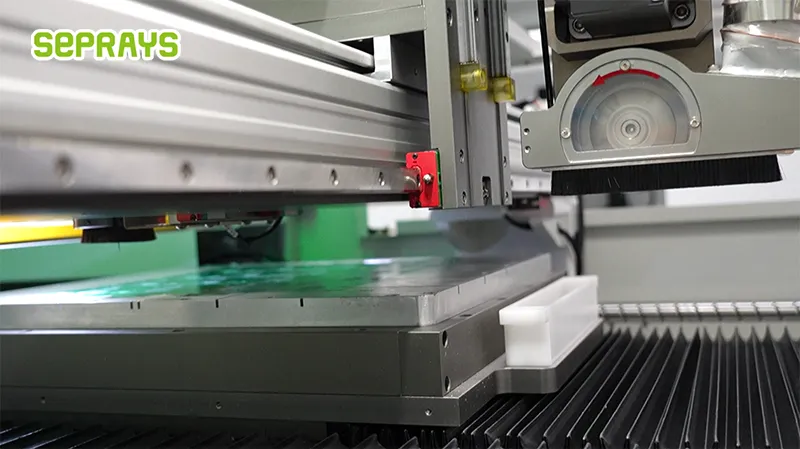
💡 Best Practices for Low-Stress Depaneling
- Assess Board Design Early
Identify sensitive zones before production planning. - Use Vision-Guided Systems
CCD alignment reduces fixture dependence and improves cutting accuracy. - Monitor Cutting Parameters
Adjust feed speed, spindle torque, and blade type to minimize stress. - Integrate Inline Inspection
Automated optical inspection post-cut detects micro-cracks early. - Train Operators
Even with automation, careful loading, unloading, and handling reduces risk.
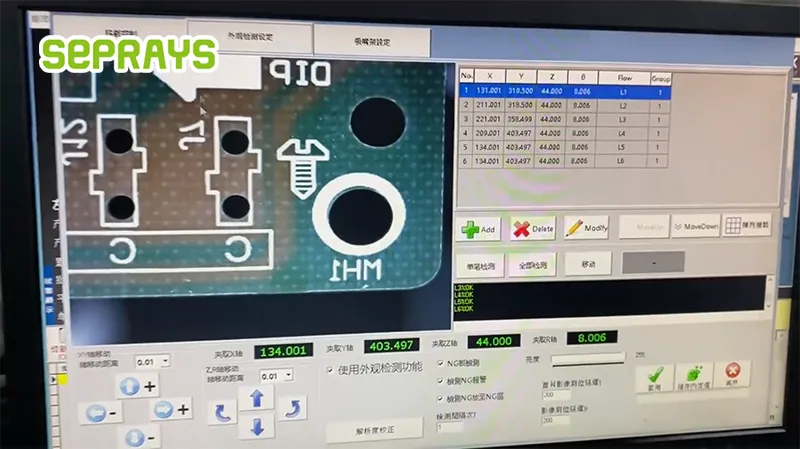
📈 Benefits of Automation in Medical PCB Cutting
- Stable process for high-mix production
- Reduced labor dependency
- Improved regulatory traceability
- Faster changeovers for multiple product types
- Enhanced overall yield
Automation is particularly important in factories that produce wearable medical electronics or multilayer sensor boards.
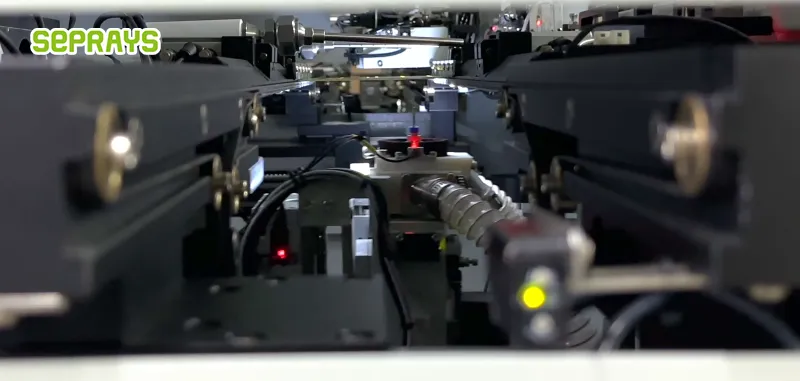
🌎 Future Trends in Medical PCB Depaneling
- Increased adoption of low-stress laser and router systems
- Integration with smart factory MES and traceability systems
- Real-time process monitoring to detect stress hotspots
- Fixture-less and vision-guided cutting solutions for mixed-batch production
By 2026, these trends will become standard practice for manufacturers seeking high reliability and regulatory compliance.
Why Choose Seprays Group?
Seprays Group has over 30 years of experience supporting high-precision PCB depaneling for sensitive electronics, including medical devices.
Seprays Group has been dedicated to PCB/FPC depaneling technology, providing a full range of solutions—milling-cutter, laser, V-groove, and punching depanelers, as well as automated handling systems.
Our equipment is trusted by leading manufacturers such as Foxconn, Flextronics, State Grid, Luxshare, Compal, Wistron, China Electronics, Quanta, CRRC, China Aerospace, OPPO, ZTE, and Bosch. It is used in factories across China and worldwide.
Seprays also supports:
- High-density, low-stress PCB cutting
- Fixture-less routing with CCD vision alignment
- Automated material handling and inline inspection
- Process evaluation for medical-grade PCB production
- Long-term technical support and maintenance
If you are evaluating low-stress depaneling solutions for sensitive medical electronics, contact us for expert guidance and application consultation.
WhatsApp: +8618929266433
E-mail: sales@seprays.com
FAQ
1. Why is low-stress PCB cutting important for medical electronics?
Medical PCBs often contain fragile components and high-density layouts. Low-stress cutting reduces micro-cracks, component lift, and rework.
2. Which depaneling methods minimize mechanical stress?
Vision-guided routers, laser cutting, and carefully tuned V-groove methods typically provide the lowest mechanical stress.
3. Can fixture-less systems be used for medical PCB cutting?
Yes. CCD vision-guided, fixture-less systems like GAM385AT can accurately cut irregular or high-density boards while reducing setup time.
4. How does automation improve yield in medical electronics?
Automation ensures consistent cutting, stable handling, and repeatable processes, reducing operator-induced variability and defects.
5. What factors should be considered when choosing a low-stress depaneling solution?
Consider PCB material, component density, batch size, regulatory compliance, and desired throughput when selecting the appropriate method and machine.