.png)
 English
  Spanish
  Japanese
  Korean
  Russian
  Chinese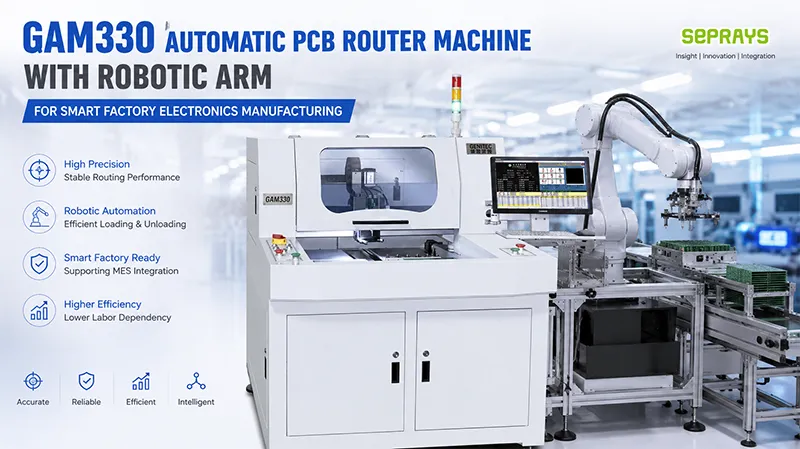
GAM330 Automatic PCB Router Machine with Robotic Arm for Smart Factory Electronics Manufacturing
In modern electronics factories, the biggest challenge is not always increasing production speed. Many manufacturers are finding that GAM330 Automatic PCB Router Machine solutions become important when they need stable quality, lower manual handling, and better production consistency. A PCB router process may look simple from the outside: place the board, cut the outline, remove the finished parts. However, in real production environments, problems often appear after scaling up. Operators need to repeat the same movements hundreds or thousands of times every day. Small positioning errors, dust contamination, tool wear, and inconsistent handling can gradually affect yield. This is why more factories are exploring automated PCB routing systems with robotic integration, especially for smart factory production lines. The question is not only: “Can the machine cut the PCB?” The more important question is: “Can the entire process remain stable after running continuously for months?” 🔍 Why PCB Router Automation Becomes Important in Smart Factories Many electronics manufacturers have experienced similar situations. At the beginning of production, manual PCB depaneling may appear acceptable. The output is manageable. The operators are familiar with the process. The investment seems lower. But when production volume increases, hidden costs start appearing: A smart factory is

Seprays Shares a Summer Appreciation Gift with Every Employee
As the summer heat reaches its peak, Seprays prepared a simple yet meaningful surprise to thank every member of our team for their continued dedication and hard work. This year, more than 750 kg of fresh watermelons were distributed across the company, ensuring that every employee—from every department and every team—received a refreshing summer gift. A Simple Gesture of Appreciation At Seprays, we believe that every achievement begins with the people behind it. Whether working in research and development, manufacturing, quality control, sales, customer service, or administration, every colleague plays an important role in delivering reliable PCB depaneling solutions to customers worldwide. While a watermelon may seem like a small gift, it reflects something much more meaningful—our appreciation for the commitment, teamwork, and professionalism our employees demonstrate every day. Growing Together as One Team As a company specializing in PCB depaneling solutions, Seprays continues to innovate in laser depaneling, PCB routing, saw blade depaneling, punching systems, and automated production solutions. After all, behind every machine delivered and every customer served is the collective effort of a dedicated team. We believe that creating an enjoyable and supportive workplace helps inspire innovation, strengthen collaboration, and build long-term success together. Looking Ahead As
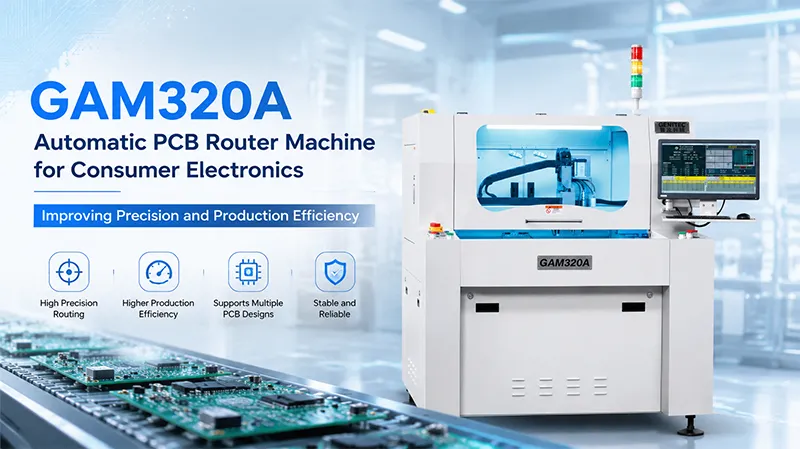
GAM320A Automatic PCB Router Machine for Consumer Electronics: Improving Precision and Production Efficiency
In the fast-changing consumer electronics industry, the GAM320A Automatic PCB Router Machine is becoming an important solution for manufacturers that need to balance production speed, cutting accuracy, and product reliability. From smartphones and smart home devices to wearable electronics and communication products, PCB designs are becoming smaller, thinner, and more complex. Many factories have already improved their SMT processes. But one question is often overlooked: Can the PCB depaneling process keep up with the increasing demands of modern electronics manufacturing? A stable assembly process does not end after soldering. The final separation process can directly influence product appearance, reliability, and manufacturing cost. 📱 Why Consumer Electronics Require More Precise PCB Depaneling Consumer electronics products usually have short product cycles. New models are released faster. At the same time, PCB designs continue to become more challenging: A small smart device may contain dozens of components in an extremely limited space. During production, even minor mechanical stress during PCB separation can create problems. Examples include: The challenge is not only cutting the PCB. The challenge is cutting it accurately and consistently. ⚠️ Common Problems in Consumer Electronics Production Many electronics manufacturers experience similar issues during high-volume production. Production Bottlenecks When product demand
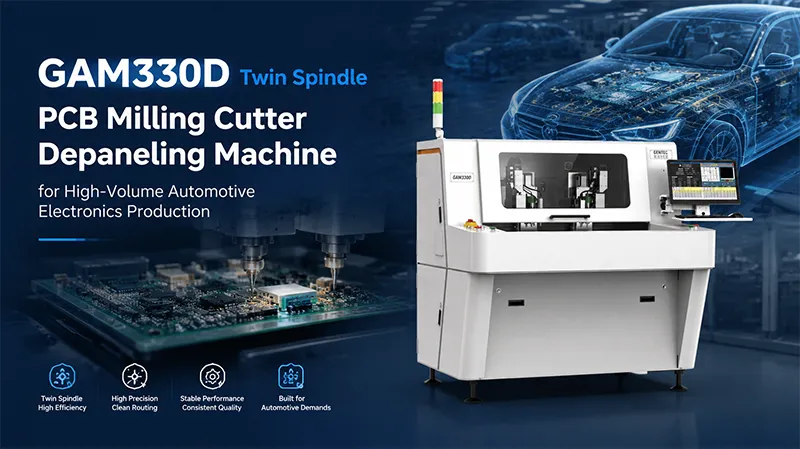
GAM330D Twin Spindle PCB Milling Cutter Depaneling Machine for High-Volume Automotive Electronics Production
GAM330D Twin Spindle PCB Milling Cutter Depaneling Machine was developed for a challenge many automotive electronics manufacturers are facing today: how to increase PCB separation efficiency without sacrificing accuracy and reliability. In automotive electronics production, PCB panels are becoming more complex. More control modules, sensors, and communication units are being installed in vehicles. At the same time, manufacturers must maintain strict quality standards because a small defect can create expensive field problems. Many factories have already optimized SMT placement and testing processes. However, the depaneling stage is sometimes overlooked. A question worth discussing is: Can your current PCB separation process support the next generation of automotive electronics? 🚗 Why Automotive Electronics Need a Different Depaneling Approach Automotive PCBs are not the same as standard consumer electronics boards. They often include: A smartphone PCB may be replaced after a few years. An automotive electronic control unit may need to operate reliably for more than ten years. This difference changes how manufacturers evaluate production equipment. Speed is important. But consistency is often more important. A faster machine that increases hidden defects may create higher costs later. ⚠️ Common Production Challenges in High-Volume PCB Manufacturing During daily production, engineers often encounter similar problems:
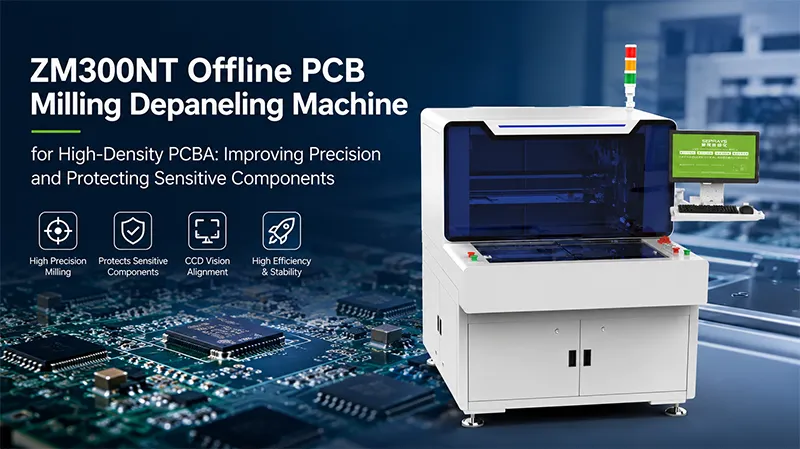
ZM300NT Offline PCB Milling Depaneling Machine for High-Density PCBA: Improving Precision and Protecting Sensitive Components
PCB milling depaneling machine selection has become much more important as PCB assemblies continue to shrink while component density keeps increasing. Many manufacturers discover that a depaneling process that worked well three years ago now causes hidden problems—micro-cracks, solder joint stress, damaged edge components, or inconsistent cutting quality. If your production involves automotive electronics, communication modules, industrial controllers, medical devices, or consumer electronics, the depaneling stage deserves as much attention as SMT placement or reflow soldering. This article shares practical observations from production environments, discusses common mistakes, compares different depaneling methods, and explains why many factories are moving toward high-speed milling solutions such as the ZM300NT. 🔍 Why High-Density PCBA Changes the Depaneling Standard A growing number of electronic products now feature: These improvements make products lighter and more powerful. They also make traditional separation methods much less forgiving. A tiny amount of mechanical stress that once had little impact may now create invisible damage inside multilayer boards. The result? Products pass factory testing but fail months later in the customer’s hands. That hidden cost is often far greater than the cost of upgrading the depaneling process. ⚠️ Common Problems Manufacturers Still Face Many production teams notice similar symptoms: Interestingly,
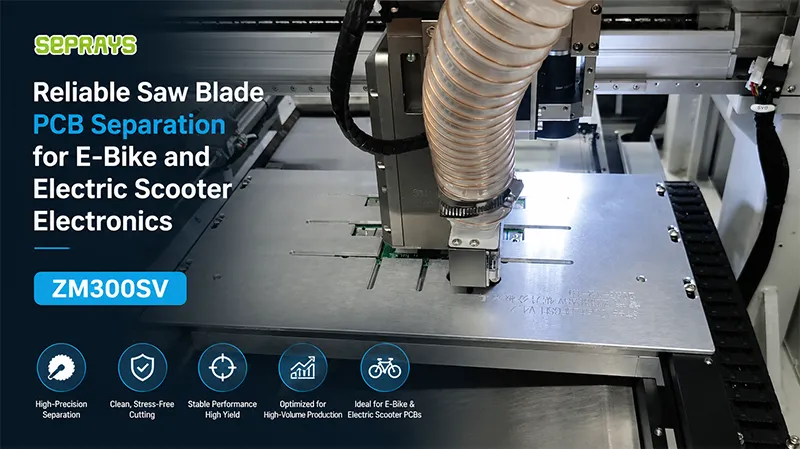
Reliable Saw Blade PCB Separation for E-Bike and Electric Scooter Electronics – ZM300SV
Reliable Saw Blade PCB Separation has become an increasingly important topic as e-bike and electric scooter manufacturers scale production to meet global demand. While battery technology, motor controllers, and smart connectivity continue to improve, many factories are discovering that PCB separation remains one of the final processes capable of influencing overall product reliability. A board that passes electrical testing today may still develop reliability issues after vibration, thermal cycling, or long-term road use if unnecessary stress is introduced during manufacturing. This article explores why PCB depaneling deserves more attention in electric two-wheel vehicle manufacturing, shares practical production observations, and discusses how the ZM300SV Offline Saw Blade PCB Separator helps manufacturers achieve stable, repeatable results. 🚲 Why E-Bike Electronics Create New Manufacturing Challenges Electric bicycles and scooters are becoming smarter every year. Today’s control systems often integrate: These products bring several manufacturing challenges simultaneously. Engineers commonly face: Interestingly, many of these PCBs appear simple. In reality, the combination of vibration, outdoor environments, and continuous current loading makes production consistency far more important than appearance suggests. ⚠️ Questions Production Engineers Frequently Ask Across different manufacturing plants, similar discussions happen repeatedly. “Why do some controller boards fail vibration testing even though they passed