.png)
 Russian
  English
  Spanish
  Japanese
  Korean
  Chinese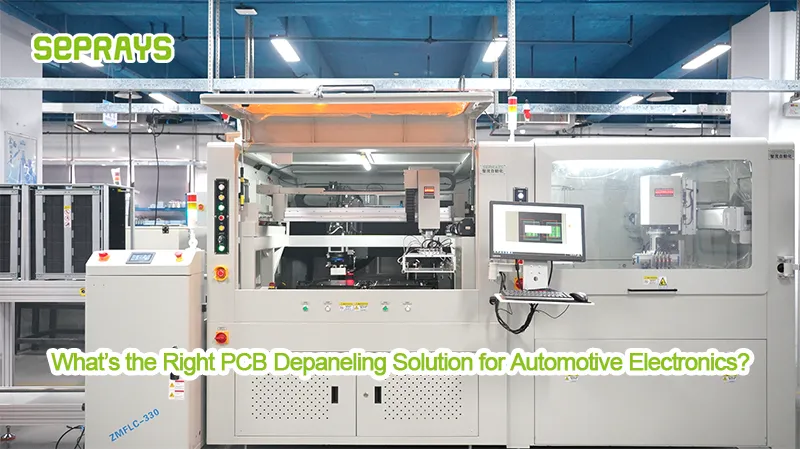
What’s the right PCB depaneling solution for automotive electronics? It’s a question that usually comes up after something goes wrong—edge cracks, unstable yield, or unexpected failures during testing. In automotive manufacturing, depaneling is not just a finishing step. It’s part of reliability control.
And the margin for error is small.
🚗 Why Automotive Electronics Raise the Bar
Automotive PCBs operate under tougher conditions than most.
They face:
- Temperature cycling
- Vibration and mechanical stress
- Long product lifecycles
- Strict qualification standards
This means the depaneling process must avoid introducing hidden defects.
Even micro-damage can become a field failure later.
⚙️ Common Challenges in Automotive PCB Depaneling
From real production lines, several issues appear repeatedly:
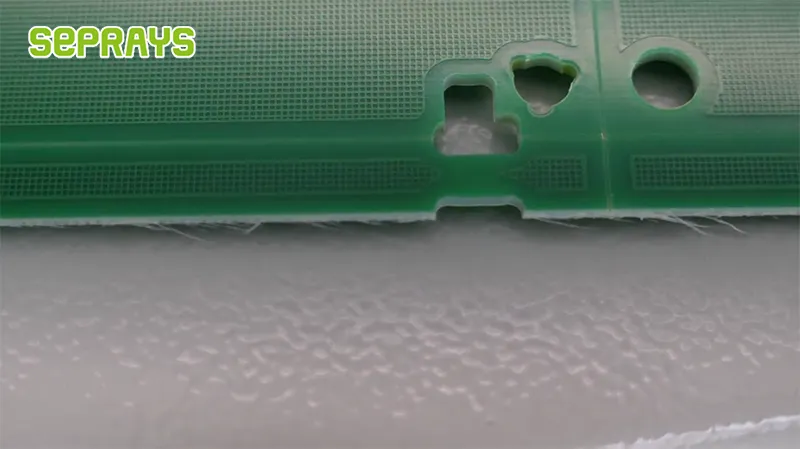
- Mechanical stress causes micro-cracks
- Edge chipping on thick or rigid boards
- Component damage near PCB edges
- Inconsistent cut quality is affecting assembly
These are not rare cases.
They are daily concerns in automotive electronics manufacturing.
🔍 Overview of Available Depaneling Solutions
Different methods solve different problems.
Here’s a practical comparison:
| Method | Stress Level | Precision | Speed | Suitable Application |
|---|---|---|---|---|
| Saw Blade | Medium | Medium | High | Power boards, straight cuts |
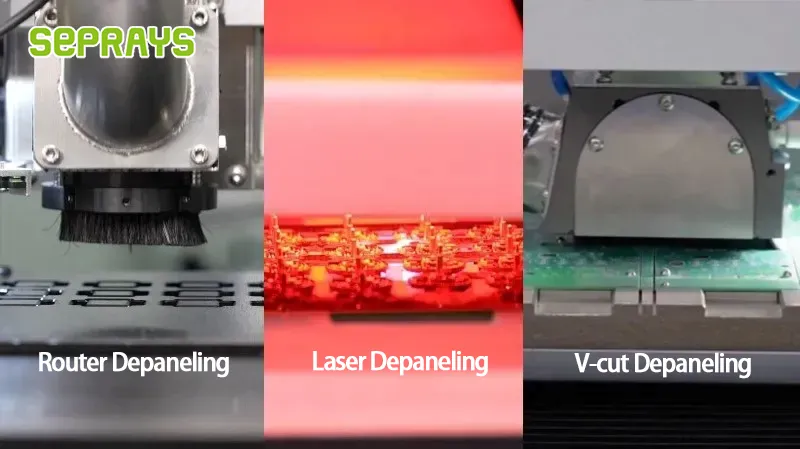
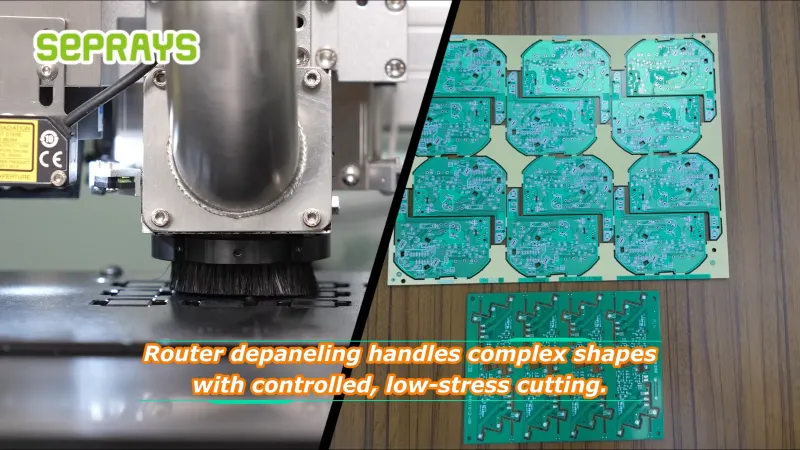
| Router | Low-Medium | High | Medium | Complex shapes, control units |
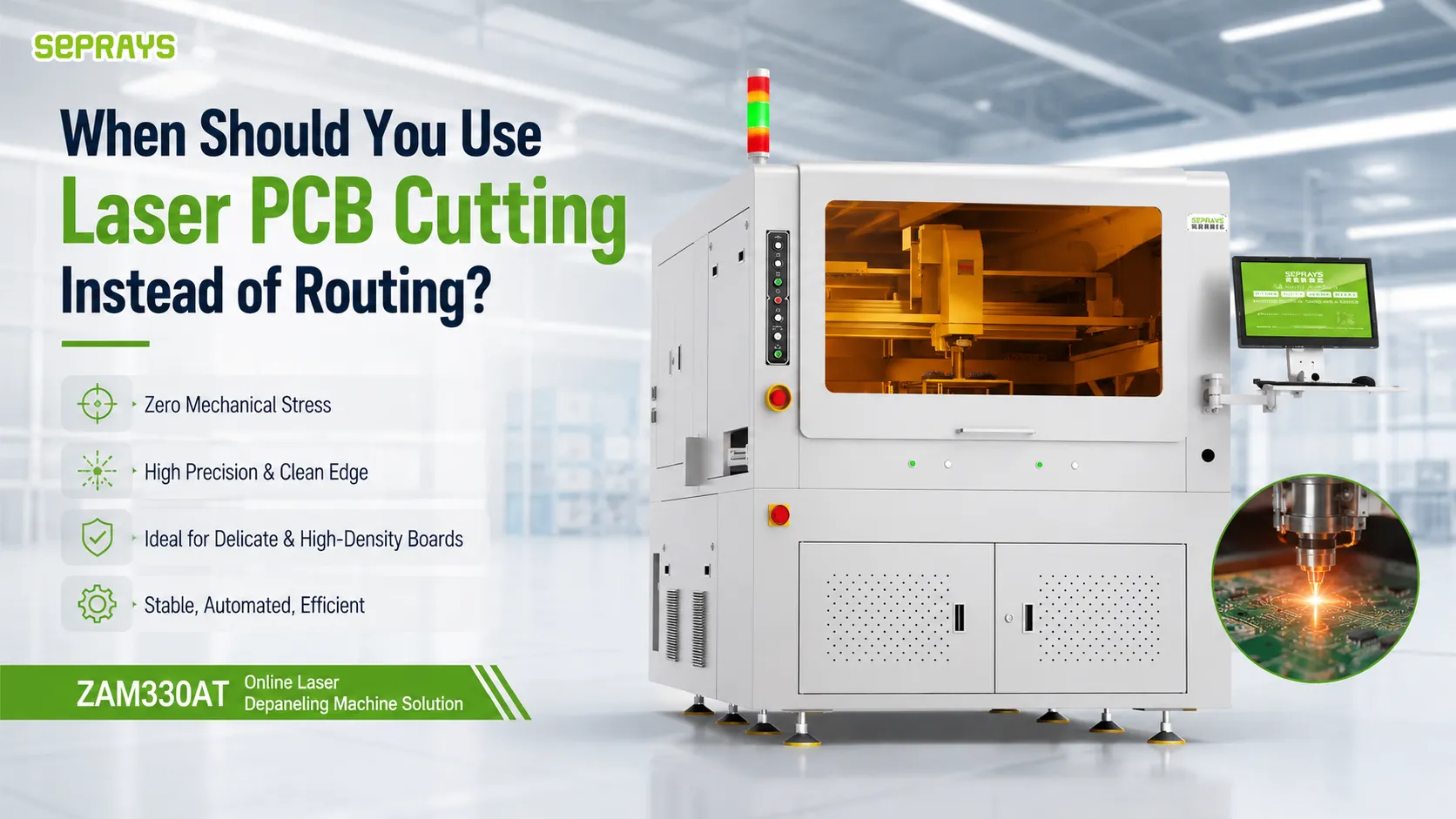
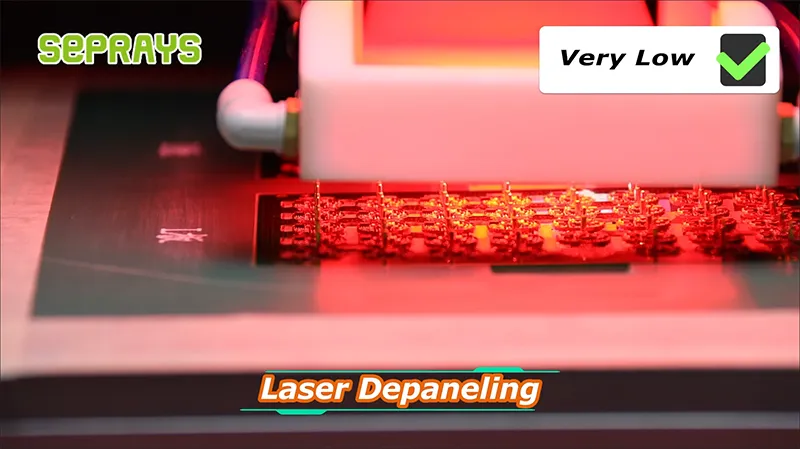
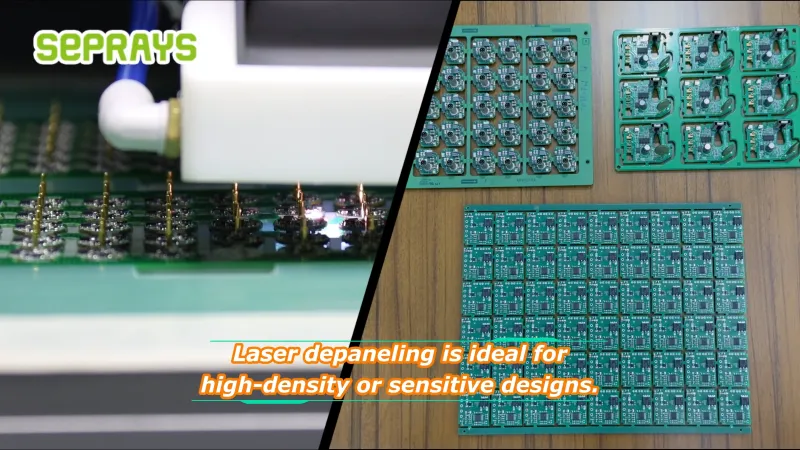
| Laser | Very Low | Very High | Medium | Sensitive modules (ADAS, sensors) |
| V-Groove | Low | Medium | Medium | Pre-scored panels |
| Punching | Medium | Medium | Very High | High-volume standard boards |
No single method fits all automotive applications.
The key is matching the process to the product.
🧩 Matching Solutions to Automotive PCB Types
Different automotive boards require different approaches.
Power electronics (e.g., BMS, inverter boards):
- Thick materials
- Straight cutting lines
- High production volume
→ Saw blade or V-groove systems are often sufficient.
Control units (ECU, domain controllers):
- Complex shapes
- Moderate sensitivity
→ Router depaneling offers flexibility and good edge quality.
ADAS and sensor modules:
- High-density layouts
- Components close to edges
- High reliability requirements
→ Laser depaneling minimizes stress and protects sensitive areas.
💥 Pain Points Engineers Often Overlook
Not all problems are visible immediately.
Some issues only appear later:
- Latent cracks after thermal cycling
- Reduced solder joint reliability
- Assembly misalignment due to poor edges
These hidden risks often trace back to the depaneling stage.
Choosing the wrong method may not fail today—but it may fail in the field.
💰 Cost vs Reliability — Finding the Balance
Automotive manufacturers rarely focus only on upfront cost.
Instead, they consider:
- Yield and scrap rate
- Rework and inspection cost
- Risk of field failure
- Long-term reliability
For example:
- Laser depaneling → higher initial cost, lower defect risk
- Saw blade → lower cost, but requires strict process control
The right decision balances both.
🧪 Case Study — Improving Yield in Automotive Production
An automotive supplier producing ECU boards faced recurring edge defects.
Problems included:
- Micro-cracks near connectors
- Inconsistent edge finish
- Increased inspection failures
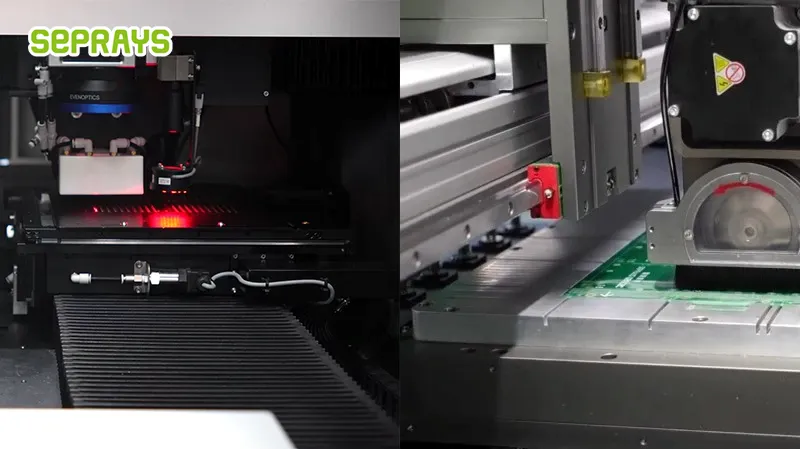
They worked with Сепреи to optimize their depaneling process.
Solution:
- Router depaneling for complex contours
- Laser depaneling for sensitive sections
Results:
- Defect rate has reduced significantly
- Product reliability improved
- Process stability increased
This mixed approach aligned with both quality and cost goals.
🔄 Why Hybrid Solutions Are Becoming Common
In automotive manufacturing, one method is often not enough.
Hybrid strategies are increasingly used:
- Laser for critical areas
- Router or saw for non-sensitive sections
This approach:
- Reduces cost compared to a full laser
- Maintains high reliability where needed
- Improves overall efficiency
It’s a practical compromise.
🛠️ Practical Tips from the Production Floor
Based on real experience:
- Avoid placing sensitive components near cutting edges
- Optimize cutting parameters for each PCB type
- Monitor tool wear regularly
- Validate edge quality during process setup
Small adjustments can prevent major failures.
🚀 Why Choose Seprays Group?
Seprays Group focuses on solving real-world depaneling challenges in demanding industries like automotive electronics.
Seprays Group has been dedicated to PCB/FPC depaneling technology, providing a full range of solutions — including milling cutter depanelers, laser depanelers, V-groove depanelers, punching depanelers, and automated handling systems.
Their equipment is trusted by leading global manufacturers such as Foxconn, Flextronics, State Grid, Luxshare, Compal, Wistron, China Electronics, Quanta, CRRC, China Aerospace, OPPO, ZTE, and Bosch. These collaborations demonstrate proven reliability in high-volume, high-precision production environments.
With deep application experience, Seprays helps manufacturers choose the right depaneling strategy based on actual product requirements—not assumptions.
If you are evaluating PCB depaneling solutions for automotive electronics, feel free to contact us.
WhatsApp: +8618929266433
Электронная почта: sales@seprays.com
❓ FAQ
1. What is the best depaneling method for automotive PCBs?
It depends on the application. Laser for sensitive boards, router for complex shapes, and saw blade for power boards.
2. Why is stress control important in automotive electronics?
Because micro-damage can lead to long-term reliability issues and field failures.
3. Are hybrid depaneling solutions common?
Yes. Many manufacturers combine methods to balance cost and performance.
4. Is laser depaneling necessary for all automotive boards?
No. It is mainly used for high-sensitivity or high-density applications.
5. How can depaneling defects be reduced?
By selecting the right method, optimizing parameters, and maintaining equipment properly.