.png)
 Russian
  English
  Spanish
  Japanese
  Korean
  Chinese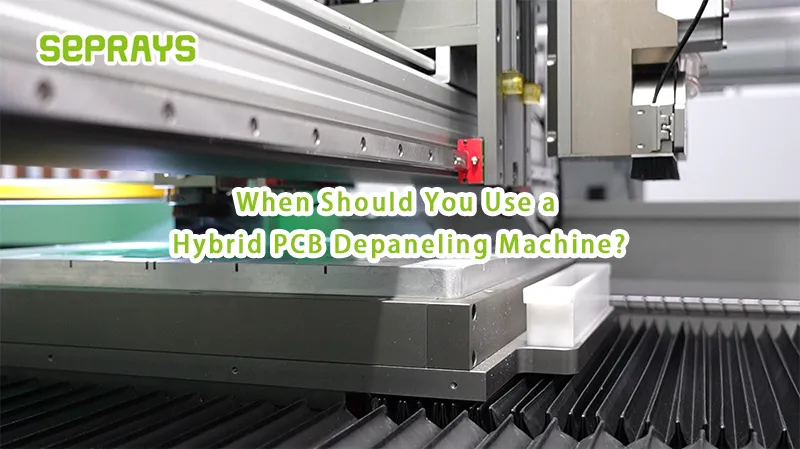
When should you use a hybrid PCB depaneling machine? This question usually comes up when a single method—router or saw blade—no longer fits all your boards.
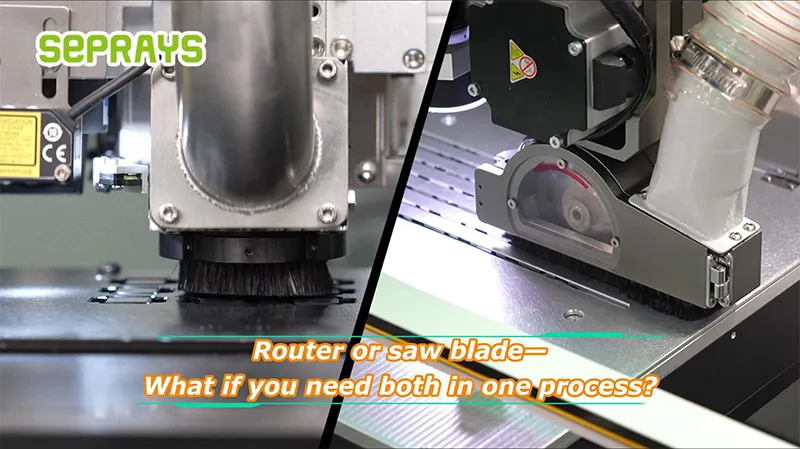
Router or saw blade?
What if you actually need both in one process?
That’s where hybrid depaneling starts to make sense.
🔍 Why One Cutting Method Is No Longer Enough
In many SMT lines today, PCB designs are no longer uniform.
You may be dealing with:
- Complex board outlines
- Mixed materials and thickness
- Tight component spacing in some areas
- Large, simple sections in others
One method works well for part of the board.
But not all of it.
That mismatch creates problems:
- Over-processing simple areas
- Under-protecting sensitive zones
- Slower overall production
⚙️ What a Hybrid Depaneling Machine Actually Solves
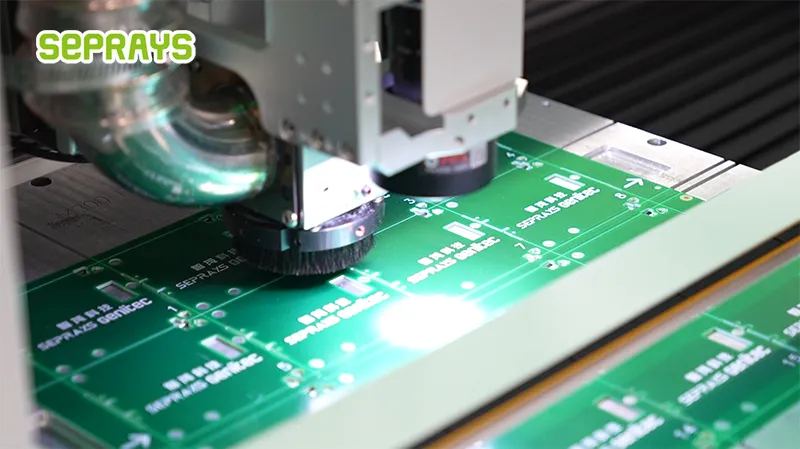
A hybrid PCB depaneling machine combines:
- Router flexibility → for complex contours and precision cutting
- Saw blade efficiency → for straight lines and high-speed separation
In one system.
Instead of forcing one method to do everything,
you assign the right method to the right task.
This is not about adding complexity.
It’s about removing compromise.
🧩 What Kind of PCB Designs Require Hybrid Solutions?
From real production experience, hybrid systems are typically used when:
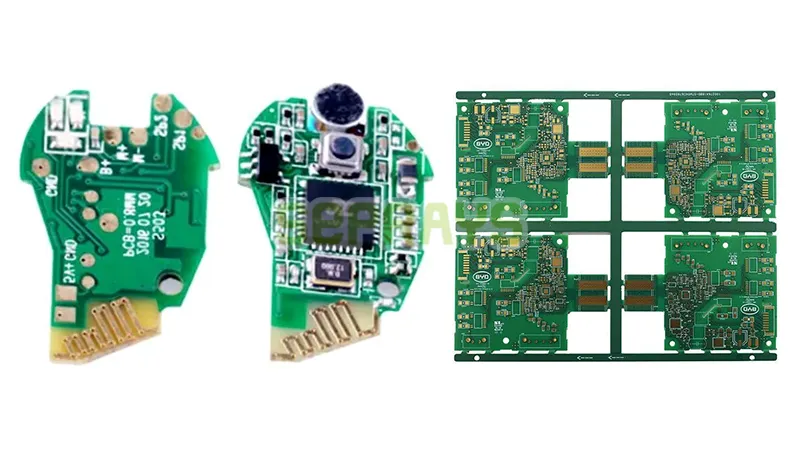
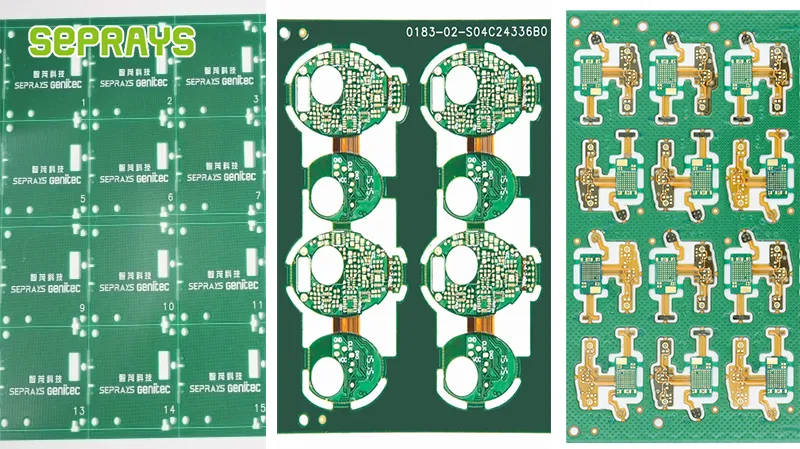
1. Boards Combine Straight Cuts and Complex Shapes
- Long straight edges (ideal for a saw blade)
- Irregular contours (require routing)
Using only routing slows production.
Using only saw risks quality.
2. Mixed Sensitivity Across the Same Panel
- Some areas have dense components
- Others are open and simple
You need:
- Low-stress cutting in critical zones
- High-speed cutting elsewhere
3. High-Mix Production Lines
- Multiple PCB models per shift
- Different cutting requirements per product
Switching machines wastes time.
Hybrid systems reduce that switching.
4. Efficiency-Driven Manufacturing Environments
- Tight cycle time targets
- Pressure to reduce labor and handling
- Need for consistent output
A hybrid allows optimization without adding extra stations.
💡 A Practical Insight Many Teams Miss
It may seem simpler to:
“Just use one machine for everything.”
But in reality:
- One method = compromise
- Hybrid method = optimization
Counterintuitive conclusion:
Adding capability can simplify your production flow.
📊 Router vs Saw vs Hybrid — Real Comparison
| Factor | Router Only | Saw Blade Only | Hybrid System |
|---|---|---|---|
| Flexibility | High | Low | Very High |
| Скорость Резки | Medium | High | Optimized |
| Complex Shapes | Excellent | Limited | Excellent |
| Straight Cuts | Slower | Very Fast | Very Fast |
| Production Flow | Moderate | Efficient | Most Efficient |
Hybrid doesn’t replace methods.
It combines their strengths.
💥 Real Pain Points That Lead to Hybrid Adoption
Factories usually move to a hybrid after experiencing:
- “Routing takes too long for simple cuts.”
- “Saw blade can’t handle complex shapes.”
- “We keep switching machines for different boards.”
- “Efficiency drops in mixed production.”
These are not machine failures.
They are method limitations.
🧪 Case Example — Mixed Production Line Optimization
A manufacturer producing both industrial and consumer PCBs faced:
- Slow routing speed for large panels
- Quality risks using a saw blade on complex designs
- Frequent changeovers between machines
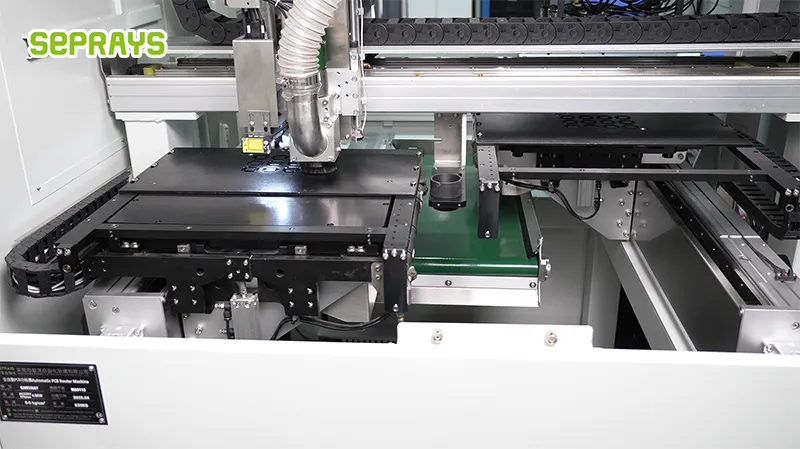
After working with Сепреи, they adopted a hybrid depaneling solution:
- Saw blade used for straight, high-speed cuts
- Router used for complex contours
Results:
- Reduced cycle time significantly
- Improved cutting quality consistency
- Less manual intervention and switching
The biggest gain was not just speed.
It was a smoother production flow.
⚙️ When Hybrid Is NOT Necessary (Important Boundary)
Hybrid is powerful, but not always required.
You may not need it if:
- Your PCB designs are simple and consistent
- Production is high-volume, low-variation
- One method already meets all requirements
Over-investing can add unnecessary complexity.
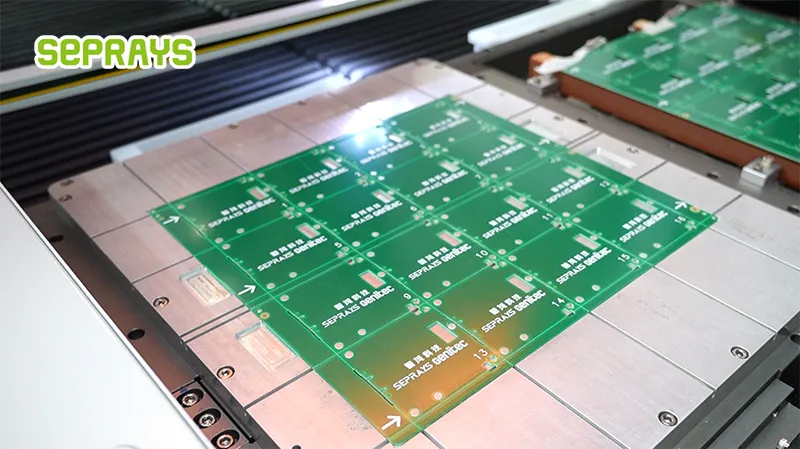
💰 Cost Perspective — Investment vs Efficiency
Hybrid systems typically require:
- Higher initial investment
- More process planning
But they reduce:
- Equipment duplication
- Changeover downtime
- Production bottlenecks
Over time, especially in mixed production,
They often deliver better ROI.
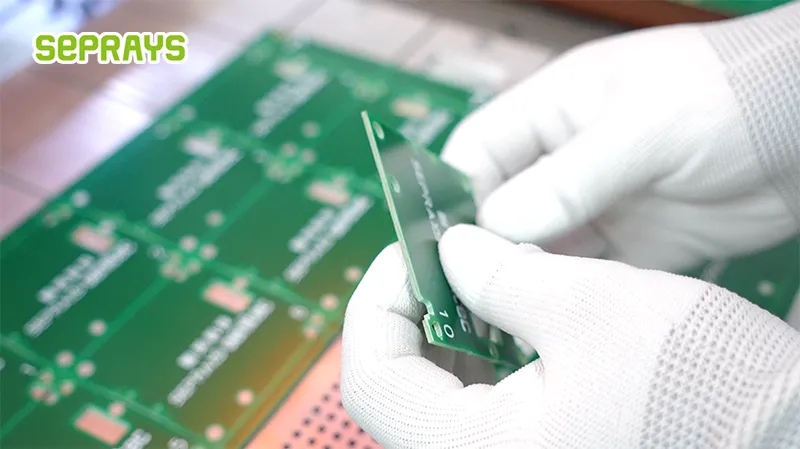
🔄 The Real Value — One System, Multiple Capabilities
Instead of asking:
“Which method is better?”
A better question is:
“How can we use both effectively?”
That’s exactly what hybrid systems enable.
🚀 Why Choose Seprays Group?
Seprays Group focuses on helping manufacturers solve real production challenges by combining the right depaneling methods into efficient, flexible systems.
Seprays Group has been dedicated to PCB/FPC depaneling technology, providing a full range of solutions—milling-cutter, laser, V-groove, and punching depanelers, as well as automated handling systems. Our equipment is trusted by leading manufacturers, including Foxconn, Flextronics, State Grid, Luxshare, Compal, Wistron, China Electronics, Quanta, CRRC, China Aerospace, OPPO, ZTE, and Bosch. It is used in factories across China and worldwide.
With deep application experience, Seprays helps you design the right hybrid setup—balancing speed, flexibility, and quality based on your actual PCB designs.
Not sure if a hybrid system is right for your process? Feel free to contact us—we’ll help you find the best depaneling setup for your production.
WhatsApp: +8618929266433
Электронная почта: sales@seprays.com
❓ FAQ
1. What is a hybrid PCB depaneling machine?
A system that combines multiple cutting methods, such as a router and a saw blade, in one process.
2. When should I use a hybrid system?
When your PCB designs require both high-speed straight cuts and complex contour cutting.
3. Does hybrid improve production efficiency?
Yes, especially in mixed production environments with varied PCB types.
4. Is a hybrid more expensive?
The initial cost is higher, but it can reduce long-term operational costs.
5. Can a hybrid replace multiple machines?
In many cases, yes—it reduces the need for separate depaneling systems.