.png)
 Russian
  English
  Spanish
  Japanese
  Korean
  Chinese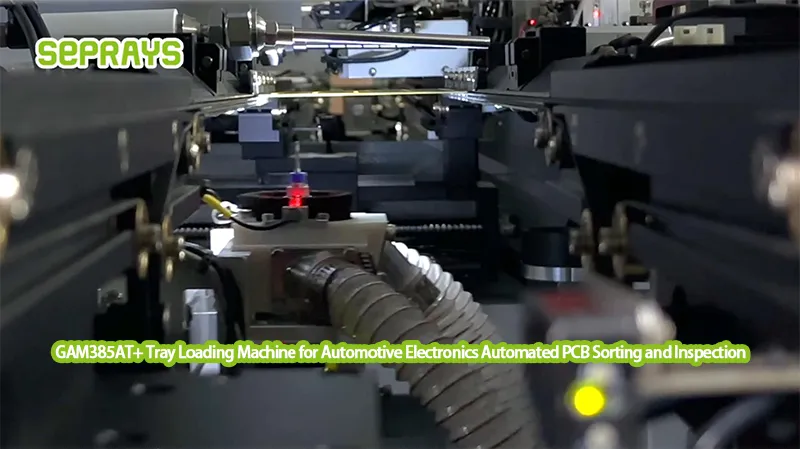
GAM385AT+ Tray Loading Machine solutions are becoming increasingly important in automotive electronics manufacturing.
Not because factories simply want more automation.
But modern PCB production lines can no longer afford unstable handling, manual sorting mistakes, or inconsistent inspection flow.
In 2026, automotive electronics production is moving faster than ever.
- More ADAS modules
- More EV control boards
- More sensor PCBs
- More traceability requirements
At the same time, manufacturers are facing:
- Rising labor costs
- Higher yield pressure
- Frequent product switching
- Tighter automotive quality standards
This is why automated PCB sorting and inspection systems are no longer optional for many SMT factories.
They are becoming part of the core production strategy.
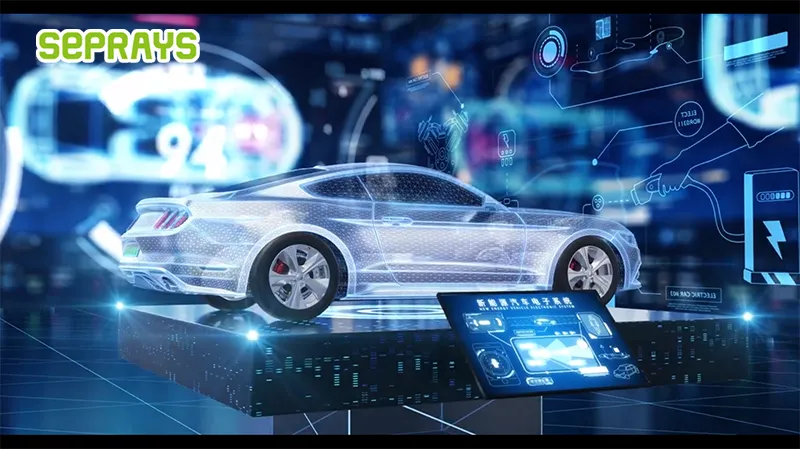
🚗 Why Automotive PCB Production Needs Automated Sorting
Automotive electronics are different from standard consumer products.
A small PCB defect can lead to:
- Functional failure
- Safety risks
- Warranty claims
- Production recalls
That changes how factories think about depaneling and inspection.
In older production lines, operators manually handled:
- PCB collection
- Tray loading
- NG sorting
- Barcode matching
- Visual checking
That process worked years ago.
But today’s production volume and complexity expose its weaknesses.
Especially during multi-shift production.
⚙️ What Problems Exist in Manual PCB Handling?
Many SMT managers focus heavily on placement accuracy and AOI systems.
But manual transfer between processes still creates hidden risks.
Common Problems Seen in Factories
| Problem | Production Impact |
|---|---|
| Manual PCB sorting errors | Wrong product mixing |
| Inconsistent tray loading | Transfer instability |
| Delayed NG separation | Rework confusion |
| Operator fatigue | Quality fluctuation |
| Barcode mismatch | Traceability issues |
| Manual pallet handling | Reduced line efficiency |
Interestingly, some factories discover that handling problems create more downtime than the depaneling machine itself.
That sounds counterintuitive.
But it happens often in high-volume automotive production.
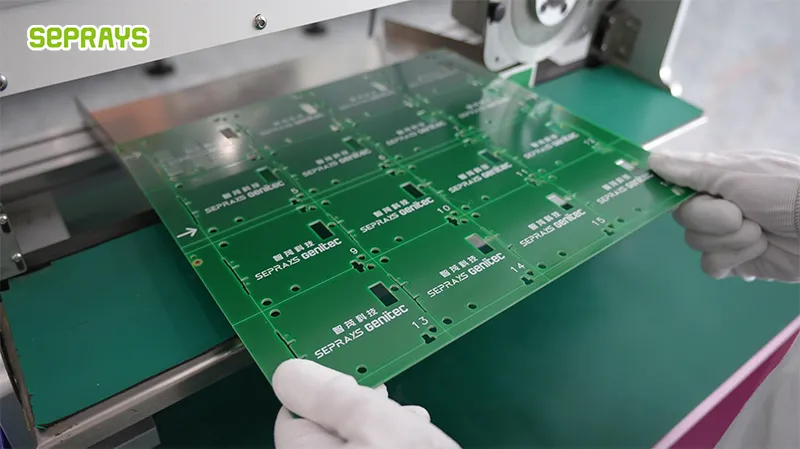
🔍 Why Automated Inspection Flow Matters
Automotive customers increasingly require:
- Full traceability
- Stable process control
- Reliable NG separation
- Data consistency
A depaneling process is no longer just about cutting.
It is now connected with:
- MES systems
- Barcode tracking
- Visual inspection
- Tray management
- Data upload
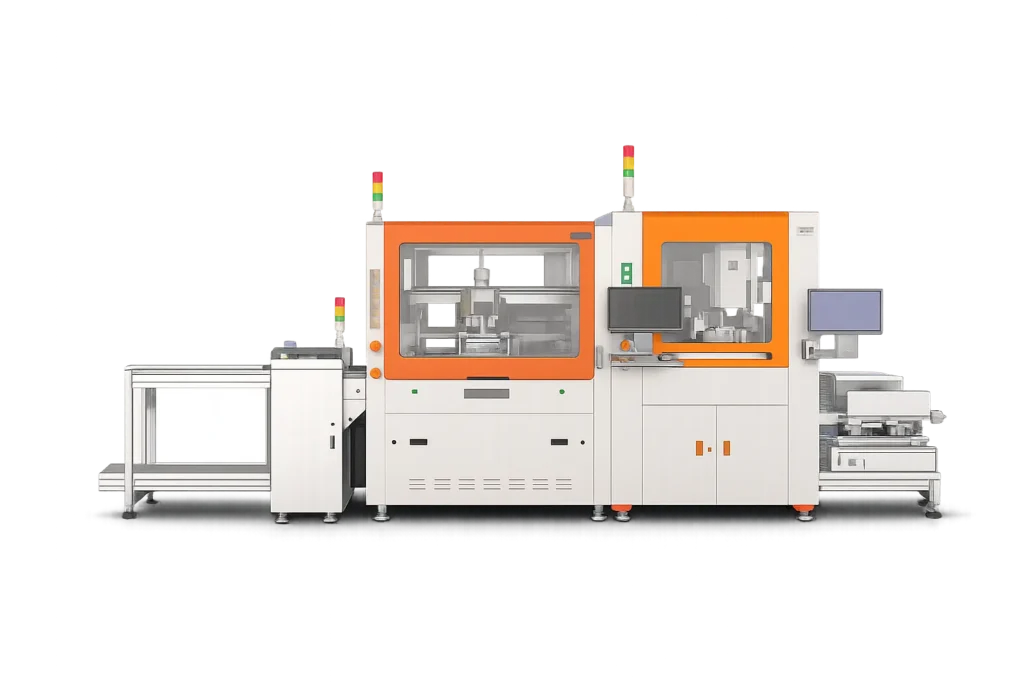
В ГАМ385АТ+ automated tray loading workflow helps reduce human intervention during these critical transfer stages.
🏭 A Real Production Scenario
One automotive electronics supplier producing tire pressure sensor boards faced an unexpected problem.
Their depaneling quality was stable.
But production delays continued.
The actual issue came from:
- Manual PCB stacking
- Incorrect tray placement
- NG board handling confusion
Operators occasionally mixed OK and NG boards during peak production periods.
That caused downstream testing delays.
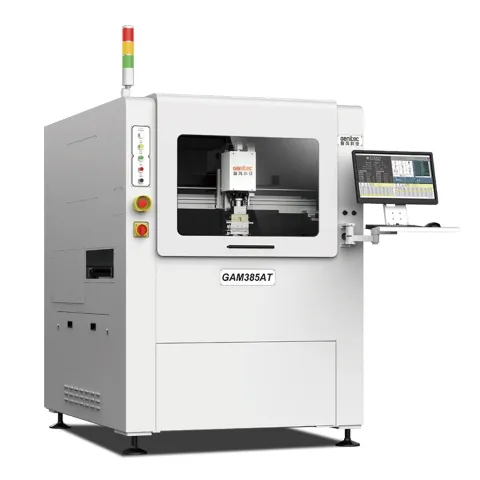
After introducing an automated tray loading and inspection workflow, the line became much more stable.
What improved most was not cutting speed.
It was process consistency.
This is something many factories underestimate before upgrading automation.
🧩 How Automated Tray Loading Improves SMT Efficiency
Automated tray systems help stabilize the production rhythm.
Especially in:
- High-volume automotive electronics
- EV control board manufacturing
- Sensor PCB production
- Mixed-model production lines
Main Benefits
Stable PCB Transfer
Consistent positioning reduces transfer errors.
Reduced Manual Handling
Lower risk of scratches and board collision.
Better Traceability
Barcode-linked handling improves production tracking.
Faster NG Sorting
Defective boards can be separated automatically.
Improved Shift Consistency
Night-shift production becomes more stable.
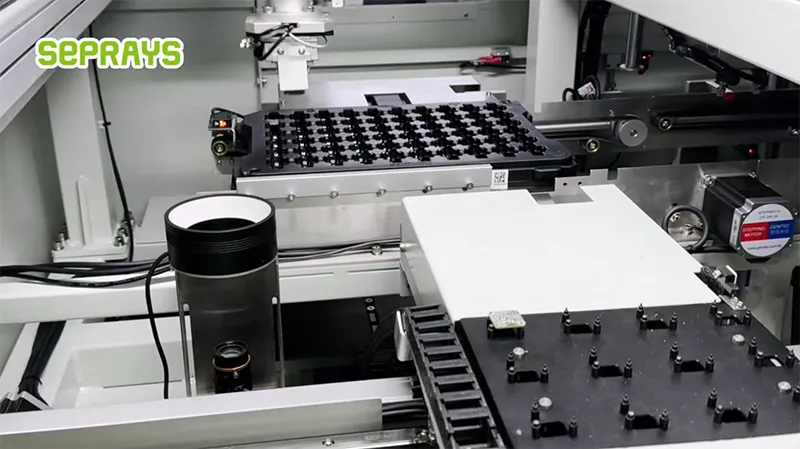
📈 Why Smart Factories Are Upgrading in 2026
The shift toward smart manufacturing is accelerating.
Especially in automotive electronics.
Factories are now evaluating:
- Labor dependency
- Automation compatibility
- Data connectivity
- Inline process continuity
Not just machine speed.
This is a major mindset shift.
A fast machine with unstable manual handling may still reduce overall factory efficiency.
That is why integrated automation systems are growing rapidly.
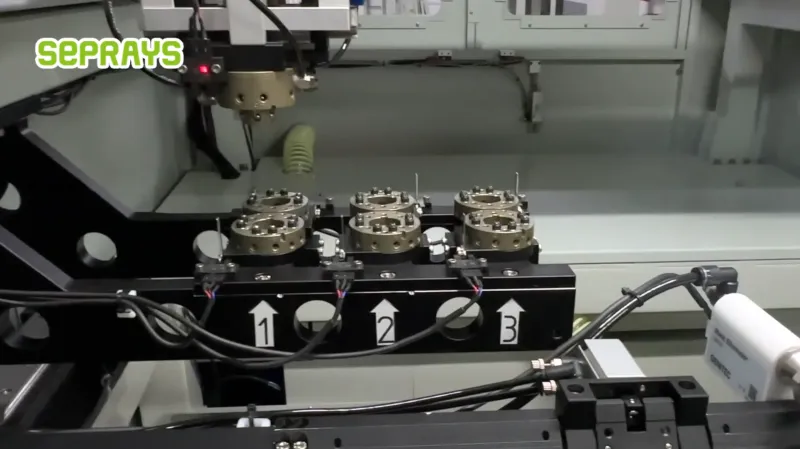
🛠️ Key Features Engineers Usually Look For
When evaluating automated PCB sorting and tray loading systems, engineers often focus on:
Important Factors
- Stable conveyor integration
- Automatic NG separation
- Barcode compatibility
- CCD vision inspection
- MES communication
- Flexible tray compatibility
- Easy changeover
- Long-term maintenance stability
One practical lesson from real factories:
Simple automation often performs better than overly complex automation.
The goal is production stability.
Not unnecessary complexity.
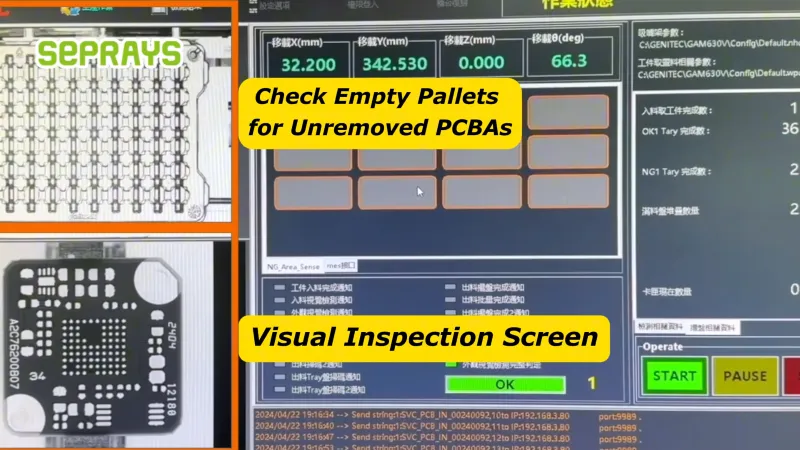
🔄 Why Inline Automation Is Becoming More Important
Automotive SMT lines increasingly operate as connected systems.
Depaneling, inspection, sorting, and pallet transfer are no longer isolated processes.
Inline automation helps improve:
- Throughput
- Traceability
- Labor efficiency
- Product consistency
Especially for:
- BMS boards
- ADAS modules
- Tire pressure sensors
- Automotive communication modules
- Power control boards
💡 A Common Misunderstanding About Automation
Some factories believe automation only makes sense for extremely large production volumes.
That is no longer true.
In 2026, even mid-sized factories are upgrading because:
- Skilled labor is harder to maintain
- Product switching is more frequent
- Quality requirements are stricter
Automation is increasingly about stability rather than only labor reduction.
That distinction matters.
🌍 The Future of PCB Sorting and Inspection
The industry direction is becoming clearer:
- Less manual handling
- More traceability
- Smarter inspection integration
- Higher inline compatibility
- Lower process variability
Factories that optimize the entire workflow — not just individual machines — are usually seeing better long-term production performance.
Why Choose Seprays Group?
With more than 30 years of industry experience, Seprays Group continues to support global electronics manufacturers with advanced PCB/FPC depaneling and automation solutions.
Seprays Group has been dedicated to PCB/FPC depaneling technology, providing a full range of solutions—milling-cutter depanelers, laser depanelers, V-groove depanelers, punching depanelers, and automated handling systems.
Our equipment is trusted by globally recognized manufacturers, including Foxconn, Flextronics, State Grid, Luxshare, Compal, Wistron, China Electronics, Quanta, CRRC, China Aerospace, OPPO, ZTE, and Bosch. These systems are widely used across automotive electronics, EV manufacturing, communication equipment, semiconductor production, and industrial automation factories worldwide.
Beyond machine supply, Seprays Group helps customers evaluate:
- PCB structure compatibility
- Automation integration
- Inline workflow optimization
- Production stability
- Long-term operational efficiency
If you are evaluating automated PCB sorting, inspection, or depaneling solutions for your production line, feel free to contact us for technical discussion and application recommendations.
WhatsApp: +8618929266433
Электронная почта: sales@seprays.com
Вопросы и ответы
1. Why is automated PCB sorting important in automotive electronics manufacturing?
Automated sorting helps improve traceability, reduce manual errors, and maintain stable production consistency in high-volume automotive SMT lines.
2. What types of PCB products benefit most from tray loading automation?
Applications such as TPMS boards, BMS modules, ADAS electronics, EV control boards, and sensor PCBs commonly benefit from automated tray handling.
3. Can automated tray systems improve production efficiency?
Yes. They reduce manual handling, stabilize inline transfer, and improve process continuity across multiple shifts.
4. What is the advantage of barcode-linked PCB inspection?
Barcode integration improves traceability, supports MES communication, and helps reduce product mixing or NG handling errors.
5. Is inline PCB automation only suitable for large factories?
No. Many mid-sized manufacturers are adopting automation in 2026 to improve consistency, reduce labor dependency, and support flexible production.