Russian
 English
 Spanish
 Japanese
 Korean
 Chinese
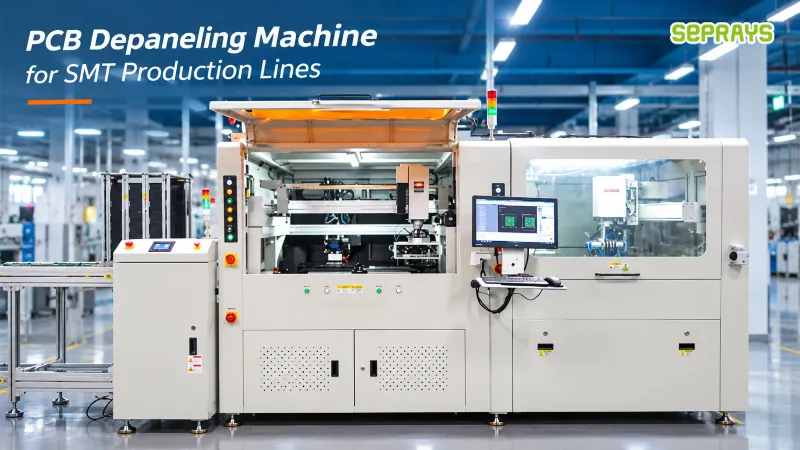
A PCB depaneling machine for SMT production lines should do more than separate circuit boards quickly. It must protect solder joints, handle different panel designs, and fit the pace of the production line.
Picture a factory where placement and reflow processes run smoothly, but finished boards pile up before depaneling.
The cutting machine may be fast enough. The problem could be manual loading, fixture changes, or slow unloading.
In 2026, choosing the right solution means evaluating the entire production process, not just the cutting specifications.
🏭 Why PCB Depaneling Matters After SMT Assembly
By the time a PCB reaches depaneling, components have already been placed and soldered.
Excessive mechanical stress during separation can damage solder joints or sensitive components.
Poor dust control may also introduce contamination.
Production engineers should focus on three practical questions:
- Can the machine maintain acceptable board quality?
- Can it match the line’s actual production takt time?
- Can separated boards move downstream without unnecessary handling?
A machine that performs well in a showroom may behave differently during continuous production.
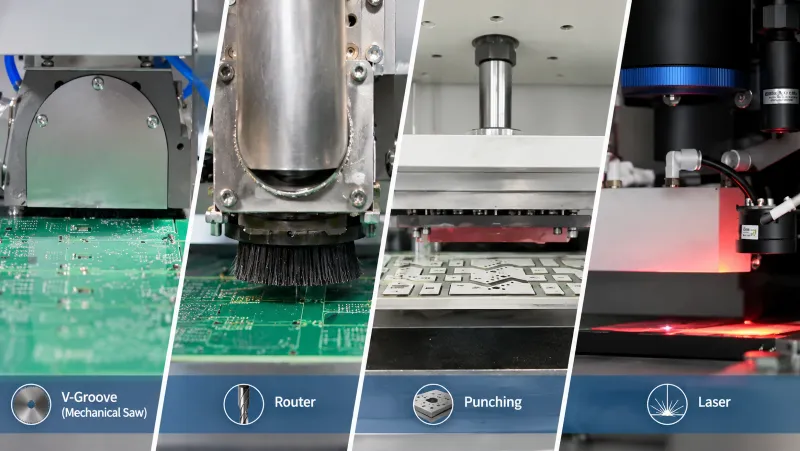
⚙️ Which Depaneling Technology Works Best?
There is no universal winner. Each technology has advantages and limitations.
| Technology | Main Advantage | Best Application | Limitation |
|---|---|---|---|
| PCB Router | Flexible cutting paths | Complex assembled PCBs | Tool wear and dust |
| Laser Depaneling | Non-contact processing | Thin FPCs and sensitive designs | Heat effects and material compatibility |
| V-Groove Depaneling | Fast separation | Pre-scored PCB panels | Limited cutting geometry |
| Punching | Short cycle times | Stable, high-volume designs | Dedicated tooling costs |
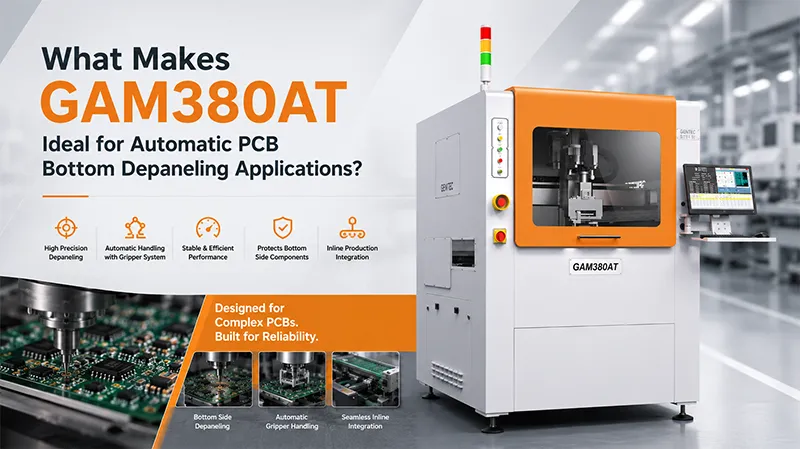
For complex FR4 assemblies, router depaneling is often a practical starting point.
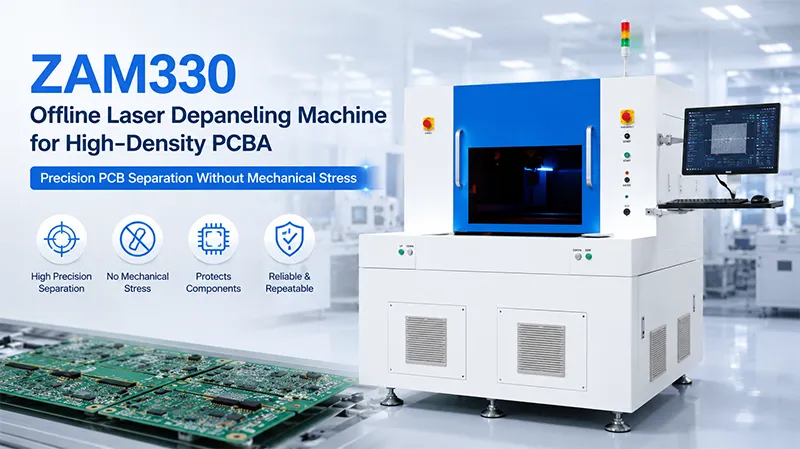
Laser processing may be preferable when mechanical stress is a critical concern, provided sample testing confirms acceptable thermal effects.
V-groove equipment can be economical when the PCB design supports it.
The best technology is the one that meets your quality requirements at an acceptable total cost.
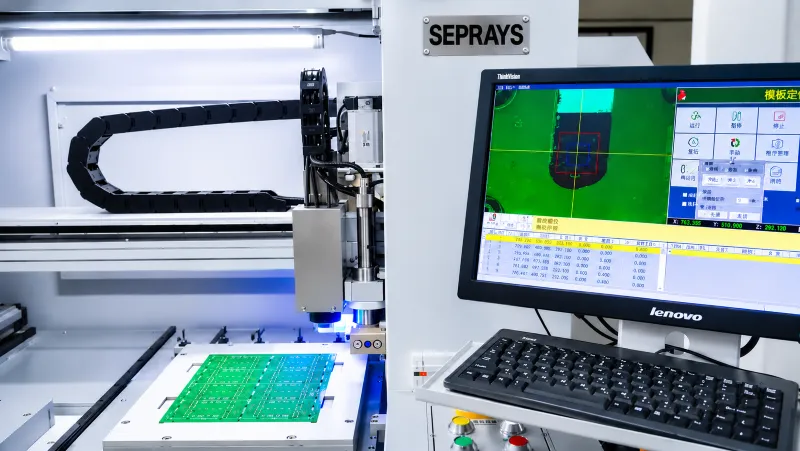
🔍 Five Factors Buyers Often Overlook
Machine specifications rarely explain the complete operating cost.
Before selecting equipment, evaluate:
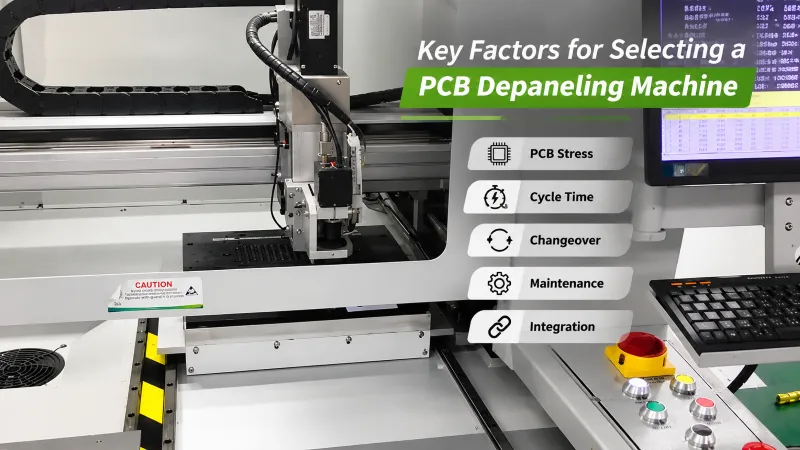
- PCB stress: Validate separation effects near sensitive components.
- Cycle time: Include loading, cutting, unloading, and waiting.
- Changeover: Measure fixture replacement and program adjustment time.
- Maintenance: Check cutter replacement, dust extraction, and spare parts.
- Integration: Confirm conveyor compatibility and required factory interfaces.
An important lesson is that a faster spindle does not always produce a faster production line.
If unloading becomes the bottleneck, additional cutting speed may deliver little benefit.
💰 What Does the Investment Really Cost?
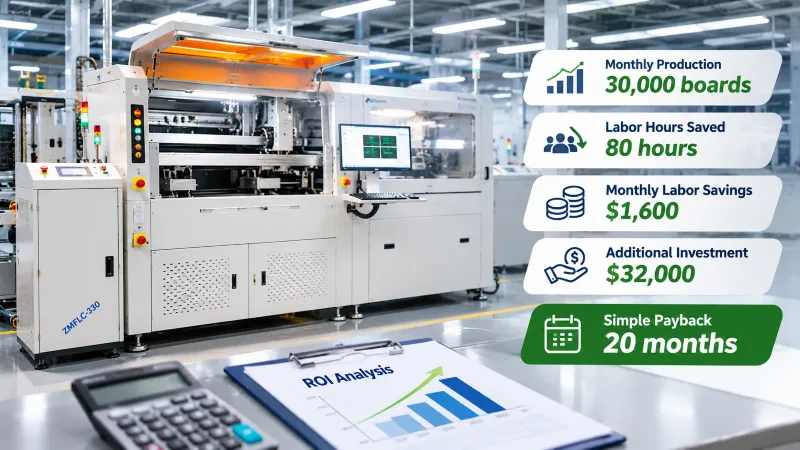
Consider a hypothetical EMS factory processing 30,000 PCB assemblies each month.
An automated solution could reduce manual handling by an estimated 80 hours monthly.
| Financial Factor | Illustrative Value |
|---|---|
| Monthly production | 30,000 boards |
| Labor hours saved | 80 hours |
| Labor cost | $20/hour |
| Monthly labor savings | $1,600 |
| Additional investment | $32,000 |
| Simple payback | 20 months |
The calculation excludes maintenance, consumables, electricity, downtime, and financing.
A fully automated system may reduce labor, but it also increases initial investment and technical complexity.
For low-volume production with frequent PCB changes, an offline router may offer better overall economics.
The surprising conclusion: More automation is not always the better investment.
🌍 A Practical Scenario: An EMS Factory in Guadalajara, Mexico
Imagine an automotive electronics manufacturer in Guadalajara, Jalisco, Mexico.
The factory produces control boards for vehicle electronics. Its existing process relies on manual PCB separation and handling.
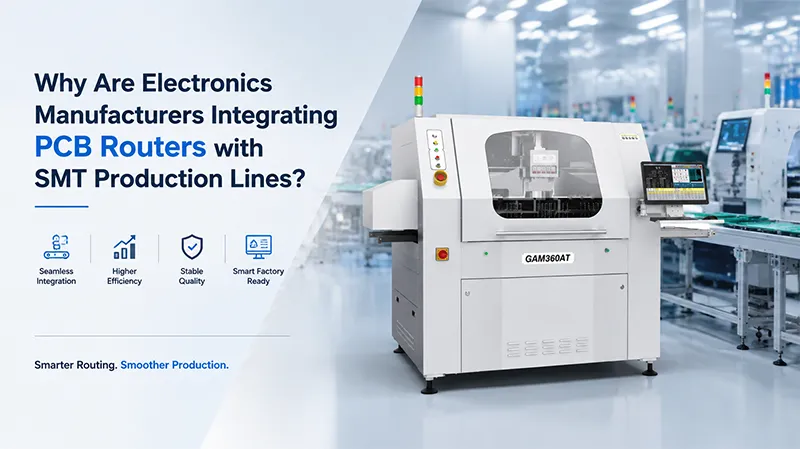
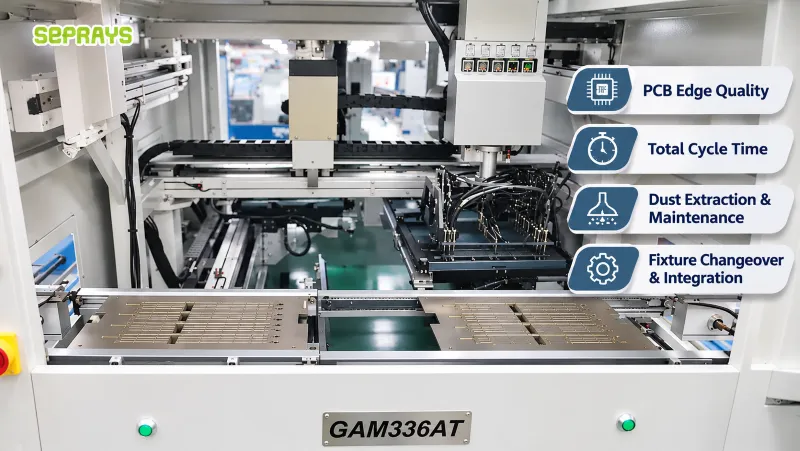
Engineers consider a SEPRAYS GAM336AT inline router to improve process consistency.
Rather than selecting equipment based on advertised cutting speed, they establish four evaluation criteria:
- PCB edge quality and clearance around sensitive components.
- Total cycle time, including loading and unloading.
- Dust extraction and cutter maintenance.
- Fixture changeover and downstream integration.
Their evaluation may reveal that reducing manual handling offers greater value than increasing spindle speed.
This is an illustrative scenario, not a documented customer installation. Actual results require sample cutting and production testing.
🧪 How to Test a Machine Before Purchasing
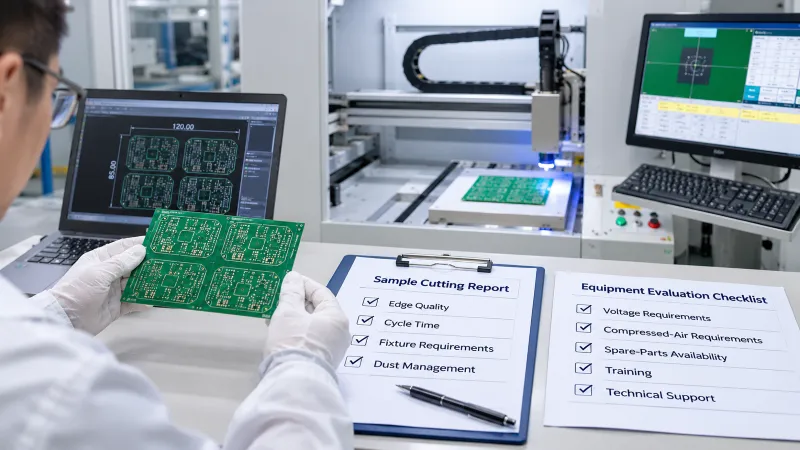
A reliable equipment evaluation begins with actual production samples.
Send suppliers PCB drawings, panel dimensions, component layouts, material information, and expected production volumes.
Request a sample-cutting report covering edge quality, cycle time, fixture requirements, and dust management.
For overseas buyers, confirm voltage, compressed-air requirements, spare-parts availability, training, and technical support.
Where applicable, establish a factory acceptance test with measurable requirements.
Do not rely solely on a polished machine demonstration.
📖 Why SEPRAYS Developed PCB Depaneling Solutions
SEPRAYS Group began its development journey in 1993.
Over more than three decades, the company has focused on PCB/FPC separation technologies and manufacturing automation.
The challenge behind this work is straightforward.
A circuit board may have already passed through solder paste printing, component placement, and reflow soldering before separation begins.
At that stage, poor cutting quality can compromise significant manufacturing value.
This helps explain SEPRAYS’ development from individual cutting equipment toward integrated routing, laser, V-groove, punching, loading, unloading, and material handling solutions.
The objective is not simply faster cutting.
It is helping manufacturers achieve more predictable production while protecting assembled boards.
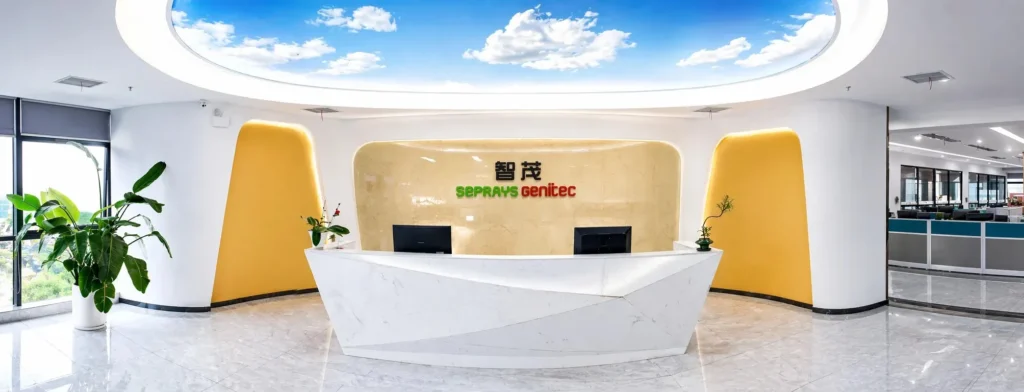
⭐ Why Choose SEPRAYS?
Since 1993, SEPRAYS Group has accumulated more than 30 years of experience developing PCB/FPC depaneling technology and manufacturing solutions.
Its equipment portfolio includes milling-cutter depanelers, laser depanelers, V-groove depanelers, punching systems, and automated loading, unloading, and material handling equipment.
According to company-provided information, SEPRAYS has served organizations including Foxconn, Flextronics, State Grid, Luxshare, Compal, Wistron, China Electronics, Quanta, CRRC, China Aerospace, OPPO, ZTE, and Bosch.
Rather than recommending one machine for every application, its engineering team evaluates PCB drawings, cutting paths, panel layouts, production volume, and downstream handling requirements.
This application-focused approach helps manufacturers identify equipment configurations suited to their production needs.
Looking for an automated PCB depaneling and unloading solution?
Please get in touch with SEPRAYS Group to discuss your application, request a machine recommendation, or arrange a PCB sample evaluation.
WhatsApp: +8618929266433
Электронная почта: sales@seprays.com
❓ FAQ
1. What type of PCB depaneling machine is best for SMT production?
For many assembled FR4 boards with complex outlines, a router is a practical option. Laser, V-groove, and punching equipment may be better for specific materials, panel designs, or production requirements.
2. Is inline PCB depaneling better than offline depaneling?
Inline systems are useful for high-volume production and automated material flow. Offline equipment may be more economical for smaller batches or frequent product changes.
3. Can PCB depaneling damage solder joints?
Yes. Mechanical stress during separation can affect sensitive components or solder joints. Suitable fixtures, cutting parameters, and process validation help reduce the risk.
4. How do I calculate the ROI of an automatic PCB depaneling machine?
Compare the incremental equipment investment against measurable labor savings, quality improvements, and operating costs. Include maintenance, tooling, downtime, and production utilization.
5. Can SEPRAYS provide customized PCB depaneling solutions?
Yes. SEPRAYS offers PCB routing, laser, V-groove, punching, and automated material handling solutions. We can evaluate equipment configurations using actual PCB drawings, production requirements, and sample testing.