.png)
 Chinese
  English
  Spanish
  Japanese
  Korean
  Russian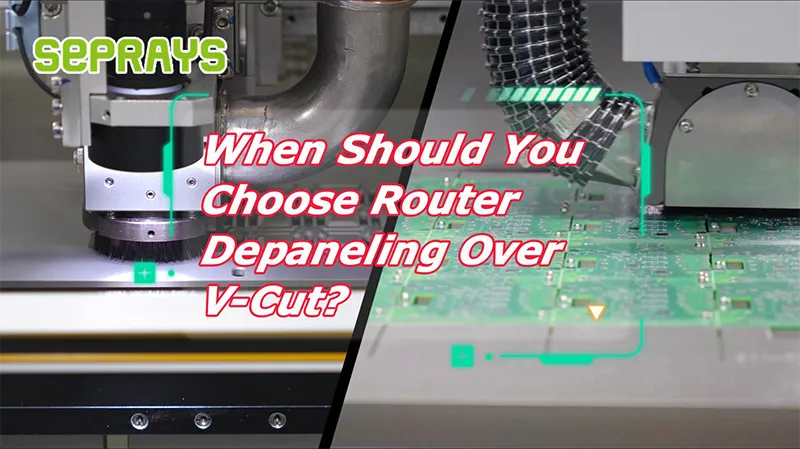
Router depaneling over V-cut is a decision many PCB engineers face sooner or later. At first glance, V-cut looks simple and fast. It works well for many standard panels. But once board designs become more complex, or when component placement moves closer to the edge, router depaneling often becomes the safer choice.
This is not about one process being universally better. In real manufacturing environments, the choice usually depends on PCB design constraints, component layout, and long-term yield stability.
Let’s walk through the situations where router depaneling makes more sense.
🔍 Understanding the Two Processes
Before deciding, it helps to understand how the two methods separate PCBs.
V-cut depaneling
- Panels are pre-scored with V-shaped grooves
- Boards are separated by applying mechanical force
- Usually very fast and cost-efficient
路由器、分割
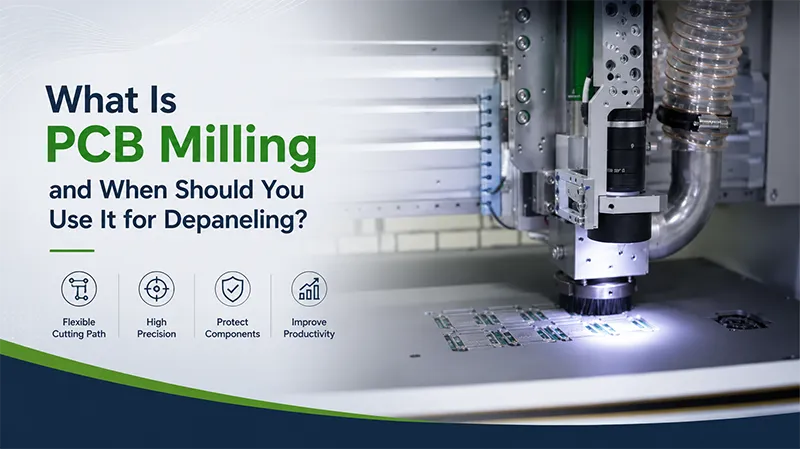
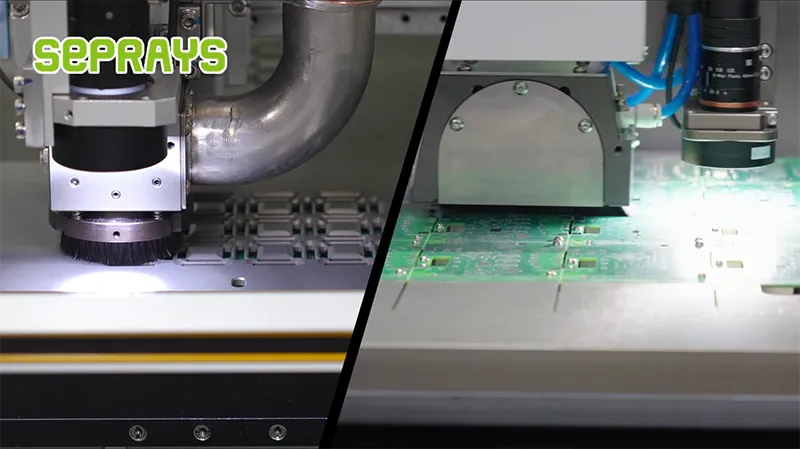
- Uses a high-speed rotating milling tool
- Cuts along programmed paths
- Allows flexible board shapes
Both processes are common in SMT production. The difference lies mainly in design freedom and mechanical stress control.
⚠️ The Hidden Stress Problem
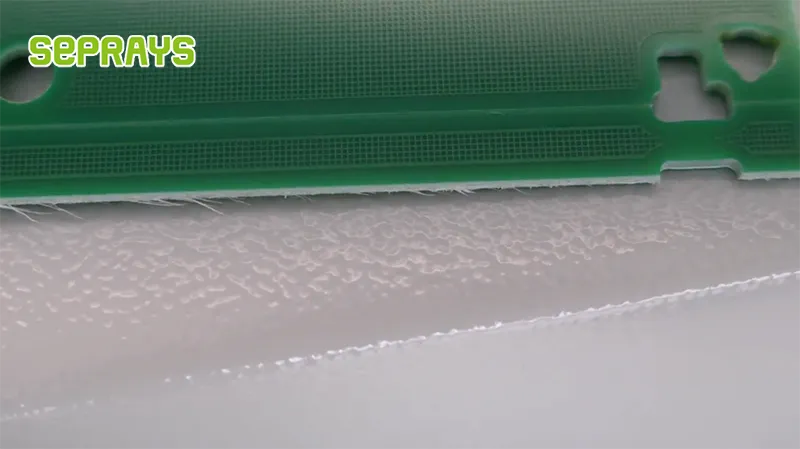
The biggest concern with V-cut depaneling is the breaking force used to separate boards.
When panels are snapped apart:
- Mechanical stress spreads across the PCB
- Nearby components may experience a bending force
- Solder joints can be affected
For boards where components are placed very close to the edge, this stress can lead to issues such as:
- Cracked MLCC capacitors
- Weakened solder joints
- Invisible reliability risks
Router depaneling avoids this snapping force because the board is cut rather than broken apart.
📏 When PCB Layout Limits V-Cut
PCB layout often determines whether V-cut is realistic.
If the board has:
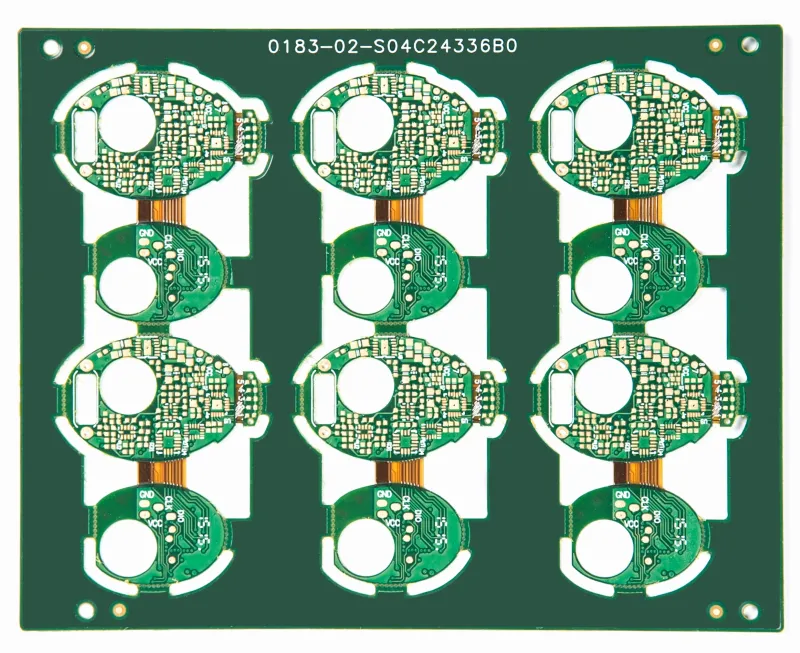
- Irregular shapes
- Curved outlines
- Internal cutouts
- Components close to edges
Then router depaneling becomes easier to implement.
V-cut works best for straight-line separations. Once designs become complex, engineers often move to routing.
🧩 Practical Comparison
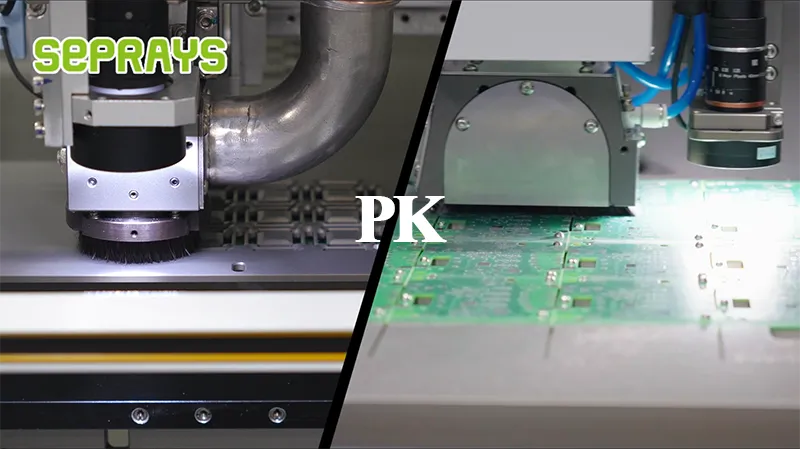
Below is a simple comparison that engineers often consider during process planning.
| Factor | V-Cut Depaneling | 路由器、分割 |
|---|---|---|
| Separation method | Breaking along scored lines | Mechanical cutting |
| Board shape flexibility | Limited | High |
| Mechanical stress | Higher during separation | Lower |
| Edge component clearance | Requires more space | Can work with tighter layouts |
| Production speed | Very fast | 温和的 |
| Tooling requirement | Requires PCB scoring | Uses milling tools |
Neither method is universally better. The right choice depends on product structure and reliability requirements.
💰 Looking at Cost Beyond Equipment
Many teams initially choose V-cut because it appears cheaper. And in many cases, it is.
However, production cost is not only about equipment or process speed. Other factors matter:
- Product yield
- Rework rates
- Component damage
- Long-term reliability
If V-cut stress causes hidden failures, the savings from faster separation can quickly disappear.
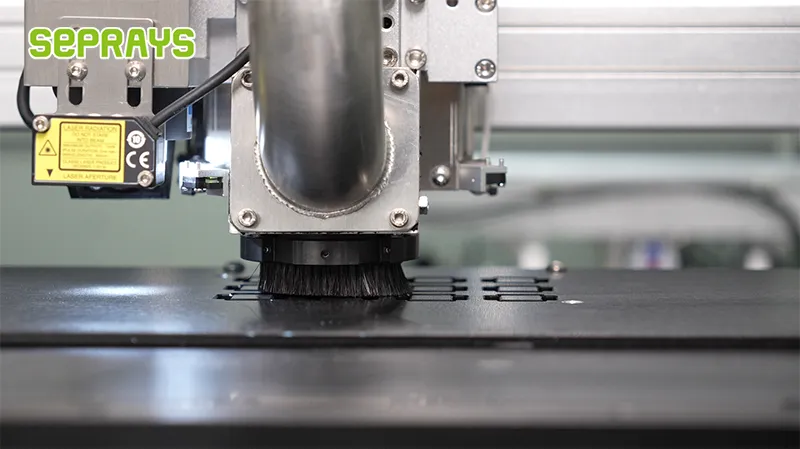
Router depaneling may run slightly slower, but it often provides better control over separation quality.
🏭 A Real Manufacturing Example
A manufacturer producing compact industrial control boards once relied entirely on V-cut separation. The design worked well initially, but later revisions placed ceramic capacitors closer to the PCB edge.
During testing, engineers started noticing occasional component cracking after depaneling.
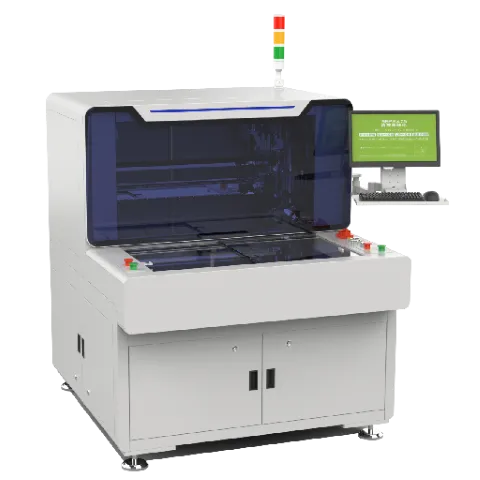
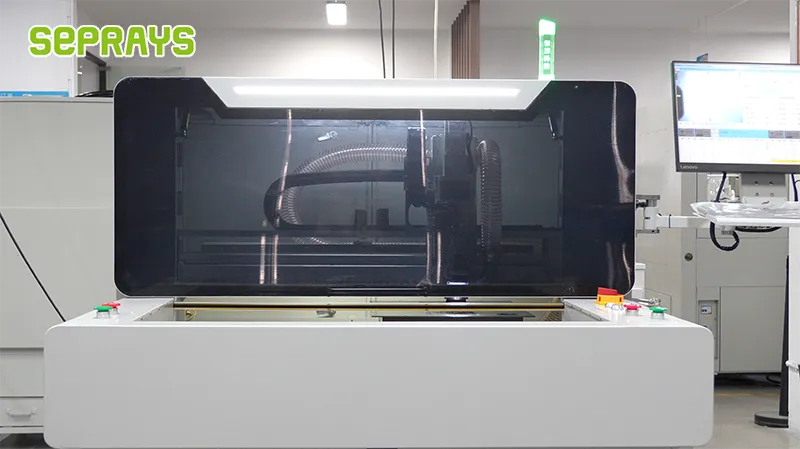
After reviewing the process, the team introduced a router depaneling system supplied by Seprays Group for this specific product line.
The change allowed them to:
- Remove the mechanical snapping force
- Keep the new compact PCB design
- Stabilize the production yield
Interestingly, the company still uses V-cut for simpler boards. They only switched to routing where the design required it.
🧠 Situations Where Router Depaneling Is the Better Choice
In practice, engineers often choose router depaneling when:
- Components are placed close to the PCB edge
- Board shapes are irregular
- Internal slots or cutouts exist
- Product reliability is critical
- V-cut separation causes board stress
For simple rectangular boards with enough edge clearance, V-cut remains a very efficient solution.
🔧 Practical Advice from Production Lines
Instead of asking “Which process is better?”, a more useful question is:
“Which process creates less risk for this specific PCB design?”
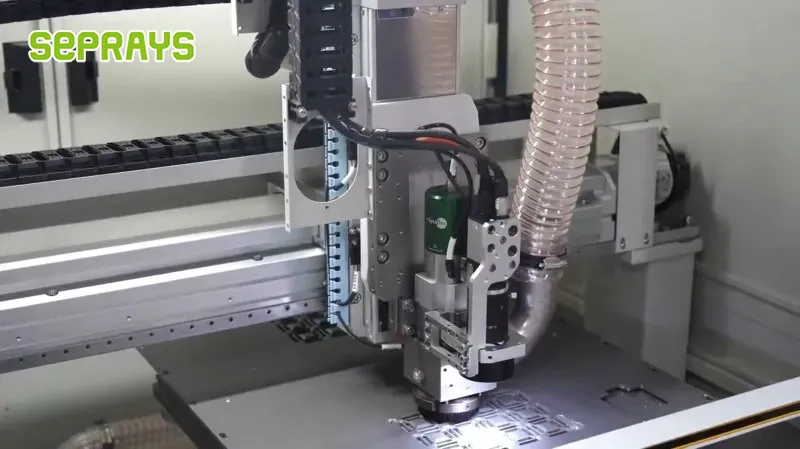
Many modern factories run both processes side by side:
- V-cut for standard, high-volume boards
- Router depaneling for complex or sensitive products
This flexible approach helps maintain both efficiency and reliability across different product types.
⭐ Why Choose Seprays Group?
Seprays Group focuses on PCB depaneling technologies used in modern electronics manufacturing. The company provides solutions such as:
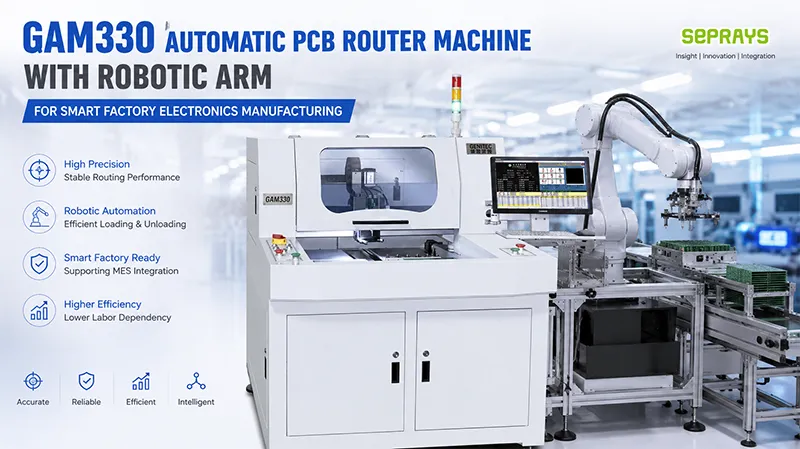
- PCB router depaneling machines
- Laser depaneling systems
- Saw blade depaneling equipment
- Inline and offline depaneling automation
With experience across consumer electronics, industrial control systems, and automotive electronics, Seprays works closely with engineers to identify the most suitable depaneling method for each PCB design.
Since 1993, Seprays Group has specialized in PCB and FPC depaneling technologies, providing router, laser, V-groove, and punching depaneling solutions along with automated handling systems. Our equipment is used by leading manufacturers such as Foxconn, Flex, Luxshare, Compal, Wistron, Quanta, CRRC, OPPO, and Bosch across global production lines.
If you are evaluating router depaneling or other PCB separation solutions, feel free to contact our engineering team for a technical discussion.
WhatsApp: +8618929266433
❓ FAQ
1. Is router depaneling safer for PCBs with edge components?
Yes, in many cases. Router depaneling cuts the board using a rotating tool instead of snapping the panel apart. This reduces the mechanical stress applied to components located near the PCB edge.
2. How much edge clearance does V-cut usually require?
Most engineers recommend leaving at least 0.5–1.0 mm between the V-cut line and nearby components. If components are closer than this, router depaneling is often considered to reduce stress risks.
3. Is router depaneling slower than V-cut separation?
Generally yes. V-cut separation is very fast because the board simply breaks along pre-scored lines. Router depaneling requires programmed cutting paths, so the process takes longer but offers more control.
4. Can router depaneling handle complex PCB shapes?
Yes. Router depaneling is commonly used for PCBs with curved outlines, slots, tabs, or irregular shapes. V-cut is limited to straight-line separations.
5. Do manufacturers often use both V-cut and router depaneling?
Yes. Many electronics manufacturers use V-cut for simple, high-volume boards and router depaneling for complex or sensitive designs. This combination helps balance production efficiency and product reliability.