.png)
 Chinese
  English
  Spanish
  Japanese
  Korean
  Russian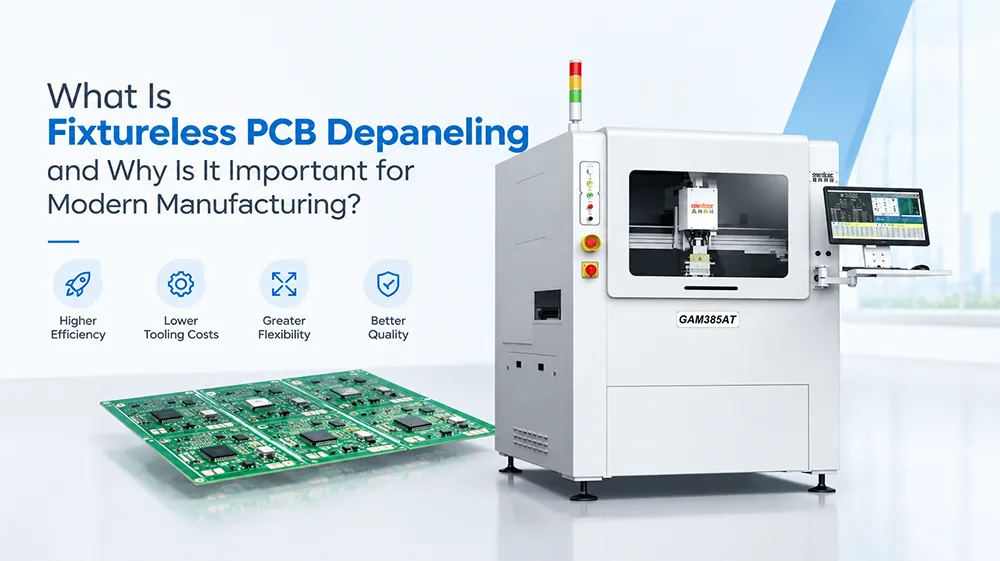
Fixtureless PCB Depaneling is becoming an increasingly discussed topic among electronics manufacturers that need faster production, lower tooling costs, and more flexible PCB separation processes.
For many factories, the challenge is not simply cutting a PCB panel. The real problem is how to maintain accuracy, protect sensitive components, and reduce downtime when product designs change frequently.
Traditional depaneling methods often require dedicated fixtures for different PCB designs. This approach works well for stable mass production, but it can create additional costs when manufacturers handle multiple models, small batches, or frequent engineering changes.
As electronics become smaller and more customized, many manufacturers are rethinking whether traditional fixture-based processes can still meet modern production requirements.
🔍 Why Traditional PCB Depaneling Creates Production Challenges
In the early stages of electronics manufacturing, many factories produced a limited number of PCB models with long production cycles. Dedicated fixtures were practical because the investment could be recovered over millions of units.
However, today’s manufacturing environment is different.
Many companies face:
- More PCB product variations
- Shorter product life cycles
- Frequent design modifications
- Higher labor costs
- Pressure to reduce manufacturing waste
A fixture designed for one PCB may become useless when the board shape changes.
For example, an automotive electronics supplier may produce several control modules for different vehicle platforms. Each PCB requires slightly different positioning. Building a separate fixture for every design increases preparation time and inventory costs.
The cutting process itself may only take seconds, but fixture management can become a hidden production bottleneck.
⚙️ How Fixtureless PCB Depaneling Works
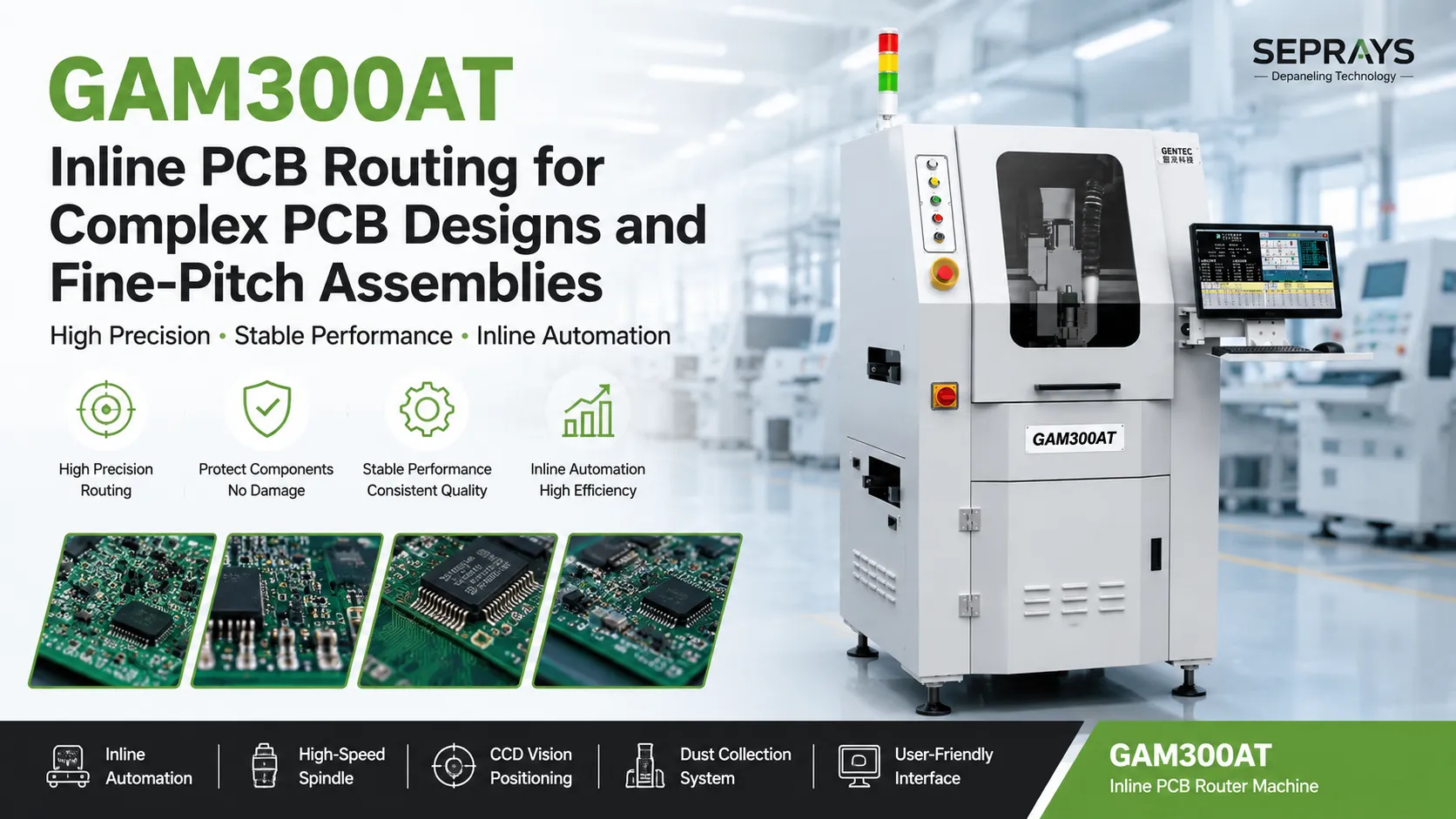
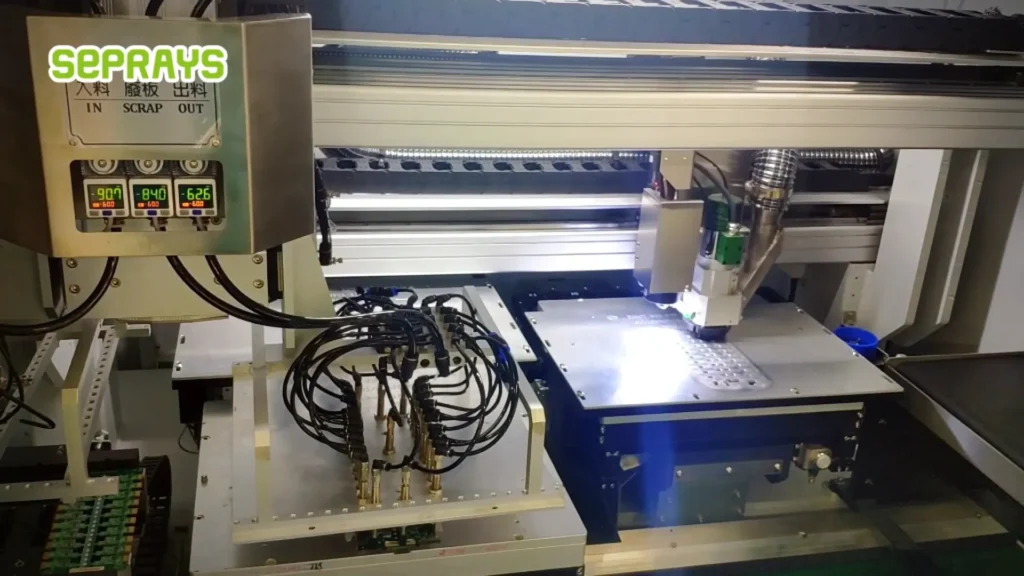
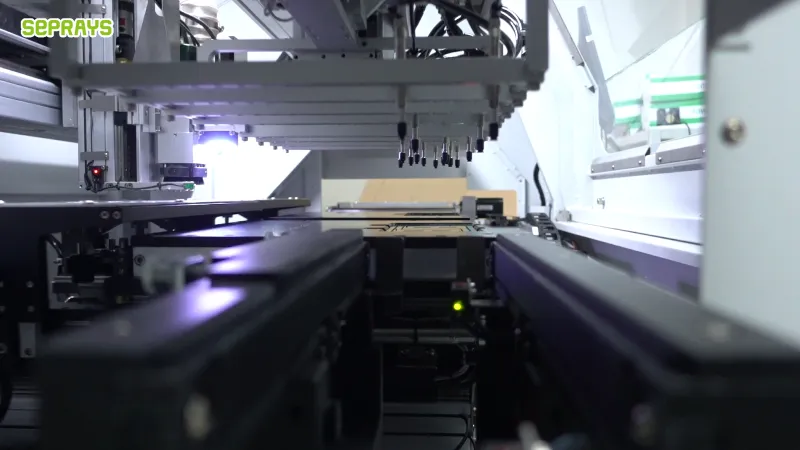
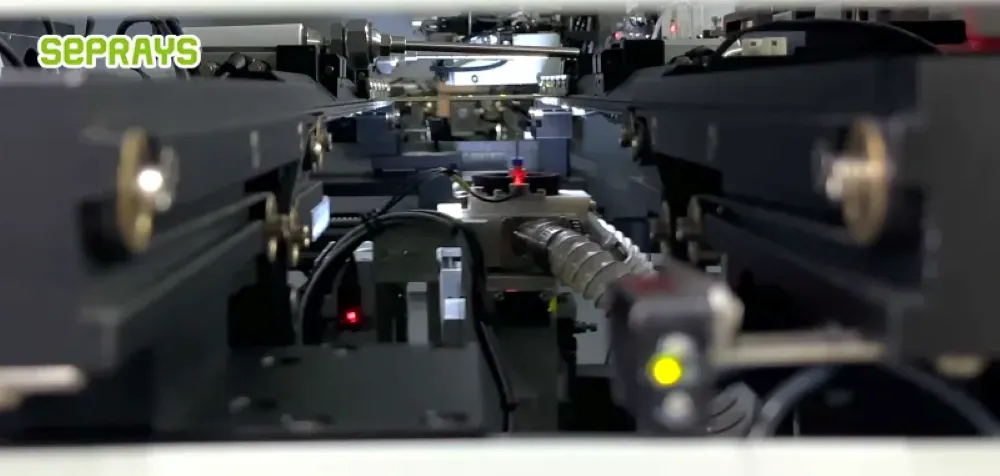
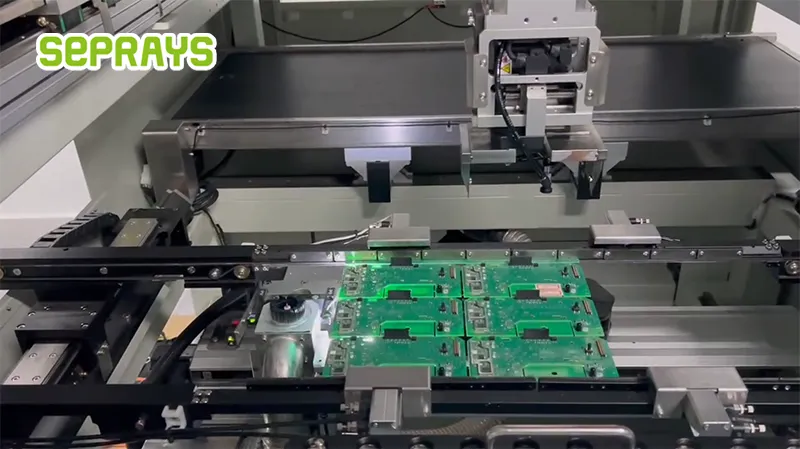
Unlike traditional methods that rely heavily on customized tooling, fixtureless solutions use advanced positioning technologies and intelligent control systems to process PCBs with reduced dependence on dedicated fixtures.
The machine can use:
- CCD visual alignment systems
- Automatic positioning algorithms
- Software-based PCB recognition
- Flexible clamping structures
- Precision milling or cutting technology
Instead of spending days preparing mechanical fixtures, manufacturers can adjust production parameters through software.
This does not mean fixtures are completely unnecessary in every situation.
For extremely thin boards, very large panels, or products with strict mechanical support requirements, customized fixtures may still provide advantages.
The key is choosing the right method according to the application.
📊 Fixtureless vs Traditional Fixture-Based Depaneling
Different production environments require different solutions.
| Comparison | Fixtureless Depaneling | Traditional Fixture-Based Depaneling |
|---|---|---|
| Tooling investment | Lower | Higher |
| Product changeover | Faster | Requires fixture replacement |
| Small batch production | More suitable | Less efficient |
| High-volume stable products | 适用范圉 | Also suitable |
| PCB design flexibility | Excellent | Limited |
| Initial setup time | Shorter | Longer |
The interesting point is that fixtureless processing is not always the cheapest option.
For a factory producing one PCB model for ten years, a dedicated fixture may still be economical.
The advantage appears when production flexibility becomes more valuable than tooling optimization.
💡 The Hidden Cost Behind PCB Fixtures
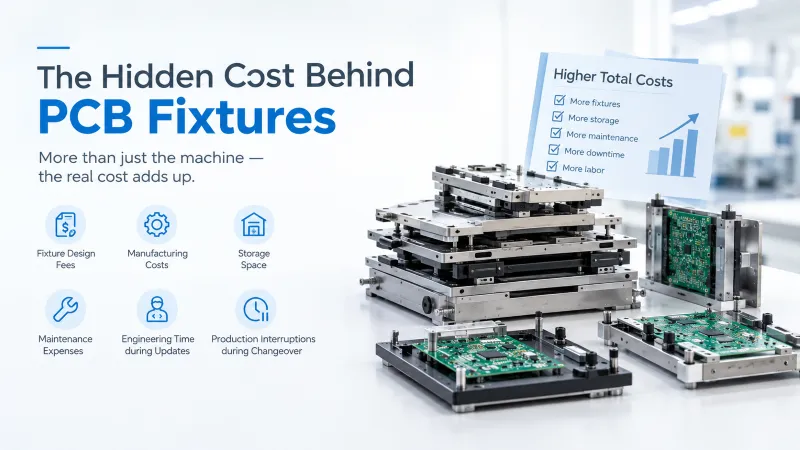
Many manufacturers calculate only the machine purchase cost. However, the actual production cost includes much more.
A fixture-based process may involve:
- Fixture design fees
- Manufacturing costs
- Storage space
- Maintenance expenses
- Engineering time during product updates
- Production interruptions during changeover
For companies producing hundreds of PCB models, these hidden costs can become significant.
A simple example:
A factory produces 50 different PCB assemblies every year.
If each product requires a dedicated fixture, the company must manage dozens of fixtures. Even if each fixture is affordable individually, the total cost and management workload continue to increase.
This is why flexible depaneling solutions are attracting attention in industries such as automotive electronics, industrial control, medical devices, and consumer electronics.
🏭 Real Manufacturing Example: Improving Flexibility in Semiconductor Electronics Production
A semiconductor equipment manufacturer in Europe faced a common production issue.
The company produced several electronic control boards for different semiconductor processing systems. Each PCB had different outlines and component layouts.
Previously, operators needed to change fixtures when switching between PCB models.
The problems included:
- Long setup time between orders
- Additional fixture investment
- Difficulty managing low-volume production
- Increased operator workload
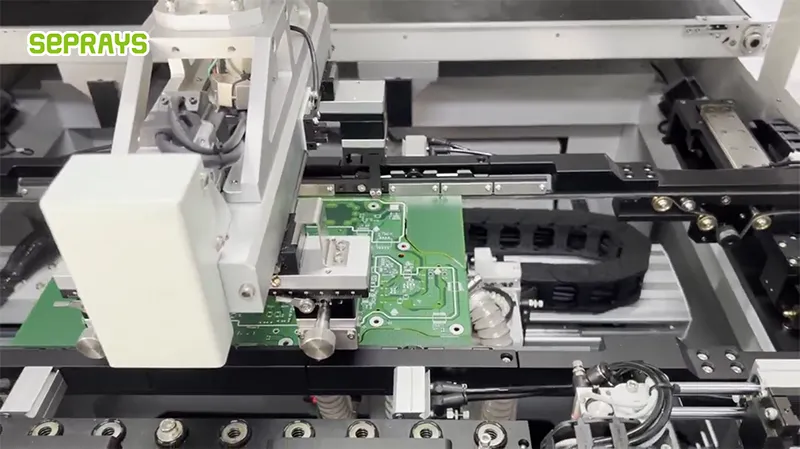
After evaluating a fixtureless PCB separation solution, the company optimized the workflow by reducing mechanical preparation requirements and improving production flexibility.
The result was not simply faster cutting.
The bigger improvement came from reducing the time spent preparing production.
This example shows an important manufacturing lesson:
Reducing preparation time can sometimes create more value than increasing cutting speed.
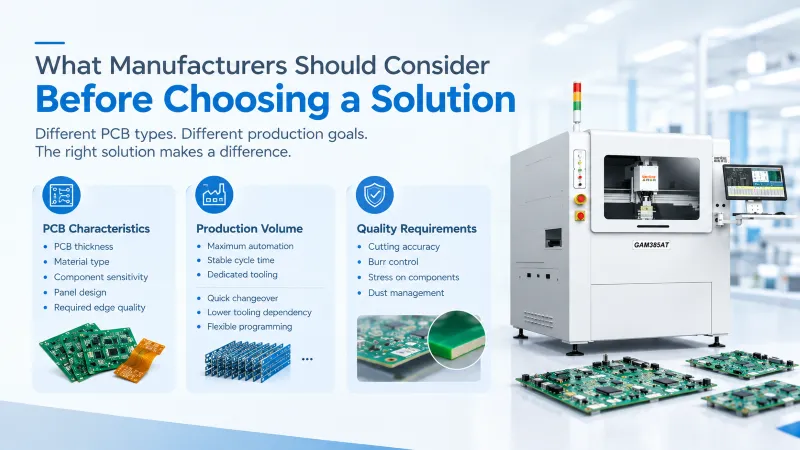
🛠️ What Manufacturers Should Consider Before Choosing a Solution
Not every PCB production line needs the same depaneling technology.
Before selecting equipment, manufacturers should evaluate:
PCB Characteristics
Consider:
- PCB thickness
- Material type
- Component sensitivity
- Panel design
- Required edge quality
A rigid PCB with simple routing requirements may have different needs compared with a flexible PCB containing sensitive components.
产量
High-volume production and flexible production require different priorities.
A factory producing millions of identical boards may prioritize:
- Maximum automation
- Stable cycle time
- Dedicated tooling
A factory producing multiple models may prioritize:
- Quick changeover
- Lower tooling dependency
- Flexible programming
Quality Requirements
Important factors include:
- Cutting accuracy
- Burr control
- Stress on components
- Dust management
A faster process does not always mean a better process.
Poor separation quality can create additional inspection and repair costs later.
🔄 An Unexpected Conclusion: Flexibility Can Reduce Manufacturing Costs
Many people assume that lower-cost manufacturing always comes from faster machines.
In reality, modern factories often save money by reducing complexity.
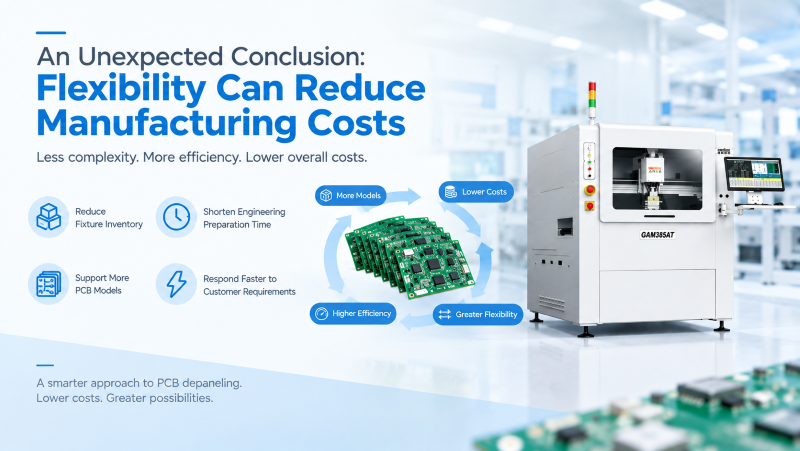
A flexible depaneling process can help companies:
- Reduce fixture inventory
- Shorten engineering preparation time
- Support more PCB models
- Respond faster to customer requirements
The biggest benefit may not appear in the cutting cycle.
It appears throughout the entire production system.
🚀 Why Fixtureless PCB Depaneling Is Becoming More Important
The electronics industry continues moving toward:
- Smaller production batches
- More customized products
- Faster product updates
- Smart manufacturing systems
Factories are no longer only competing on production speed.
They are competing on adaptability.
A depaneling solution that allows manufacturers to respond quickly to product changes can become an important part of a flexible manufacturing strategy.
⭐ Why Choose Seprays Group?
With more than 30 years of experience in PCB/FPC depaneling technology, Seprays Group has continuously focused on developing reliable and flexible PCB separation solutions for global electronics manufacturers.
Seprays Group provides a complete range of depaneling solutions, including milling-cutter depanelers, laser depanelers, V-groove depanelers, punching depanelers, and automated handling systems. Our equipment is trusted by leading manufacturers, including Foxconn, Flextronics, State Grid, Luxshare, Compal, Wistron, China Electronics, Quanta, CRRC, China Aerospace, OPPO, ZTE, and Bosch, and is widely used in factories across China and worldwide.
With decades of engineering experience, Seprays understands that different industries require different PCB separation strategies. From high-volume production lines to flexible manufacturing environments, Seprays works with customers to develop solutions that balance accuracy, efficiency, and long-term operating costs.
For manufacturers exploring fixtureless PCB separation or looking to improve PCB production flexibility, Seprays Group provides professional technical support and customized solutions.
If you need more information about PCB depaneling solutions, please feel free to contact us.
WhatsApp: +8618929266433
❓ FAQ
1. What is fixtureless PCB depaneling?
Fixtureless PCB depaneling is a PCB separation method that reduces dependence on dedicated mechanical fixtures by using technologies such as visual alignment, software positioning, and flexible clamping systems.
2. Is fixtureless PCB depaneling suitable for high-volume production?
Yes, it can be used in high-volume manufacturing, especially when factories produce multiple PCB models. However, extremely stable mass production lines may still benefit from dedicated fixtures.
3. Does fixtureless depaneling affect PCB cutting accuracy?
Modern fixtureless systems can achieve high precision through CCD alignment and intelligent positioning. Actual accuracy depends on machine design, PCB structure, and process conditions.
4. Can fixtureless PCB depaneling reduce production costs?
It can reduce costs by lowering fixture investment, shortening setup time, and improving production flexibility. The actual savings depend on PCB variety, production volume, and workflow requirements.
5. Which PCB separation method should manufacturers choose?
The best method depends on PCB design, production volume, material, quality requirements, and automation goals. Manufacturers should evaluate the complete production process instead of focusing only on cutting speed.