.png)
 Chinese
  English
  Spanish
  Japanese
  Korean
  Russian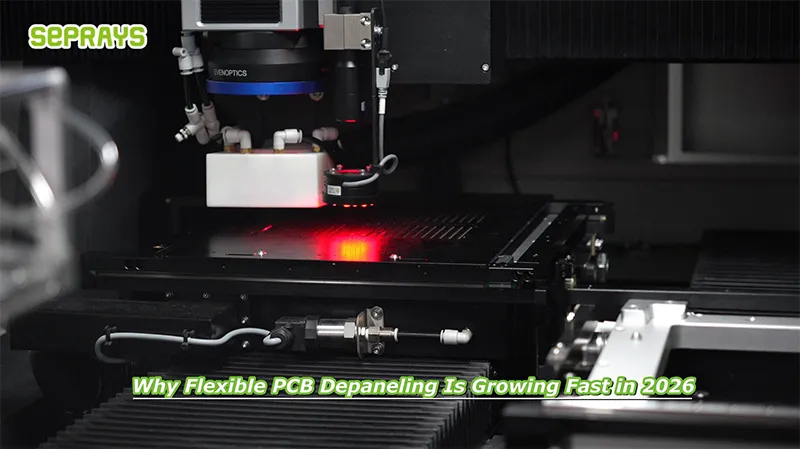
Flexible PCB Depaneling is becoming one of the fastest-growing topics in electronics manufacturing.
Not because factories suddenly want new equipment.
But because the products themselves are changing.
In 2026, more devices are becoming:
- Smaller
- Thinner
- Lighter
- More integrated
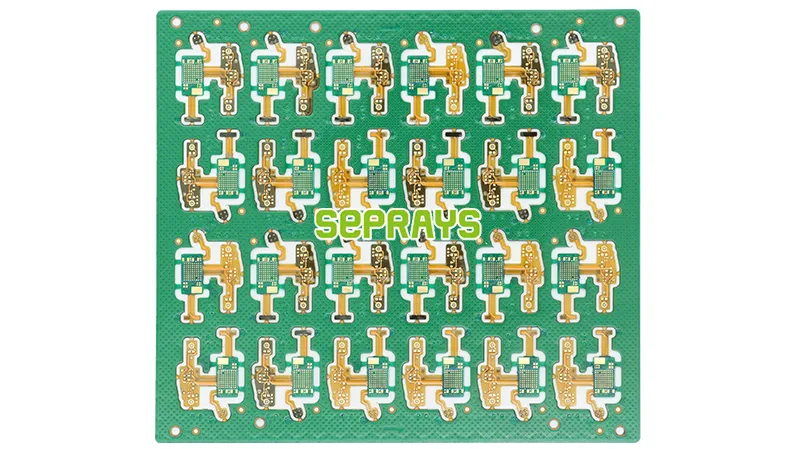
And that shift is pushing flexible PCB and rigid-flex PCB production much further than before.
The challenge?
Traditional depaneling methods were originally designed for rigid boards.
Flexible materials behave very differently during cutting.
That is why many manufacturers are rethinking their entire depaneling process.
🔍 Why Flexible PCBs Are Expanding So Quickly
A few years ago, flexible PCBs were mostly associated with smartphones and wearable devices.
Now they are appearing everywhere.
Including:
- EV battery systems
- Medical electronics
- AR/VR hardware
- Industrial sensors
- Aerospace electronics
- AI devices
- Foldable consumer products
The reason is simple.
Flexible boards help manufacturers save:
- Space
- 设备重量
- Assembly complexity
At the same time, they improve product integration.
But as production volume increases, depaneling becomes much more difficult.
⚠️ Why Flexible PCB Depaneling Is More Challenging Than Rigid Boards
This is where many factories encounter problems.
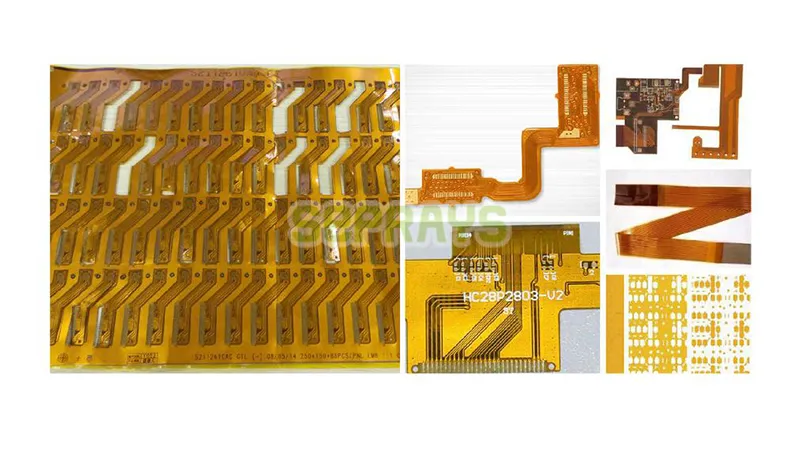
Flexible PCB materials are:
- Thin
- Soft
- Sensitive to stress
- Easy to deform
Traditional mechanical cutting methods can create issues such as:
- Material stretching
- Burrs
- Edge deformation
- Copper damage
- Position shift
Even handling itself can become risky.
A flexible board may move slightly during cutting, causing alignment deviation or inconsistent results.
🧩 The Real Problem Is Not Just Cutting
Many engineers initially focus only on separation quality.
But in real production, the bigger challenge is process stability.
Especially in high-volume SMT environments.
Factories often struggle with:
- Material fixation
- Accurate positioning
- Static electricity
- Scrap handling
- Low repeatability
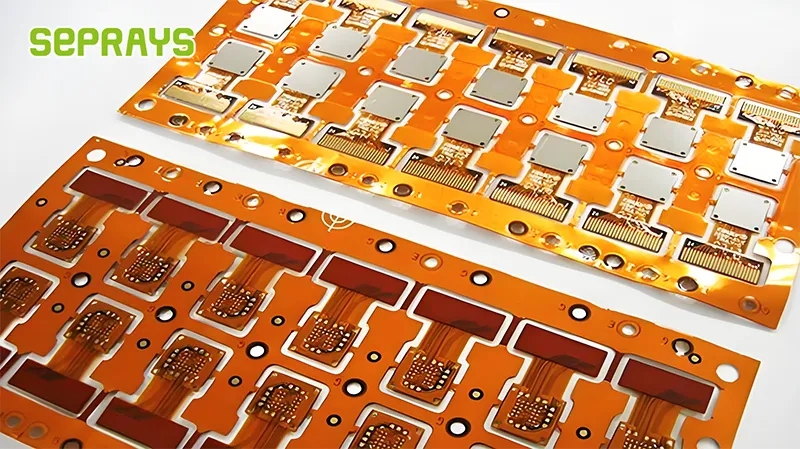
This becomes even more difficult when components are mounted close to the edge.
A small cutting error can damage the entire board.
📊 Common Depaneling Methods for Flexible PCBs
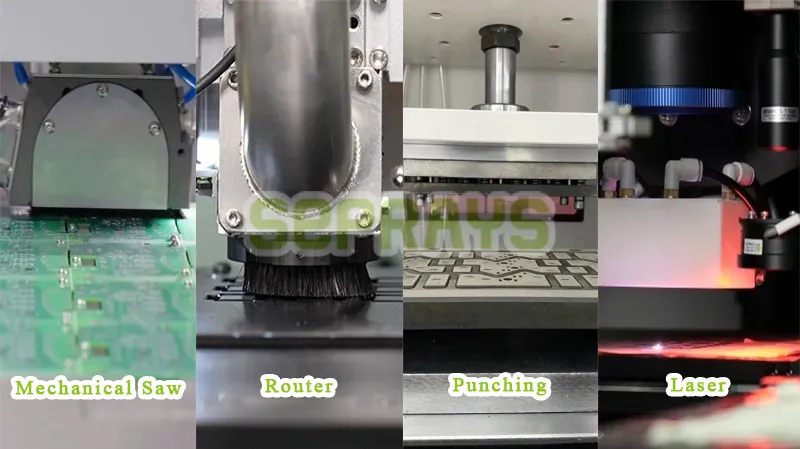
| Method | Advantages | Limitations |
|---|---|---|
| 激光分板 | Ultra-low stress, high precision | Higher investment |
| 路由器、分割 | Flexible cutting paths | Mechanical stress exists |
| Punching | Fast for fixed designs | Low flexibility |
| Saw Depaneling | Efficient for straight cuts | Not ideal for soft materials |
💡 Why Laser Depaneling Is Growing So Fast
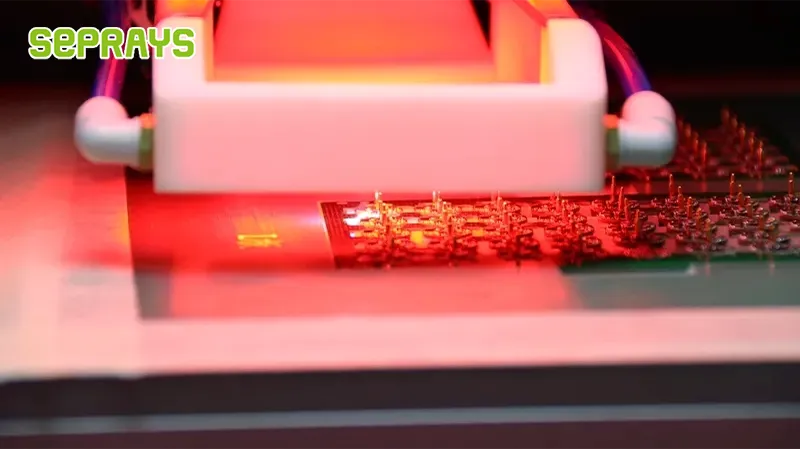
One major trend in 2026 is the rapid adoption of laser depaneling for flexible materials.
Why?
Laser cutting avoids direct physical contact.
That matters a lot for sensitive FPC products.
Laser systems help reduce:
- Mechanical stress
- Edge deformation
- Micro-cracks
- Tool wear issues
For ultra-thin materials, this can significantly improve yield stability.
Especially in:
- Medical electronics
- Camera modules
- Semiconductor packaging
- Wearable devices
🚗 EV and Automotive Electronics Are Accelerating Demand
Many people still associate flexible PCBs only with smartphones.
But automotive electronics is becoming a major growth driver.
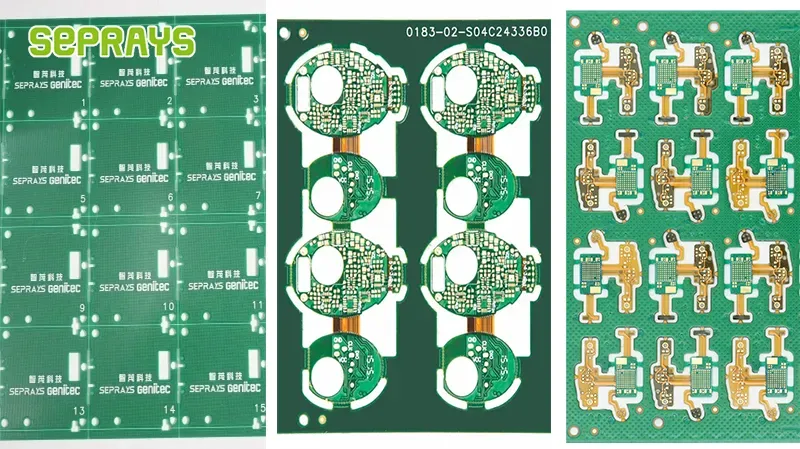
Modern EV systems increasingly use flexible and rigid-flex structures in:
- BMS modules
- Sensor systems
- Camera systems
- ADAS electronics
- Power control units
These applications require:
- High reliability
- Tight space integration
- Stable electrical performance
And because automotive standards are stricter, depaneling quality matters much more.
🏭 Smart Factories Are Changing FPC Production Requirements
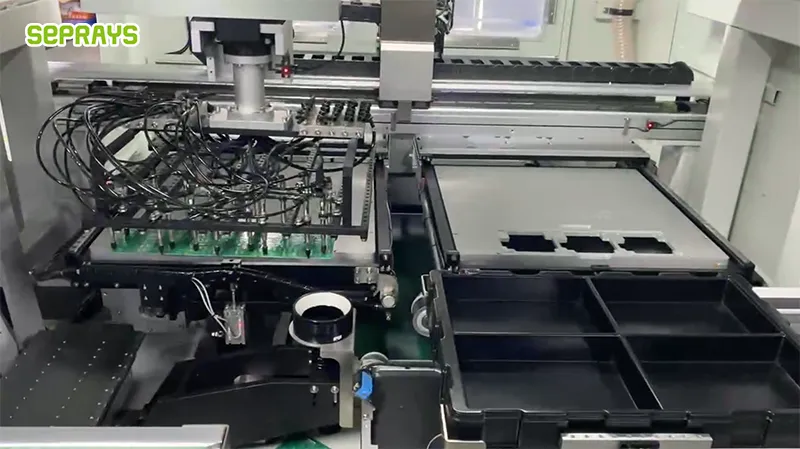
Flexible PCB production is also becoming more automated.
That creates new expectations for depaneling equipment.
Manufacturers increasingly want:
- Inline automation
- CCD vision positioning
- Automatic loading/unloading
- MES integration
- Low-stress cutting
In other words, depaneling is no longer treated as a standalone process.
It becomes part of the smart manufacturing workflow.
👀 A Counterintuitive Reality About Flexible PCB Production
Some factories assume:
“Flexible PCB is soft, so cutting should be easier.”
In practice, the opposite is often true.
Rigid boards are mechanically stable.
Flexible materials move more easily during processing.
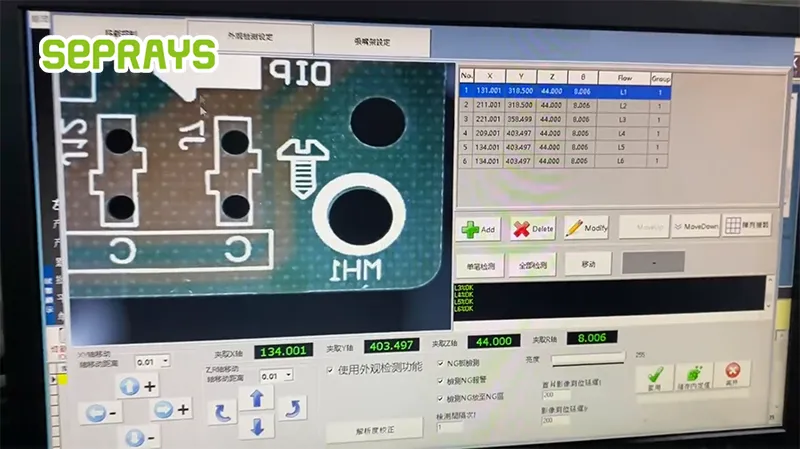
That means successful depaneling depends heavily on:
- Material support
- Positioning accuracy
- Process control
- Stress management
This is why advanced CCD vision systems are becoming increasingly important.
🔧 When Router Depaneling Still Makes Sense
Laser technology is growing quickly.
But router depaneling is not disappearing.
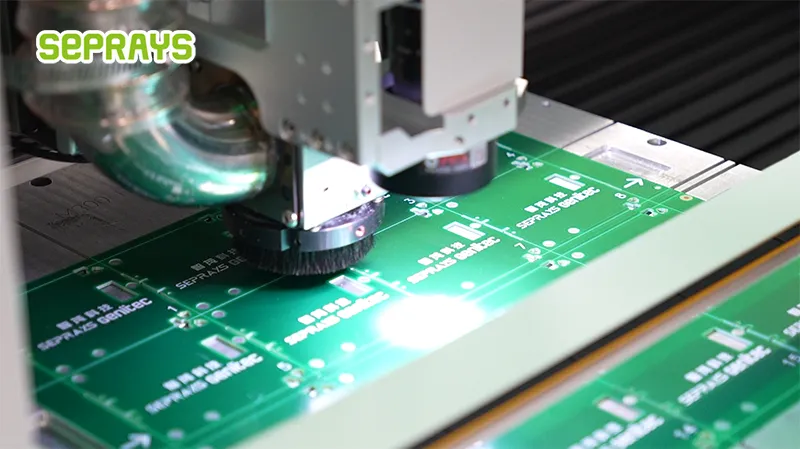
In fact, many manufacturers still prefer router systems for:
- Mixed production
- Rigid-flex boards
- Complex contour cutting
- Medium-volume manufacturing
Modern router systems with:
- CCD alignment
- Vacuum fixation
- Low-stress tooling
can still achieve very stable results.
Especially when production flexibility is important.
🧪 A Production Example from the Industry
One electronics manufacturer producing wearable medical devices faced unexpected yield problems.
Their original process used mechanical punching.
Initially, production speed looked excellent.
But over time, they noticed:
- Edge deformation
- Inconsistent cutting quality
- Higher scrap rates
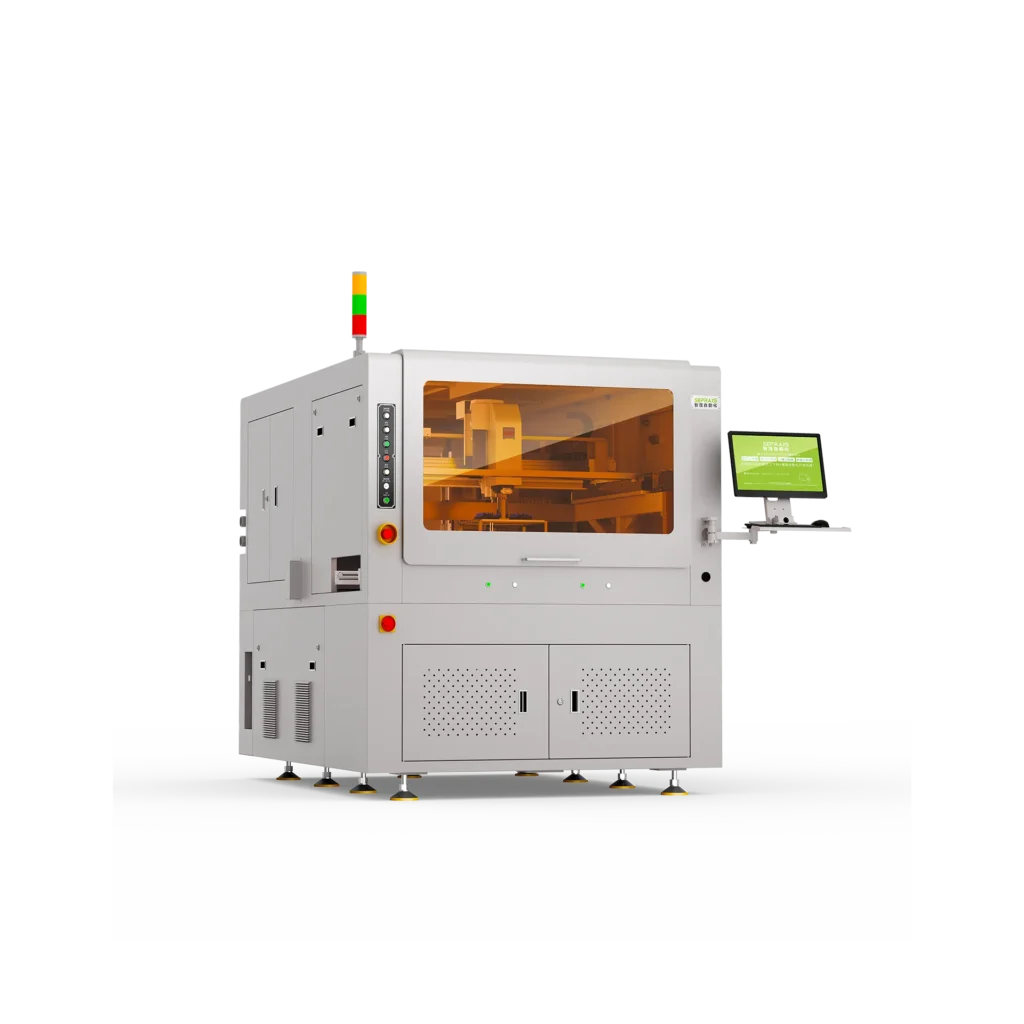
After evaluating the process with Seprays Group, the manufacturer switched to a laser depaneling solution with vision positioning and automatic alignment.
The improvement was not only cleaner edges.
The biggest gain came from process consistency during mass production.
Interestingly, scrap reduction created more savings than the cutting speed itself.
💰 Is Flexible PCB Depaneling More Expensive?
At first glance, yes.
Flexible PCB depaneling equipment often requires:
- Higher precision
- Better motion control
- Advanced vision systems
But many factories discover another reality later.
Low-quality depaneling becomes extremely expensive when:
- Product value is high
- PCB density increases
- Reliability standards tighten
One damaged flexible board may cost far more than the depaneling process itself.
🔄 Hybrid Depaneling Is Becoming More Common
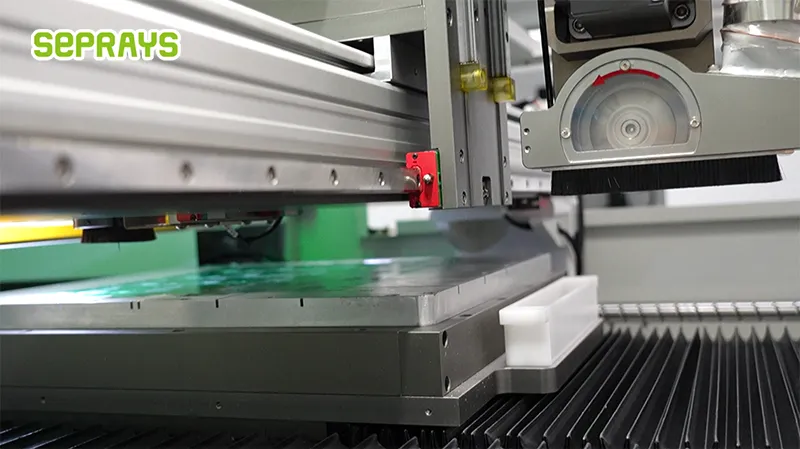
Some manufacturers now combine multiple cutting methods into a single workflow.
For example:
- Laser for sensitive areas
- Router for outer contours
- Punching for simple sections
Hybrid systems improve flexibility for complex products.
Especially in high-mix production environments.
🌍 What Manufacturers Are Looking for in 2026
In conversations with production teams, several priorities appear repeatedly:
- Lower stress
- Better consistency
- Faster changeover
- Automation compatibility
- Reliable technical support
Interestingly, “maximum cutting speed” is no longer always the top priority.
Stable yield matters more.
🚀 Final Thoughts
Flexible PCB depaneling is growing fast because electronics manufacturing itself is changing.
Products are becoming:
- Smaller
- More complex
- More sensitive
- More integrated
And traditional cutting methods cannot always meet these new requirements efficiently.
In 2026, manufacturers are no longer simply asking:
“Which machine cuts faster?”
They are asking:
“Which process protects product quality while supporting long-term production stability?”
That shift is changing the entire depaneling industry.
🚀 Why Choose Seprays Group?
With more than 30 years of industry experience, Seprays Group continues to help electronics manufacturers solve complex PCB/FPC depaneling challenges across modern SMT production environments.
Seprays Group has been dedicated to PCB/FPC depaneling technology, providing a full range of solutions—including milling-cutter depanelers, laser depanelers, V-groove depanelers, punching depanelers, hybrid depaneling systems, and automated handling equipment. Our solutions are trusted by globally recognized manufacturers such as Foxconn, Flextronics, State Grid, Luxshare, Compal, Wistron, China Electronics, Quanta, CRRC, China Aerospace, OPPO, ZTE, and Bosch. Seprays equipment is widely used in factories across China and worldwide.
By combining low-stress cutting technologies, CCD vision positioning, automation integration, and flexible production experience, Seprays helps customers improve yield, reduce process risk, and achieve more stable long-term manufacturing performance.
If you are evaluating flexible PCB depaneling solutions for your production line, feel free to contact us. Our engineering team can help assess the most suitable process for your application.
WhatsApp: +8618929266433
❓ FAQ
1. Why is flexible PCB depaneling more difficult than rigid PCB cutting?
Flexible materials are thinner and softer, making them more sensitive to stress, deformation, and positioning errors.
2. Is laser depaneling better for flexible PCBs?
In many cases, yes. Laser cutting provides low-stress, non-contact processing suitable for sensitive FPC materials.
3. Can router depaneling still be used for rigid-flex boards?
Yes. Modern router systems with CCD vision and proper fixation can handle many rigid-flex applications effectively.
4. Which industries are driving flexible PCB growth in 2026?
Automotive electronics, medical devices, wearable products, AI hardware, and semiconductor applications are major growth areas.
5. What should manufacturers focus on when choosing flexible PCB depaneling equipment?
Key factors include cutting stress, positioning accuracy, automation compatibility, material handling stability, and long-term yield performance.