.png)
 Spanish
  English
  Japanese
  Korean
  Russian
  Chinese
Laser vs Router PCB Depaneling is a topic that comes up frequently when production teams start dealing with smaller, denser PCB designs. Years ago, router depaneling handled most boards without issue. But as components moved closer to the edge and product reliability requirements increased, many engineers began reconsidering the cutting method.
So which one actually fits modern PCBA production better? The answer depends on board design, component placement, production scale, and cost priorities.
Let’s break it down from a practical manufacturing perspective.
🔍 Two Common Depaneling Methods in PCBA Production
Both router and laser depaneling are widely used in electronics manufacturing, but they work in very different ways.
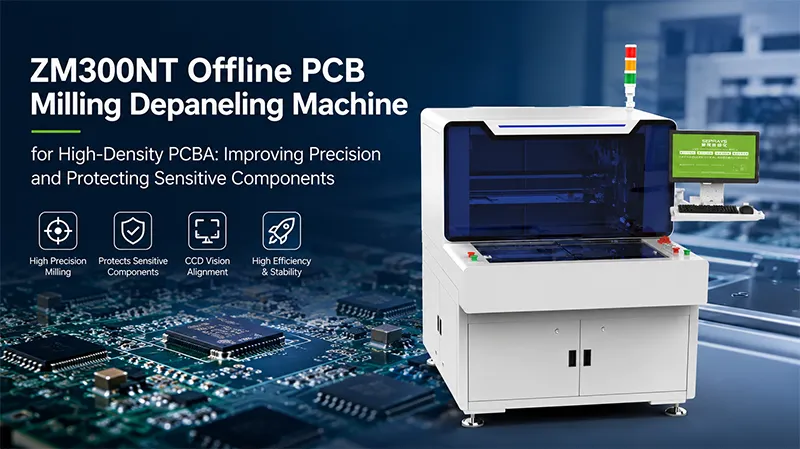
Router depaneling
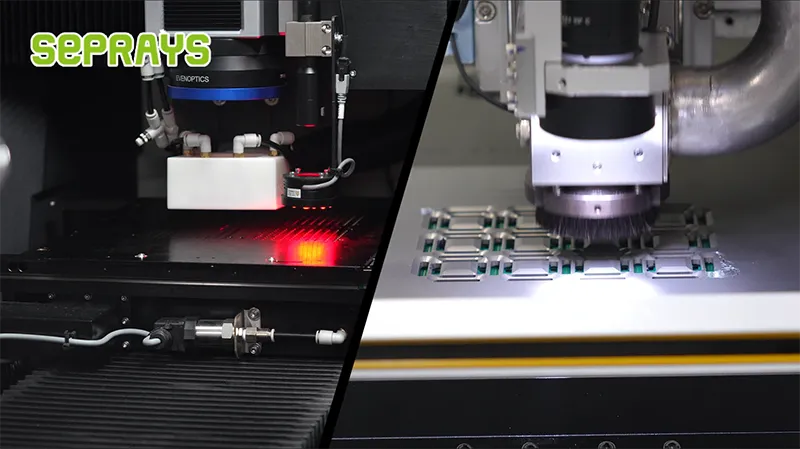
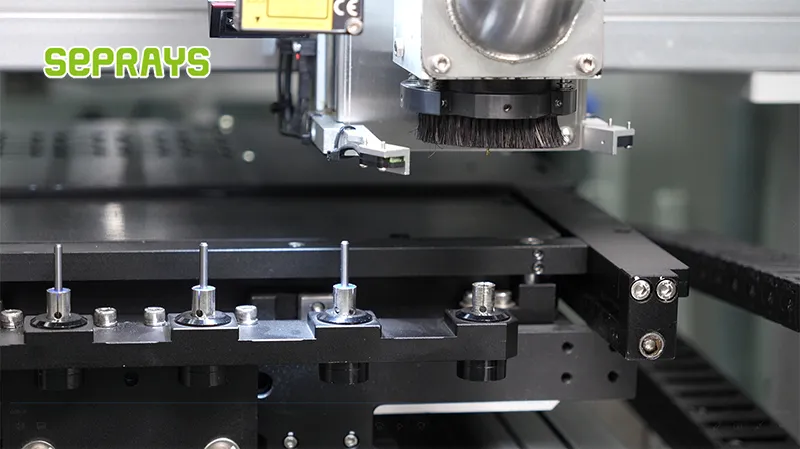
- Uses a high-speed rotating milling bit
- Mechanically cuts the PCB along programmed paths
- Mature and widely adopted in SMT lines
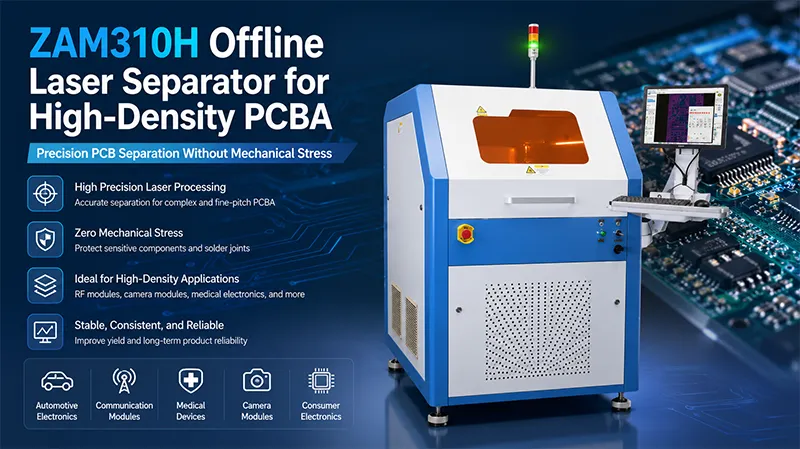
Láser depaneling
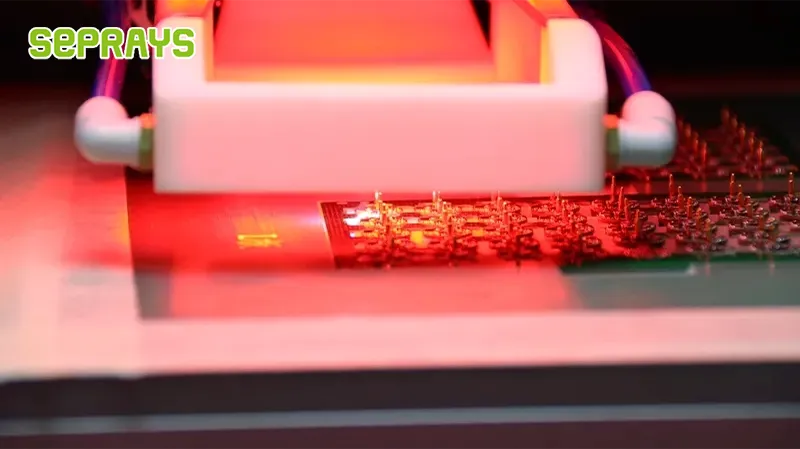
- Uses a focused laser beam to separate boards
- Non-contact cutting process
- Ideal for delicate or complex PCB designs
Router systems dominate many traditional production lines. Laser systems are becoming more common as PCB designs become more compact.

⚠️ The Stress Problem Engineers Often Notice
One of the main differences between the two methods is the mechanical stress during cutting.
Router depaneling involves physical contact between the milling tool and the PCB. During cutting, this creates vibration and mechanical force.
For many boards, this is not a problem. But when components sit very close to the board edge, engineers may see issues such as:
- cracked MLCC capacitors
- weakened solder joints
- small board deformation
- long-term reliability concerns
Laser depaneling avoids these risks because the beam cuts without touching the PCB.
📏 PCB Designs Are Getting Smaller
Modern PCBA designs are very different from those of ten years ago.
Common design trends now include:
- compact wearable devices
- thin communication modules
- high-density consumer electronics
- automotive electronic control boards
These products often place components extremely close to the PCB edge. In such cases, the traditional mechanical cutting method becomes more challenging.
This is one reason many engineers revisit the Laser vs Router PCB Depaneling question during design reviews.

📊 Quick Comparison
Below is a simplified comparison that engineers often use when evaluating depaneling solutions.
| Factor | Router Depaneling | Láser Depaneling |
|---|---|---|
| Cutting method | Mecánica de fresado | Laser beam |
| Mechanical stress | Moderado | Almost none |
| Precisión de corte | Good | Extremely high |
| Shape flexibility | High | Very high |
| Tool wear | Requires tool replacement | No cutting tools |
| Equipment cost | Lower initial cost | Higher initial investment |
Both technologies have their place in modern production environments.
💰 Looking Beyond Equipment Cost
Many purchasing decisions focus on machine price alone. In reality, total manufacturing cost includes several hidden factors.
For example:
- tool replacement for router bits
- maintenance downtime
- component damage near edges
- production yield stability
Laser systems remove tool wear completely. They also reduce vibration-related defects.
However, router depaneling still provides excellent cost efficiency for standard rigid boards with sufficient edge clearance.
🏭 A Real Production Example
A consumer electronics manufacturer producing compact control modules faced repeated yield fluctuations. The PCB design placed ceramic capacitors less than 0.7 mm from the board edge.
Originally, the production line used router depaneling.
During quality analysis, engineers suspected that cutting vibration might be affecting fragile components. After evaluation, the company tested a laser depaneling system supplied by Seprays Group for this product series.
Results over several production runs showed:
- fewer edge-related component issues
- improved cutting consistency
- more stable production yield
The company did not completely replace router depaneling. Instead, they used router machines for standard boards and laser systems for sensitive designs.
🧠 When Each Method Makes More Sense
In many factories, both processes are used together.
Router depaneling works well when:
- PCB designs are simple
- Components are far from the edges
- Production speed is a priority
- Cost control is critical
Laser depaneling is often chosen when:
- Components sit very close to the edge
- Boards are thin or fragile
- Complex shapes are required
- Reliability requirements are extremely high
The best method depends on the specific PCB structure and product requirements.
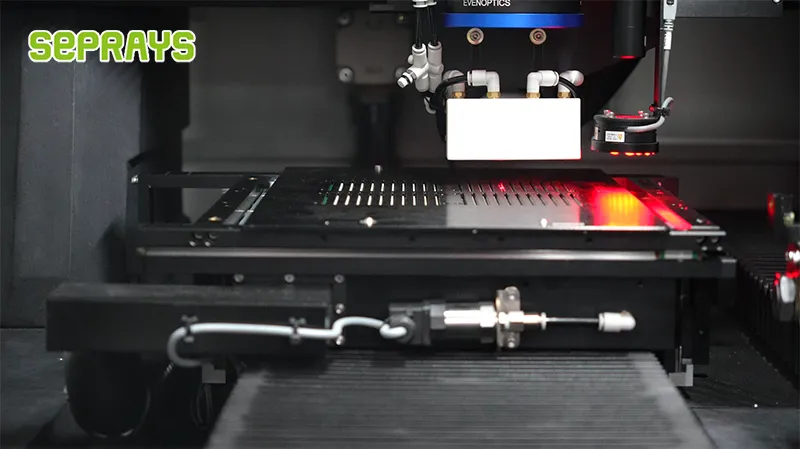
🔧 A Practical Approach for Modern PCBA Lines
Instead of choosing one technology permanently, many manufacturers build hybrid depaneling strategies.
For example:
- router depaneling for general products
- laser depaneling for high-precision boards
This approach allows factories to balance efficiency, reliability, and production cost across different product lines.
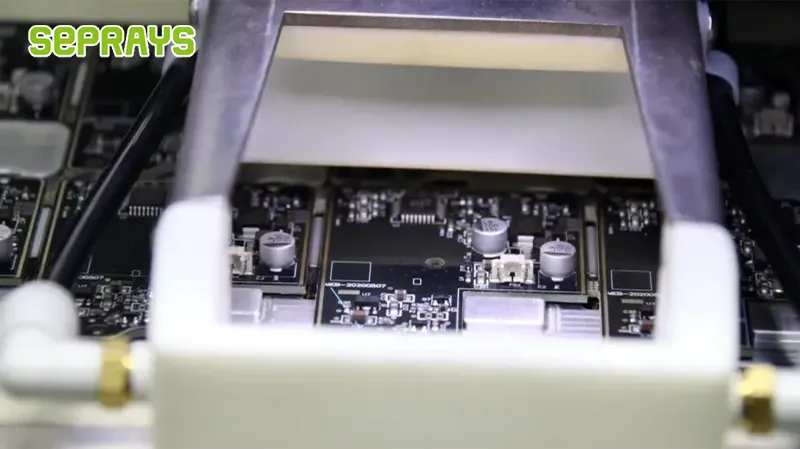
⭐ Why Choose Seprays Group?
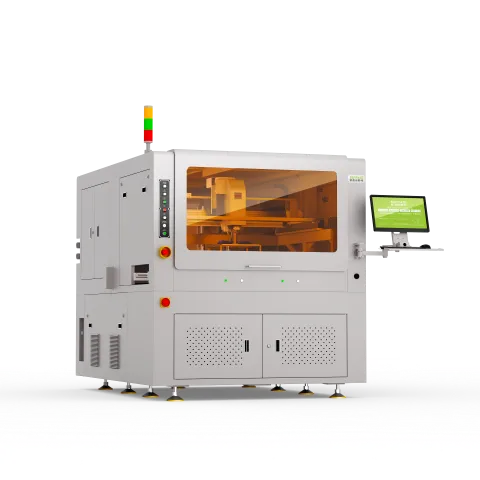
Seprays Group focuses on PCB depaneling technologies used in modern electronics manufacturing. The company provides solutions such as:
- PCB router depaneling machines
- laser depaneling systems
- saw blade depaneling equipment
- inline and offline depaneling automation
With experience across consumer electronics, industrial control systems, and automotive electronics, Seprays works closely with engineers to identify the most suitable depaneling method for each PCB design.
Since 1993, Seprays Group has specialized in PCB and FPC depaneling technologies, offering solutions such as milling cutter depanelers, laser depanelers, V-groove depanelers, punching depanelers, and automated handling systems. Our equipment is trusted by manufacturers including Foxconn, Flex, Luxshare, Compal, Wistron, Quanta, CRRC, OPPO, ZTE, and Bosch, supporting factories across China and global markets.
If you are evaluating router or laser depaneling solutions, please feel free to contact us for a technical discussion.
WhatsApp: +8618929266433
Correo electrónico: sales@seprays.com
❓ FAQ
1. Is laser depaneling more precise than router depaneling?
Yes. Laser systems typically provide higher cutting precision and extremely narrow kerf width, making them suitable for high-density PCBs.
2. Does router depaneling damage PCB components?
Not necessarily. When components are placed far enough from the edge, and parameters are optimized, router depaneling works very well.
3. Which depaneling method is faster for production?
Router depaneling is generally faster for many standard boards, especially in high-volume manufacturing.
4. Can both laser and router depaneling be used in the same factory?
Yes. Many electronics manufacturers use router depaneling for standard boards and laser systems for sensitive or complex PCBs.
5. What factors should engineers consider when choosing a depaneling method?
Key factors include PCB thickness, component distance from the edge, board shape complexity, production volume, and reliability requirements.