.png)
 Korean
  English
  Spanish
  Japanese
  Russian
  Chinese
Common PCB depaneling problems in SMT production lines don’t usually show up at the start. The line runs. Output looks fine.
But over time, small issues begin to affect yield, speed, and consistency.
From an operator or process engineer’s point of view, these problems are familiar—and often underestimated.
🔍 Why Depaneling Becomes a Hidden Bottleneck
Depaneling is typically the last mechanical step.
It seems simple.
Cut the board. Move it forward.
But in reality, it directly impacts:
- Product reliability
- Production rhythm
- Overall yield
When something goes wrong here, it affects everything downstream.
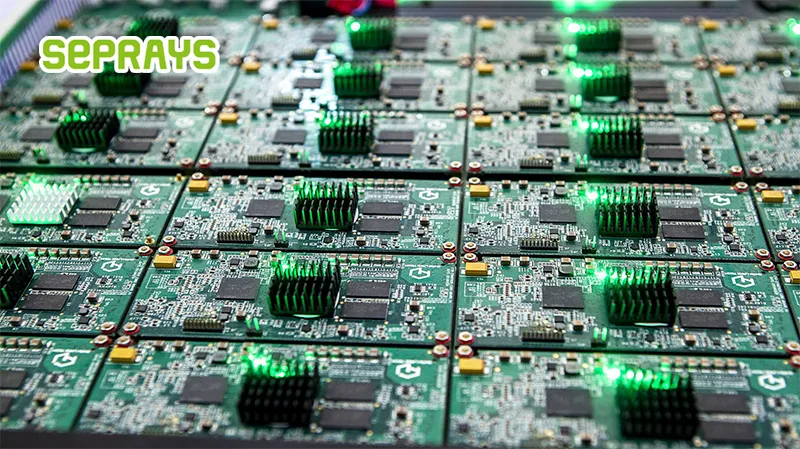
⚙️ Problem #1 — Mechanical Stress Damage
This is one of the most common and most overlooked issues.
Symptoms include:
- Micro-cracks in solder joints
- Component damage (especially MLCCs)
- PCB warpage after cutting
The challenge:
These defects are often invisible at first.
They appear later in testing—or worse, in the field.
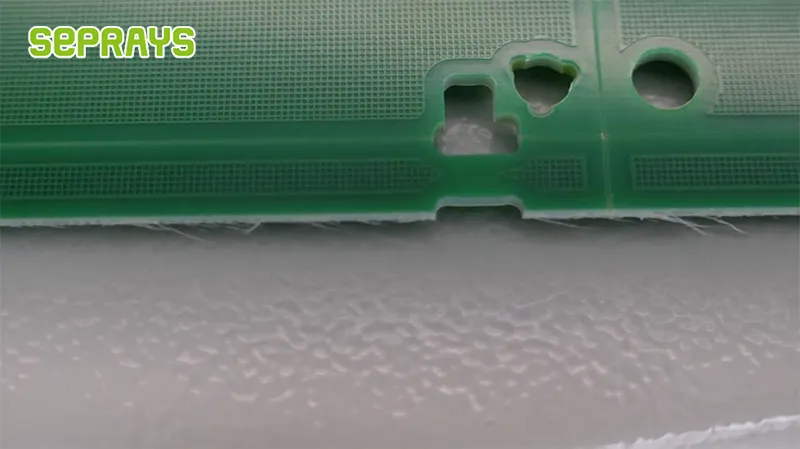
💥 Problem #2 — Poor Edge Quality
Edge quality affects both function and appearance.
Typical issues:
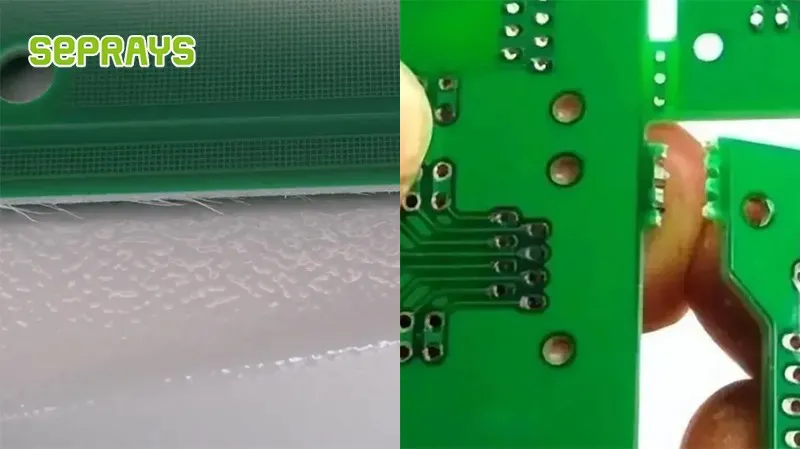
- Burrs
- Fiber pull-out
- Delamination
Causes:
- Dull cutting tools
- Incorrect parameters
- Using the wrong depaneling method
This leads to:
- Additional cleaning steps
- Increased rework
- Customer complaints
⏱️ Problem #3 — Low Production Efficiency
Many SMT lines experience:
- Waiting time at the depaneling station
- Slow cycle times
- Frequent manual intervention
Common reasons:
- Method mismatch (e.g., routing used for simple cuts)
- Lack of automation
- Inefficient workflow design
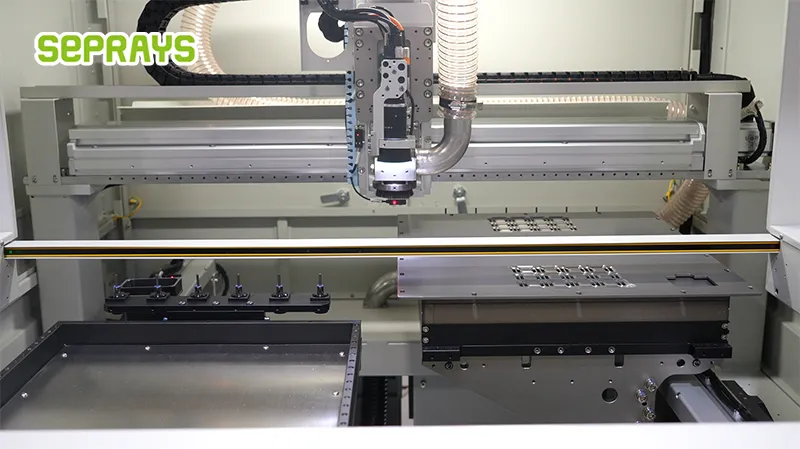
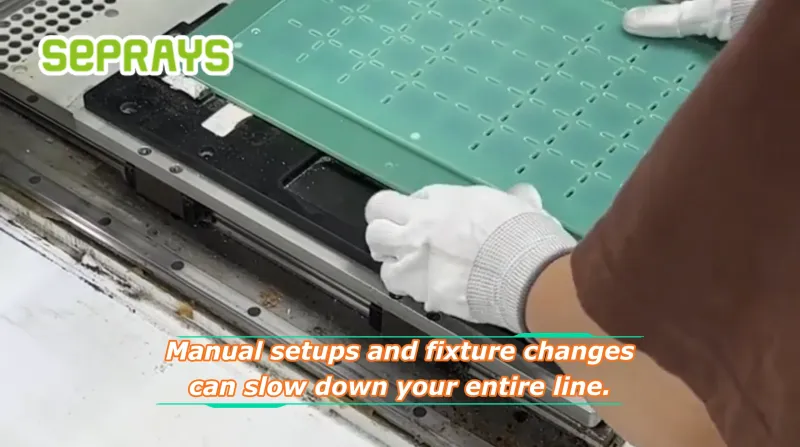
🔄 Problem #4 — Frequent Changeover Delays
In high-mix production, this becomes critical.
Pain points include:
- Fixture replacement
- Program switching
- Manual alignment
The result:
- Downtime increases
- Operators struggle to keep up
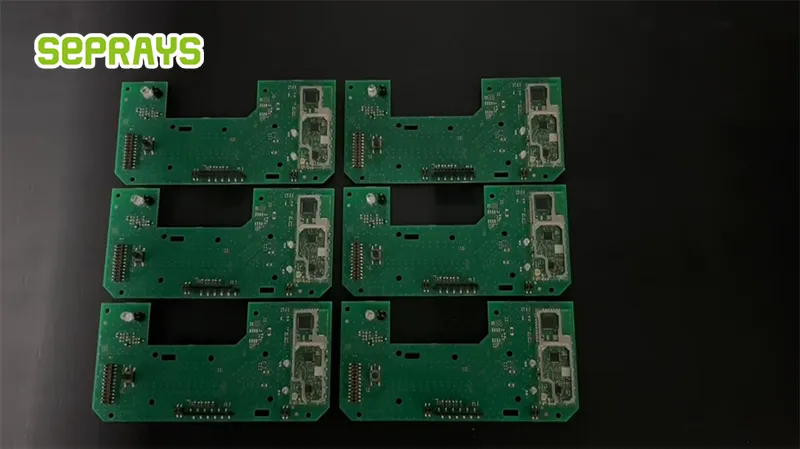
🎯 Problem #5 — Inconsistent Quality Between Batches
You may notice:
- Good results in one shift
- Poor results in another
This inconsistency often comes from:
- Operator-dependent processes
- Manual loading and positioning
- Lack of standardized parameters
💡 A Counterintuitive Insight
Many teams focus on speed first.
But:
Higher speed without stability = higher cost
A slightly slower but stable process often delivers:
- Better yield
- Lower rework
- More predictable output
📊 Problem vs Root Cause vs Solution
| Problem | Root Cause | Practical Solution |
|---|---|---|
| Stress damage | High cutting force | Use low-stress methods (laser/router) |
| Poor edge quality | Tool wear / wrong method | Optimize tools and parameters |
| Low efficiency | Process mismatch | Match the method to the PCB design |
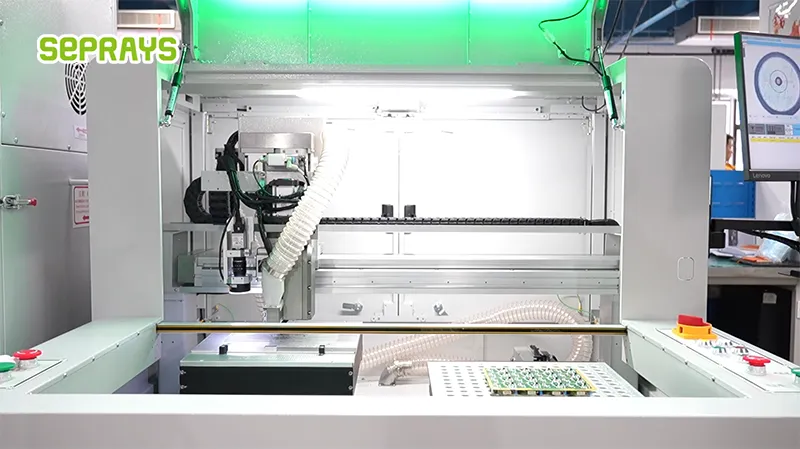
| Changeover delays | Manual setup | Use CCD + fixture-less systems |
| Inconsistent output | Operator variation | Increase automation |
🧪 Case Example — Fixing a Depaneling Bottleneck
A manufacturer producing industrial control PCBs experienced:
- High rework rates
- Inconsistent edge quality
- SMT line delays
Initial setup:
- Semi-automatic routing machines
- Manual loading
Problems:
- Operator variability
- Slow changeovers
- Tool wear is not managed effectively
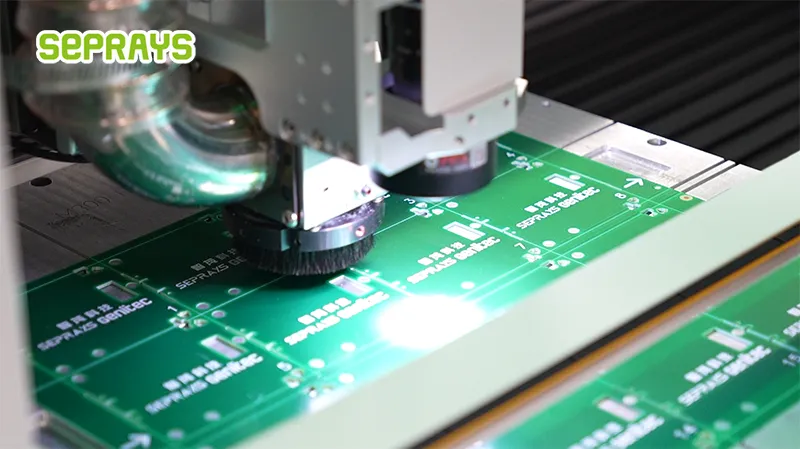
After working with Seprays, they implemented:
- Optimized routing parameters
- Vision alignment (CCD)
- Semi-automated handling upgrades
Results:
- Reduced defect rates
- Improved consistency
- Smoother production flow
The biggest improvement?
Process stability.
🛠️ Practical Ways to Solve Depaneling Problems
From real production experience:
- Choose the method based on PCB structure, not habit
- Monitor tool wear regularly
- Use CCD alignment to improve accuracy
- Reduce manual handling where possible
- Standardize process parameters
These are simple steps.
But they make a big difference.
🔄 When Should You Reevaluate Your Process?
You should take action if:
- Defect rates are rising
- Operators report difficulty
- Production speed is inconsistent
- New PCB designs cause issues
These are early warnings.
Ignoring them increases the cost later.
🚀 Final Thought — Stability Is the Real Goal
Depaneling is not just a cutting process.
It is a quality control step.
A stable depaneling process leads to:
- Higher yield
- Lower cost
- Better product reliability
🚀 Why Choose Seprays Group?
Seprays Group focuses on helping manufacturers identify and solve real depaneling problems in SMT production lines, improving both efficiency and product quality.
With over 30 years of industry experience, Seprays Group has been dedicated to PCB/FPC depaneling technology, providing a full range of solutions—milling-cutter, laser, V-groove, and punching depanelers, as well as automated handling systems. Our equipment is trusted by leading manufacturers, including Foxconn, Flextronics, State Grid, Luxshare, Compal, Wistron, China Electronics, Quanta, CRRC, China Aerospace, OPPO, ZTE, and Bosch. It is used in factories across China and worldwide.
With strong application expertise, Seprays helps customers reduce defects, optimize processes, and achieve stable long-term production performance.
If you are facing depaneling challenges in your SMT line, feel free to contact us—we’re here to help.
WhatsApp: +8618929266433
이메일: sales@seprays.com
❓ FAQ
1. What is the most common depaneling problem?
Mechanical stress damage can lead to hidden reliability issues.
2. Why does depaneling affect product quality?
Because it introduces mechanical or thermal stress during the final stage.
3. How can I improve depaneling efficiency?
By matching the method to PCB design and reducing manual steps.
4. Is automation necessary for depaneling?
Not always, but it improves consistency and reduces operator dependency.
5. When should I upgrade my depaneling process?
When defects increase, efficiency drops, or new PCB designs create challenges.