.png)
 Korean
  English
  Spanish
  Japanese
  Russian
  Chinese
In the fast-paced world of PCB (Printed Circuit Board) manufacturing, speed is of the essence. As production lines demand faster and more efficient processes, PCB depaneling methods must keep up. Saw blade depaneling has long been a go-to method, but is it still the fastest in 2026? Let’s dive into how saw blade depaneling stacks up against newer techniques and explore whether it’s still the best choice for mass production.
🛠️ What Is Saw Blade PCB Depaneling?
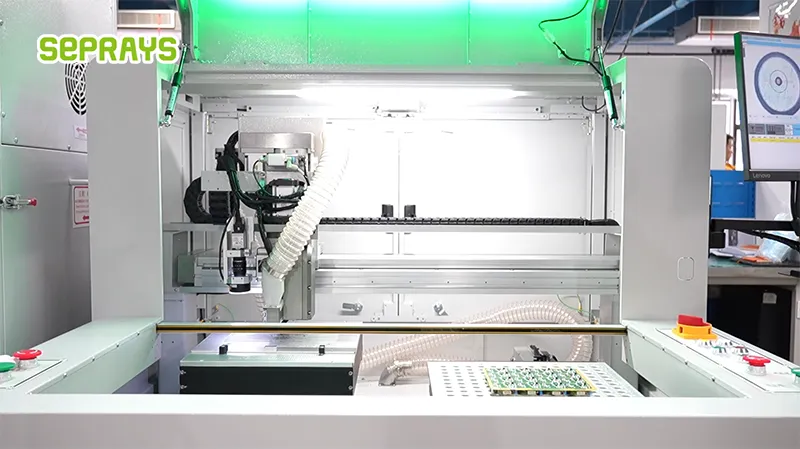
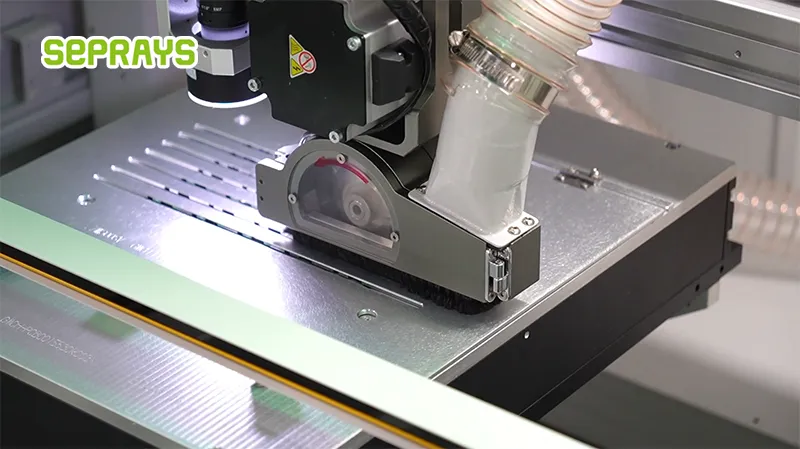
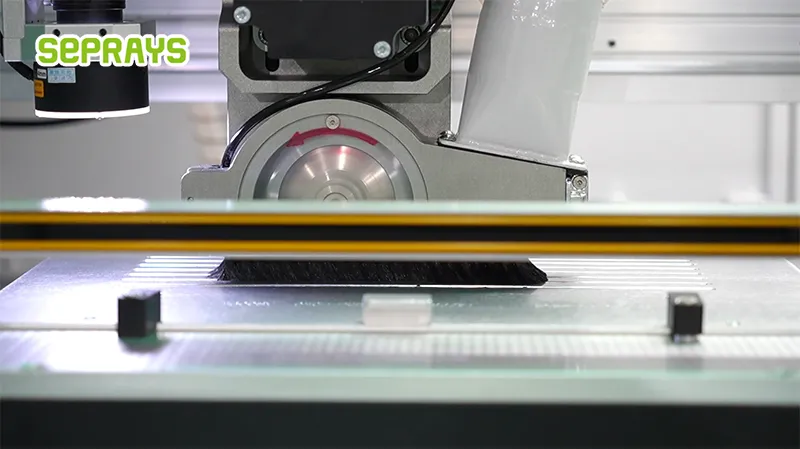
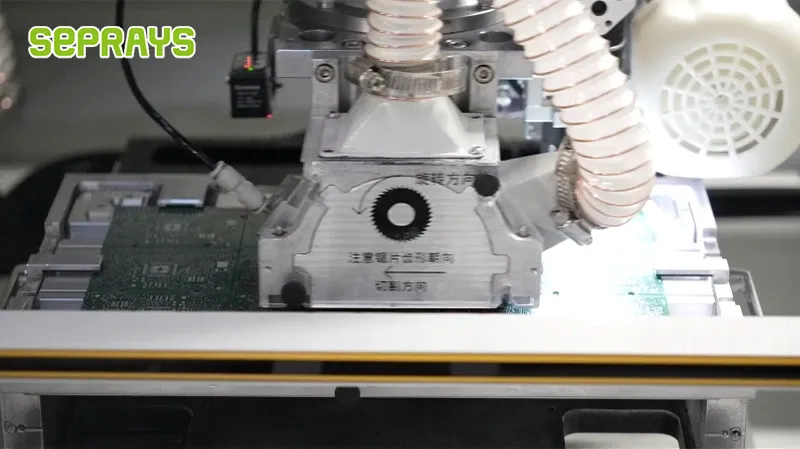
Saw blade PCB depaneling is a mechanical method used to separate individual PCBs from a larger panel. This process involves using a rotating saw blade to cut through the panel, making it a fast and straightforward way to divide the board into smaller pieces.
- Process: A saw blade cuts along the defined lines, effectively slicing through the PCB material.
- Advantages: It’s fast, reliable, and can handle a wide range of PCB types.
- Limitations: Saw blades can create mechanical stress, leading to potential edge damage or component shifting.
🔄 Speed in PCB Depaneling: Is Saw Blade Still King?
When it comes to mass production, speed is a critical factor. But speed isn’t the only thing that matters—reliability, precision, and quality also play a role. Let’s compare saw blade depaneling to other methods to determine whether it’s still the fastest in terms of overall efficiency.
1. Saw Blade Depaneling
- 속도: Generally fast and effective for high-volume production. The rotating saw blade cuts through the PCB in a continuous motion, allowing for consistent throughput.
- Best for: Medium to high-volume production runs, particularly when cost and speed are prioritized over precision.
2. Laser Depaneling
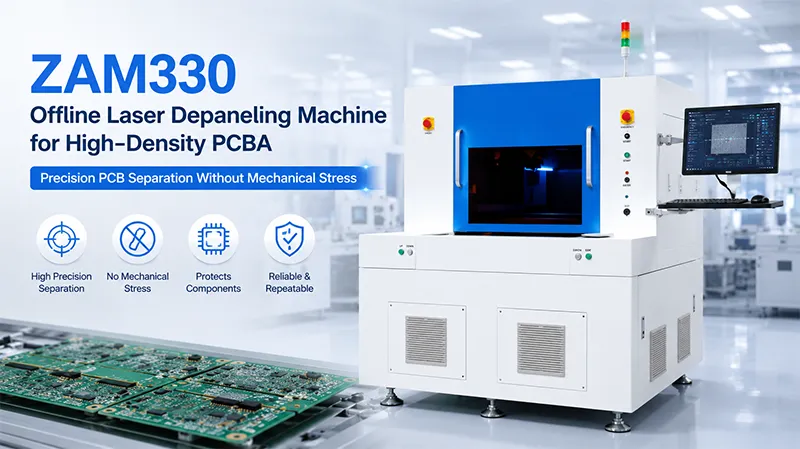
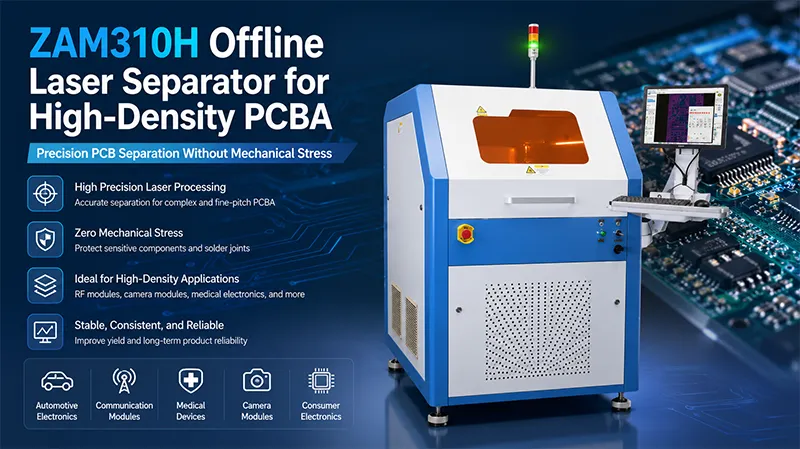
- 속도: Lasers can be fast, but they are often slower than saw blades for simple cuts. However, they offer higher precision and reduce the risk of mechanical stress.
- Best for: High-density boards, sensitive components, and complex geometries.
3. Router Depaneling
- 속도: Routers are typically slower than saw blades but offer more control and precision, especially for high-density or irregular-shaped PCBs.
- Best for: High-precision tasks and small to medium-sized production runs.
4. V-Groove Depaneling
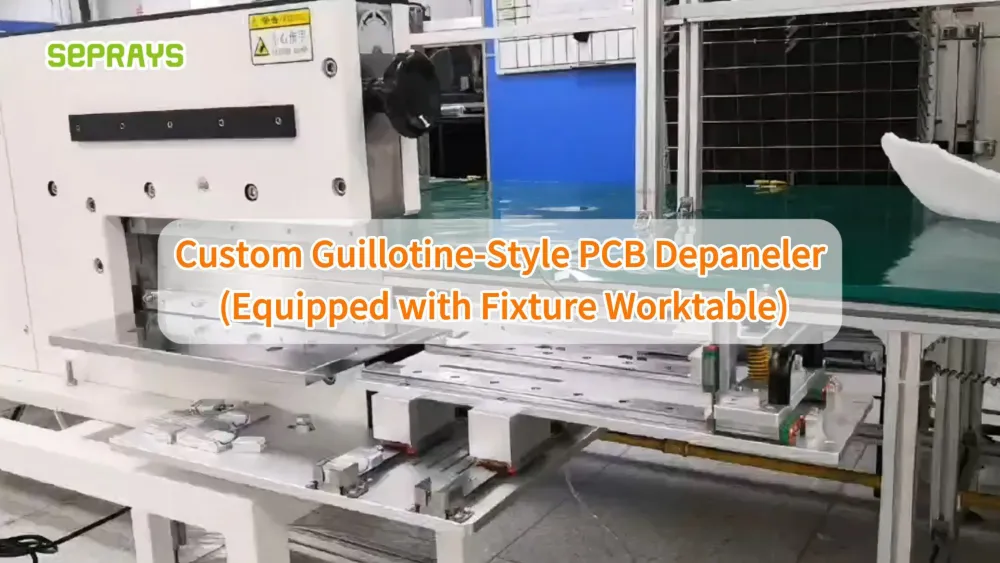
- 속도: This method involves scoring the board along predefined lines, making it fast but generally limited to simpler designs and pre-scored panels.
- Best for: Low-cost, simple applications, and when cost is the primary concern.
⚙️ Advantages and Disadvantages of Saw Blade Depaneling
✅ Advantages of Saw Blade Depaneling
- 속도: Saw blades remain one of the fastest methods for cutting through PCBs, making them ideal for high-volume production.
- Low Setup Cost: Compared to lasers and other precision methods, saw blades come with a relatively low initial investment.
- Versatility: Saw blades can handle a wide range of PCB thicknesses and materials, making them versatile for various production runs.
❌ Disadvantages of Saw Blade Depaneling
- Mechanical Stress: The physical cutting process can create stress on the PCB, leading to potential issues like warping or micro-cracks.
- Edge Damage: Saw blades can leave rough edges, which might require additional post-processing.
- Limited Precision: Saw blade depaneling doesn’t offer the same level of precision as laser or router methods.
📊 Comparing Speed and Efficiency of Depaneling Methods
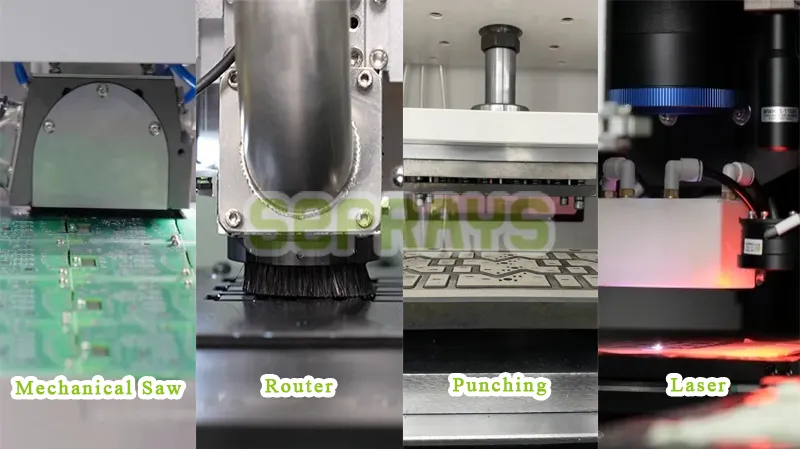
Let’s take a look at a comparison chart that outlines the speed, cost, and other relevant factors for different depaneling methods:
| Method | 속도 | 정밀 | Cost (Initial) | Best Use Case |
|---|---|---|---|---|
| Saw Blade | High | Low | Low | High-volume, general boards |
| Laser | 중소 | Very High | High | High-density, fine-pitch boards |
| Router | 중소 | High | 중소 | High-precision, mixed production |
| V-Groove | Very High | Low | Low | Simple designs, low-cost production |
💡 Is Saw Blade Depaneling Still the Fastest?
The answer depends on your production needs. For mass production of general PCBs that do not require fine precision, saw blade depaneling remains one of the fastest options. However, if your boards require higher precision or you’re dealing with more complex designs, laser or router depaneling might be better suited, despite being slightly slower.
- For Simple Boards: Saw blade depaneling is still the fastest and most cost-effective.
- For High-Density or Sensitive Boards: Laser depaneling might be a better choice, even though it could be slower for simpler cuts.
🧩 Case Study – The Impact of Saw Blade Depaneling in Mass Production
One manufacturer specializing in consumer electronics was facing production delays. Their existing depaneling method was slow, leading to a backlog of orders.
Challenges:
- Slow throughput during peak production times
- Increasing customer demand for quicker turnaround
- Rising labor costs due to manual interventions
Solution:
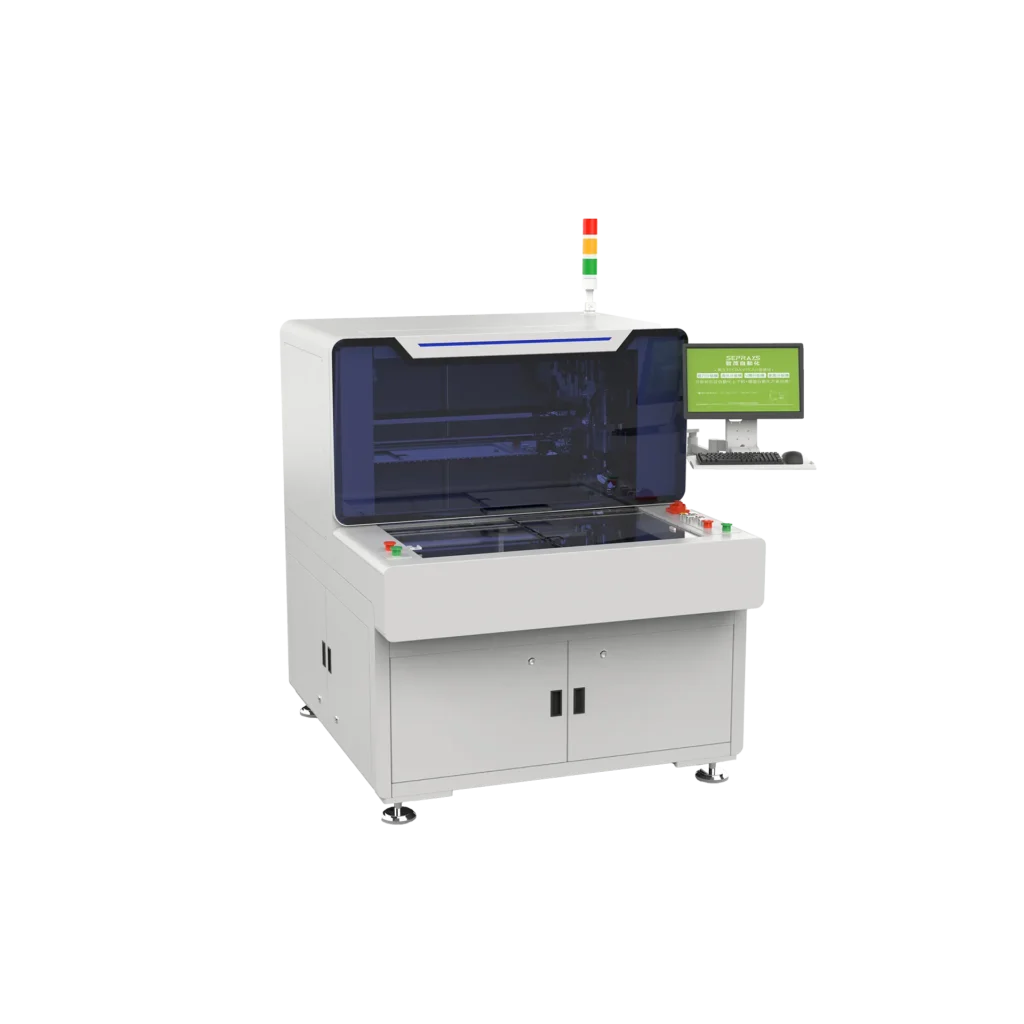
They switched to Seprays’ saw blade depaneling solution, optimized for high-volume production runs. The system significantly increased throughput without compromising board quality.
Results:
- 30% faster processing time
- Reduced labor costs and operator errors
- Improved production flow
In this case, saw blade depaneling proved to be the best method to meet high-volume production needs.
💰 Cost Analysis – Is Saw Blade Depaneling Still the Most Cost-Effective?
Cost-effectiveness in PCB depaneling isn’t just about speed—it’s about balancing the total cost of ownership with the benefits provided.
- Initial Investment: Saw blades are typically the most affordable option compared to lasers or routers, making them accessible for manufacturers with tight budgets.
- Operational Costs: The maintenance of saw blades is relatively low, although frequent tool changes are needed, which can incur additional downtime.
- Post-Processing Costs: Saw blades may require extra steps to smooth edges, which adds to the overall cost.
For high-volume, straightforward PCB designs, saw blades are still one of the most cost-effective choices. However, as production complexity grows, additional investments in precision methods might yield better long-term returns.
🏆 Why Choose Seprays Group?
Seprays Group has been dedicated to PCB/FPC depaneling technology, providing a full range of solutions — including milling cutter depanelers, laser depanelers, V-groove depanelers, punching depanelers, and automated handling systems.
Our equipment is trusted by leading manufacturers such as Foxconn, Flextronics, State Grid, Luxshare, Compal, Wistron, China Electronics, Quanta, CRRC, China Aerospace, OPPO, ZTE, and Bosch. Our solutions are tailored to meet the unique needs of high-volume production environments, ensuring optimal performance, reduced costs, and maximum efficiency.
Feel free to contact us for advice on selecting the right depaneling method for your production needs.
WhatsApp: +8618929266433
이메일: sales@seprays.com
❓ FAQ
1. What is saw blade PCB depaneling?
It is a mechanical process that uses a rotating saw blade to separate PCBs from a larger panel.
2. Is saw blade depaneling still the fastest method?
Yes, for simple and high-volume production runs, saw blades remain one of the fastest methods.
3. What are the limitations of saw blade depaneling?
It can cause mechanical stress, leaving rough edges that may require additional post-processing.
4. How does saw blade depaneling compare to laser depaneling?
While laser depaneling offers higher precision, saw blade depaneling is faster and more cost-effective for simpler, high-volume applications.
5. Why should I choose Seprays for depaneling?
Seprays provides a comprehensive range of depaneling solutions tailored to meet the specific needs of your production, ensuring faster, more efficient, and cost-effective manufacturing.