.png)
 Korean
  English
  Spanish
  Japanese
  Russian
  Chinese
From Seprays Group to the World: Happy Lantern Festival and Warm Wishes for the Year Ahead
🏮 Lantern Festival The Lantern Festival marks a moment of reunion and reflection at the first full moon of the lunar year. On this special day,we eat glutinous rice balls (Tangyuan) 🥣 — a symbol of unity and completeness,and watch beautiful lanterns ✨ lighting up the night with hope and joy. At Seprays Group, we believe shared traditions help connect people across cultures and borders. May the full moon bring yousweetness, warmth, and togetherness,and may the year ahead be filled with clarity, progress, and success. 🌕 Happy Lantern Festival! WhatsApp: +8618929266433 E-mail: sales@seprays.com
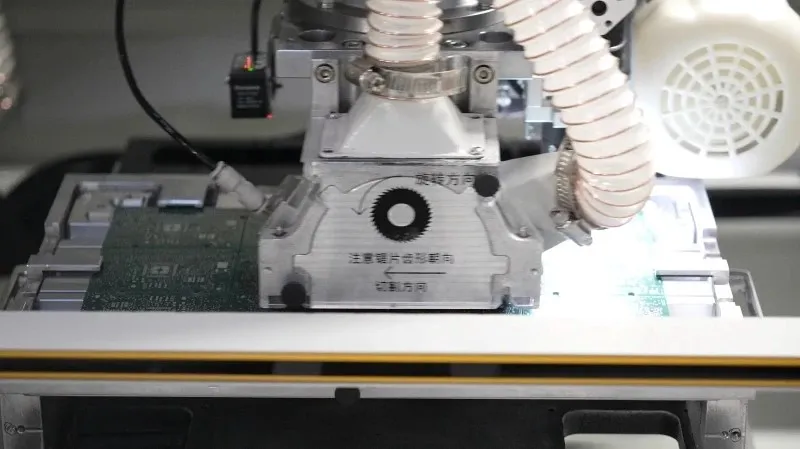
How Accurate Is PCB Saw Depaneling?
This is one of the first questions engineers ask when evaluating depaneling methods for volume production. Saw blade depaneling is widely used in SMT lines, especially for standard FR4 panels—but accuracy is often misunderstood. The short answer: PCB saw depaneling is accurate enough for many mass-production boards, but it has clear limits. Understanding those limits is what prevents quality issues later. 🧭 What “Accuracy” Really Means in Saw Depaneling Accuracy in saw depaneling is usually discussed in two ways: Repeatability is strong. Once operators set the parameters correctly, the machine delivers the same cut every time. Absolute accuracy, however, depends heavily on panel design, blade condition, and setup discipline. This distinction matters more than many buyers expect. ⚙️ Why Saw Depaneling Is Still Widely Used Despite newer technologies, saw depaneling remains common because it is: For products with clear V-grooves or straight separation lines, saw depaneling delivers consistent results with minimal process complexity. ⚠️ Common Pain Points Engineers Encounter Accuracy issues usually don’t come from the machine itself, but from real-world production factors: When these factors stack up, even a ±0.15 mm process can cause edge chipping or component stress. 🧠 What Saw Depaneling Does Well—and What It Doesn’t Strengths:
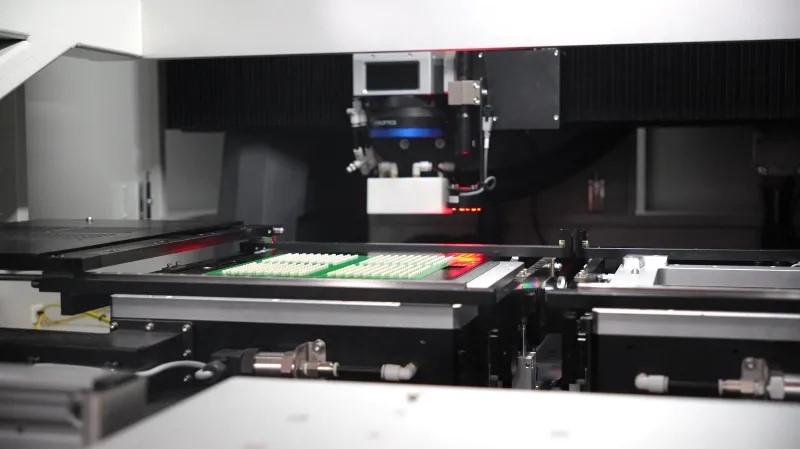
Does Laser PCB Depaneling Meet Mass Production Demands?
This question comes up frequently as electronics move toward higher density, thinner materials, and stricter reliability requirements. Laser depaneling is often associated with precision and flexibility—but can it really keep up with volume manufacturing? The short answer: yes, but only under the right conditions. This article looks at where laser depaneling works well in mass production, where it struggles, and how manufacturers are using it today. ⚡ Why Manufacturers Are Even Considering Laser Depaneling Laser PCB depaneling wasn’t originally developed for high-volume lines. It gained traction because traditional mechanical methods introduced stress, vibration, and design limitations. Today, the drivers are clear: For many engineers, the question isn’t about precision anymore—it’s about throughput and cost control. 🧠 What Laser Depaneling Actually Does Differently Unlike mechanical cutting, laser depaneling removes material using focused energy rather than force. Key technical advantages include: From a quality standpoint, this eliminates many root causes of latent failures seen in mechanical depaneling. ⚠️ Common Pain Points in Mass Production Despite its advantages, laser depaneling isn’t a universal solution. Manufacturers often worry about: In early evaluations, some lines reject laser depaneling because they compare single-pass speed, rather than overall line efficiency. This is where context matters. 💰 Cost

New Year, Full Speed: Seprays Is Back in Action
Glorious Resumption of Work · Embarking on a New Journey On the twelfth day of the first lunar month, February 28, 2026, Seprays Group officially resumed operations, marking the start of a new chapter in the year ahead. As we move into the new year, we remain committed to creating long-term value for our global clients through professionalism, reliability, and strong execution. Guided by clear goals and steady progress, we continue to turn plans into action and standards into results. Back in action. Ready for what’s next. WhatsApp: +8618929266433 E-mail: sales@seprays.com
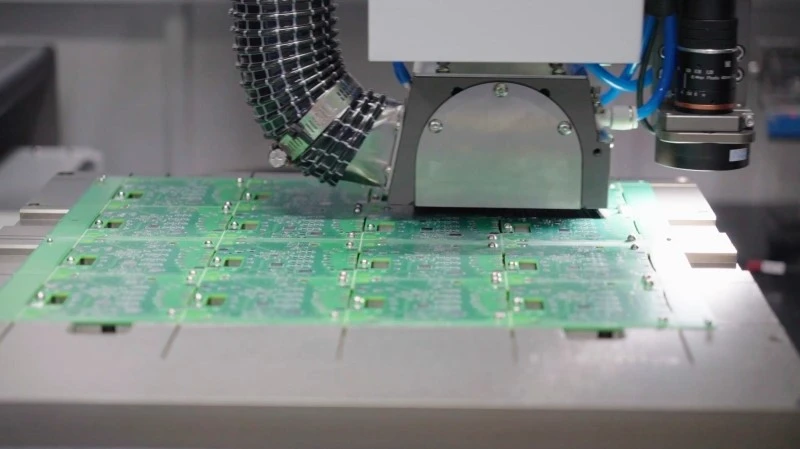
가 보았다 블레이드 구분 손상 구성 요소는?
This is one of the most common questions engineers ask when evaluating depaneling methods for high-volume SMT production. The short answer is: it depends on how the process is designed, not just the cutting method itself. Saw blade depaneling can be fast and consistent, but it also introduces mechanical forces that must be controlled carefully. In this article, we share real-world observations from production lines, discuss where risks come from, and explain when saw blade depaneling is safe—and when it isn’t. ⚙️ Where Component Damage Concerns Come From Component damage rarely comes from the saw blade alone. It usually comes from stress transfer. During depaneling, stress can be introduced through: When components are close to the cut line, even small mechanical forces can affect solder joints, MLCCs, or fine-pitch devices. The concern isn’t theoretical. Many SMT engineers have seen latent failures appear weeks later, traced back to depaneling stress rather than assembly defects. 🔍 What Actually Happens During Saw Blade Depaneling Saw blade depaneling works by cutting along a pre-designed V-groove. This allows continuous, high-speed separation, making it popular for mass production. However, the blade applies: If the PCB is thin or densely populated, that force has nowhere to go—except

Seprays|중국의 신년 휴일을 일정 및 장비를 종료하고 유지 보수 알림
2026 Chinese New Year Holiday Schedule Dear Customers and Partners, In celebration of the 2026 Spring Festival, Seprays will observe a holiday break during the following period. Holiday Schedule• February 15 – February 27, 2026• Regular operations resume on February 28, 2026 We wish you a joyful Chinese New Year and a happy Year of the Horse. Important Notice for Equipment During the Holiday To ensure equipment safety and long-term stability during the extended shutdown, please complete the following checks before the holiday. No.1* Equipment Cleaning Clean all workpieces, fixtures, electrical cabinets, and residual debris inside the machine.Wipe the external panels to keep the equipment clean and dust-free. No.2* Anti-Rust Protection After cleaning the worktable, apply anti-rust oil evenly.Run the machine at low speed for about 1 hour to fully lubricate linear guides, ball screws, and sliding components. No.3* Power-Off and Axis Reset Turn off the power and air supply.Return the X / Y / Z axes to the home position. No.4* Moisture and Water Protection Recommended storage conditions:Temperature: 24 ± 2°CHumidity: 60% ± 10% RH Please ensure proper moisture-proof and water-proof protection. No.5* Rodent Prevention Ensure the equipment is well sealed.Take necessary anti-rodent measures to prevent cable damage. Thank


