.png)
 Russian
  English
  Spanish
  Japanese
  Korean
  Chinese
This is a common question when manufacturers start using laser depaneling seriously, not just as a lab tool. Both options work. The real issue is where they fit best in your production flow.
This article shares practical experience from real SMT lines, not ideal diagrams.
🔍 What “Inline” and “Offline” Really Mean
Before comparing, it helps to be clear.
Inline laser depaneling
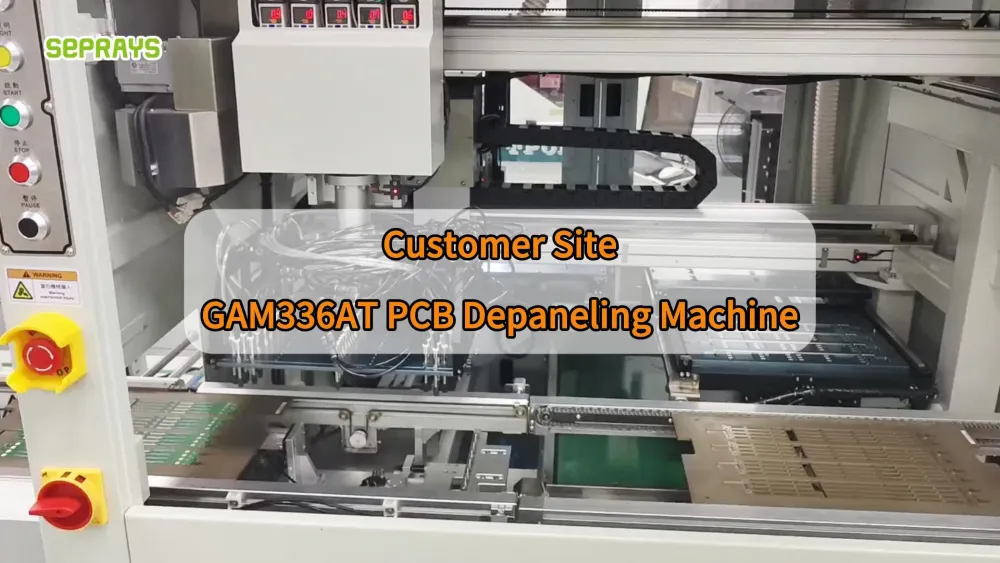
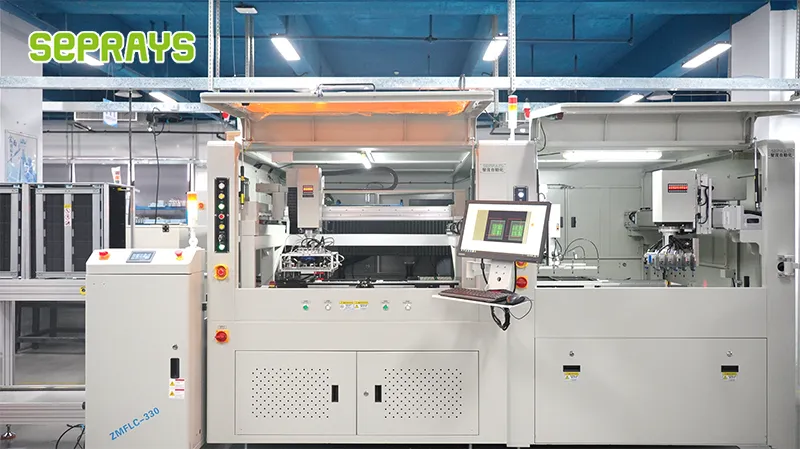
The depaneling system is connected directly to the SMT line. Panels move automatically from upstream processes and continue downstream without manual handling.
Offline laser depaneling
Panels are loaded manually or via a standalone loader. The machine works independently of the SMT line.
The laser technology may be similar. The production logic is not.
⚠️ The Real Pain Points Behind This Decision
Most teams don’t ask this question without pressure.
Common triggers include:
- Yield loss caused by mechanical stress
- Bottlenecks after reflow
- Labor shortages
- Traceability requirements from customers
- Increasing product mix complexity
Choosing inline or offline is usually about risk control, not just automation level.
🧠 When Inline Laser Depaneling Makes Sense
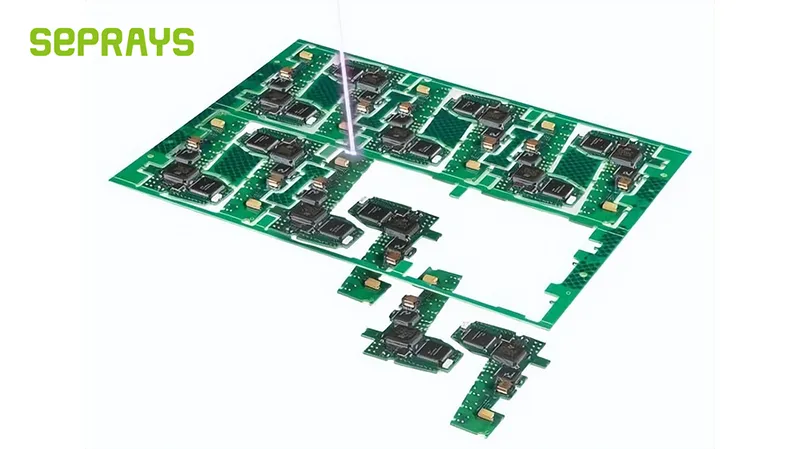
Typical inline use cases:
- High-volume, stable products
- Automotive or medical electronics
- Strict traceability requirements
- Fully automated SMT lines
Inline systems reduce:
- Human handling
- Panel mix-ups
- Process variation between shifts
They also make depaneling part of the controlled production chain, rather than a side process.
💰 Inline Systems: The Cost Reality
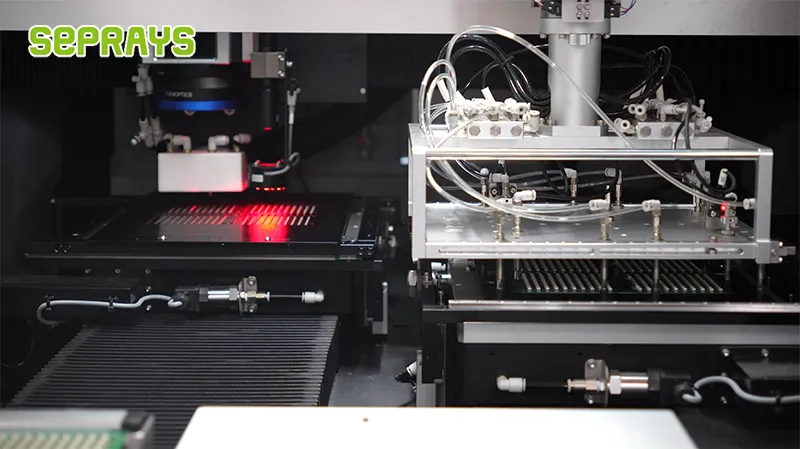
Inline laser depaneling requires:
- Higher initial investment
- Line layout planning
- Integration time
But it saves on:
- Labor per unit
- Rework caused by handling damage
- Quality escapes that are hard to trace
For stable, long-running projects, the cost per board often drops over time.
🧩 Where Offline Laser Depaneling Still Wins
Offline laser depaneling is not “lower level.”
In many factories, it is the smarter choice.
Offline is ideal when:
- Product types change frequently
- Batch sizes are small or medium
- Prototyping and NPI are frequent
- Floor space is limited
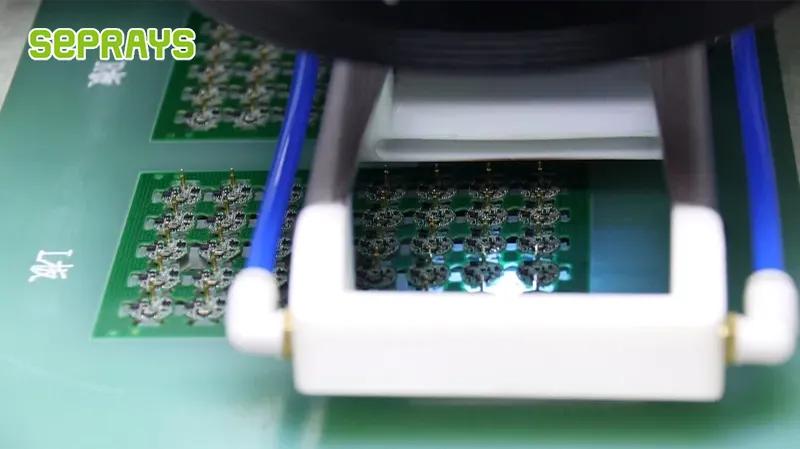
Offline systems offer flexibility. Engineers can adjust programs quickly without stopping the main SMT line.
🔄 Flexibility vs. Flow: A Practical Trade-Off
Inline favors:
- Flow stability
- Predictability
- Automation consistency
Offline favors:
- Engineering agility
- Fast changeovers
- Shared use across products
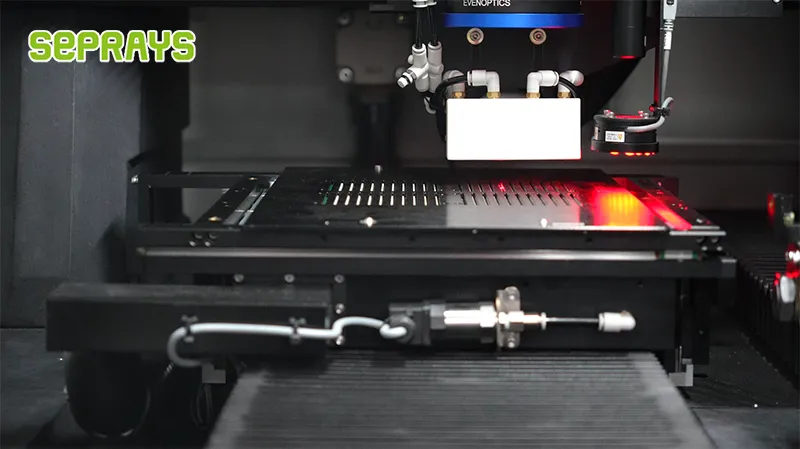
Neither is better by default. The wrong choice can create new bottlenecks.
🧪 A Field Example from Production
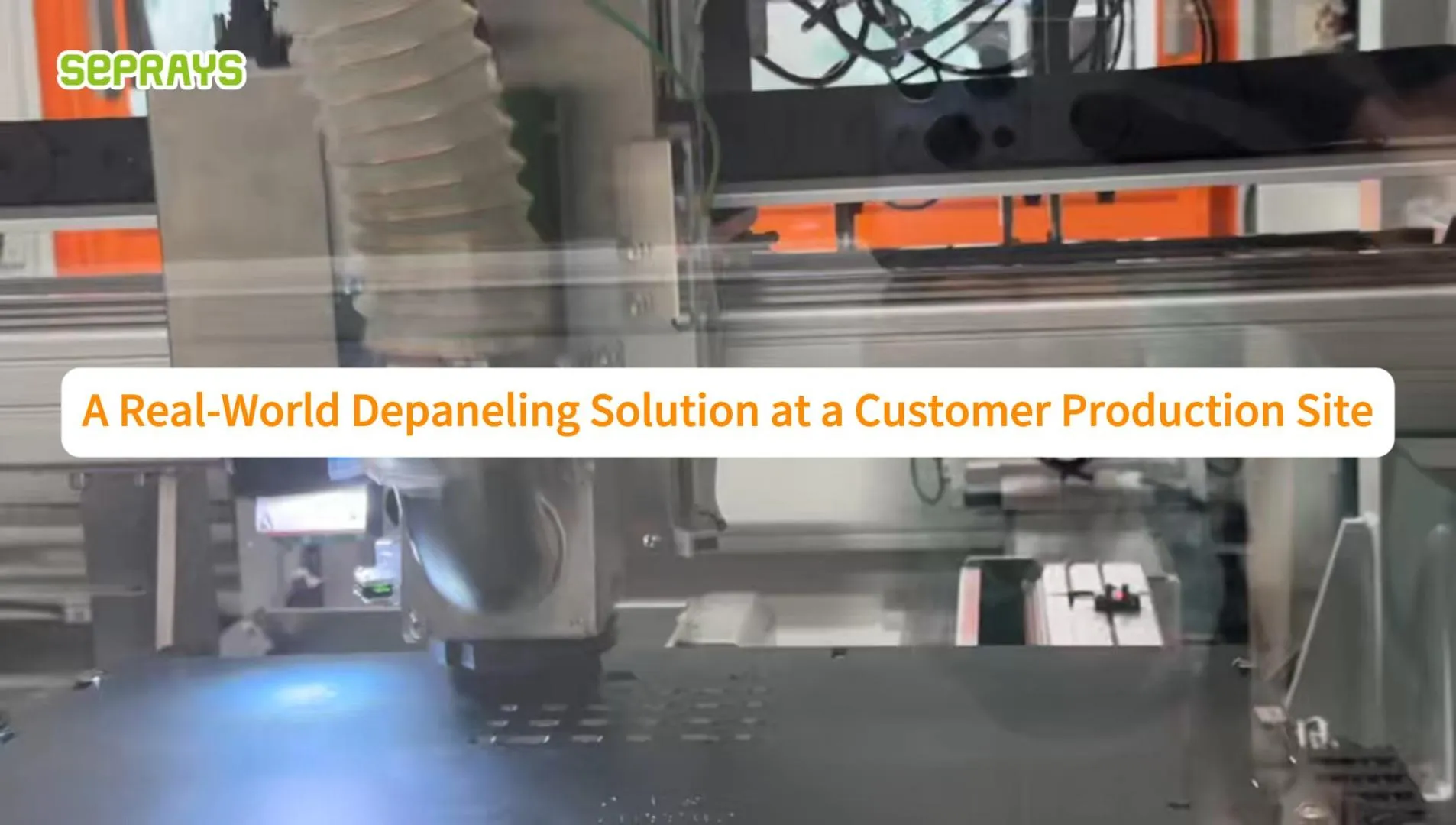
In one industrial electronics project supported by Seprays Group, a customer initially planned a fully inline laser depaneling setup.
After review:
- The product mix was high
- Batch sizes varied daily
- Engineering changes were frequent
The solution was a hybrid approach:
- Offline laser depaneling for NPI and mixed products
- Inline depaneling is reserved for one stable, high-volume model
This reduced downtime and avoided unnecessary integration costs.
📊 Comparing Inline and Offline at a Glance
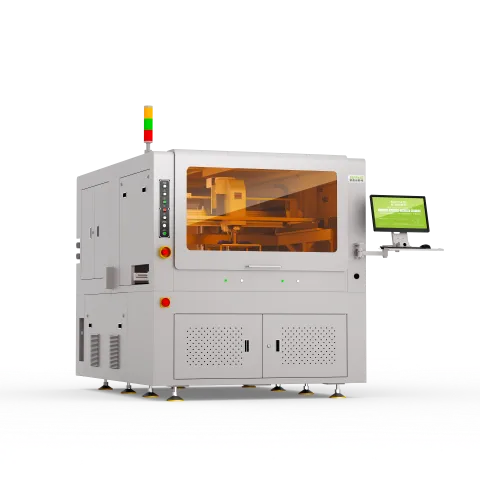
Inline laser depaneling
- Best for stable, high-volume lines
- Strong traceability
- Minimal handling
- Higher upfront cost
Offline laser depaneling
- Best for mixed production
- Easier to manage changeovers
- Lower integration risk
- Slightly higher labor involvement
💬 The Question You Should Actually Ask
Instead of asking:
“Inline or offline — which is better?”
Ask:
- How stable is my product mix?
- How often do programs change?
- Where do my current bottlenecks come from?
- What failures would be hardest to trace later?
The right answer depends on your production behavior, not industry trends.
🔧 Practical Selection Guidelines
Choose inline laser depaneling if:
- The product will run for months or years
- Automation consistency is critical
- Traceability is mandatory
Choose offline laser depaneling if:
- Flexibility matters more than speed
- Engineering changes are frequent
- One machine must serve multiple lines
Many advanced factories use both, each where it fits best.
⭐ Why Choose Seprays Group?
Seprays Group helps manufacturers decide where laser depaneling belongs in their real production flow—inline, offline, or hybrid. With experience across different SMT environments, Seprays focuses on reducing long-term risk, not just adding automation.
If you are evaluating inline or offline laser PCB depaneling for your line, please contact us for a practical, engineering-level discussion.
WhatsApp: +8618929266433
Электронная почта: sales@seprays.com