.png)
 Russian
  English
  Spanish
  Japanese
  Korean
  Chinese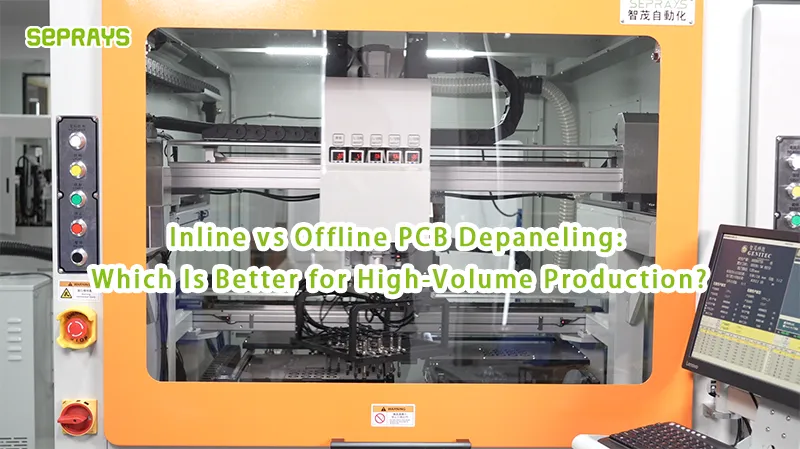
Inline vs offline PCB depaneling is a decision many factories face when production starts scaling. At low volume, both seem workable.
But once output increases, the difference becomes obvious.
Boards begin to queue.
Operators struggle to keep pace.
And small inefficiencies turn into real costs.
So which approach is actually better for high-volume production?
🔍 What Inline and Offline Really Mean on the Shop Floor
Before comparing, it helps to define them clearly.
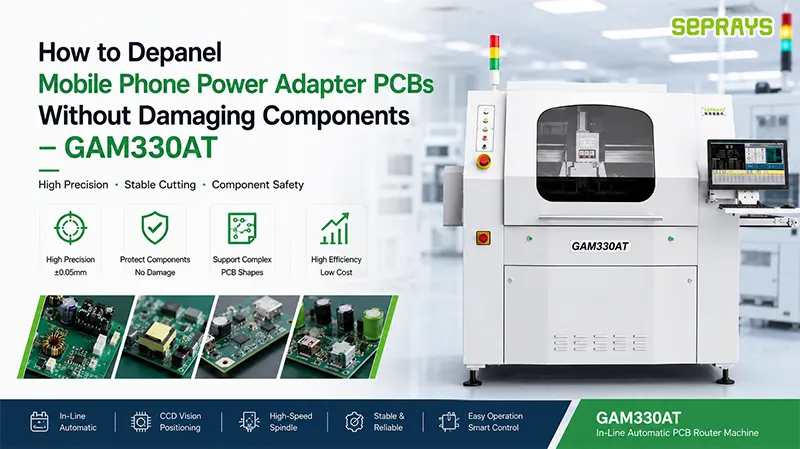
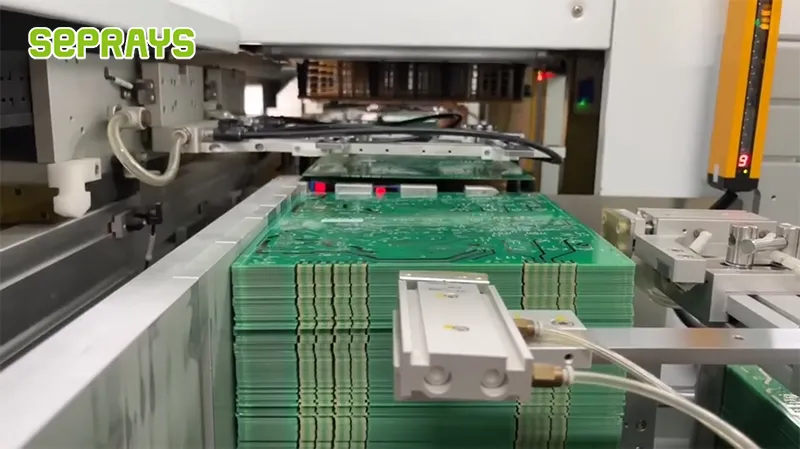
- Inline depaneling
Connected directly to the SMT line.
Boards move automatically via conveyors. - Offline depaneling
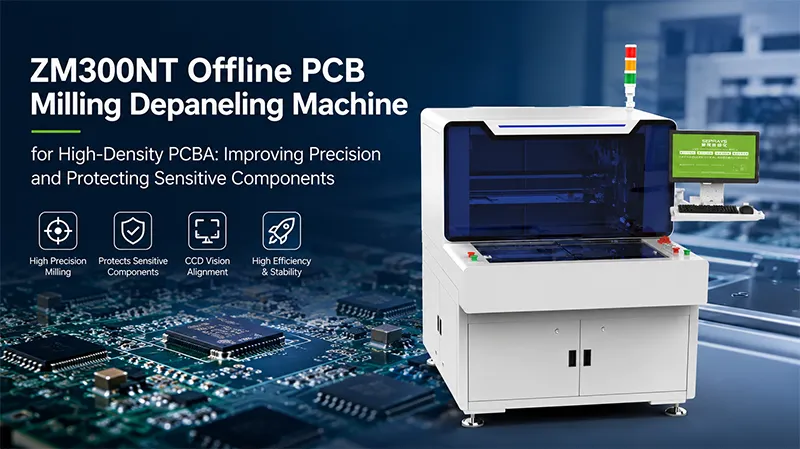
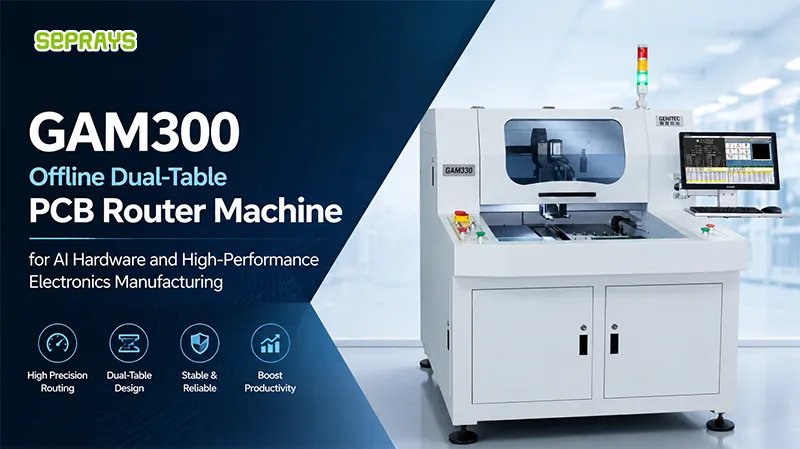
Standalone machines.
Boards are manually loaded and unloaded.
Both are widely used.
But they serve different production realities.
⚙️ The Real Goal in High-Volume Production
High-volume manufacturing is not just about speed.
It is about:
- Continuous flow
- Stable output
- Predictable cycle time
Any interruption reduces efficiency.
This is where the difference between inline and offline becomes critical.
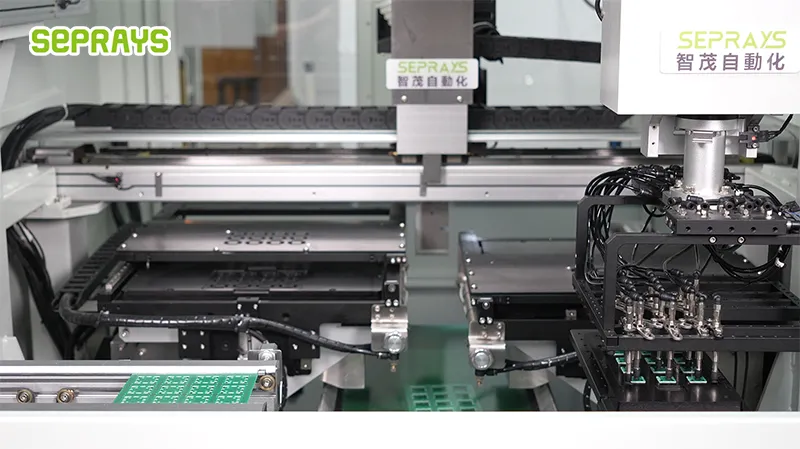
💥 Where Offline Depaneling Starts to Struggle
Offline systems work well at the beginning.
But at scale, issues appear:
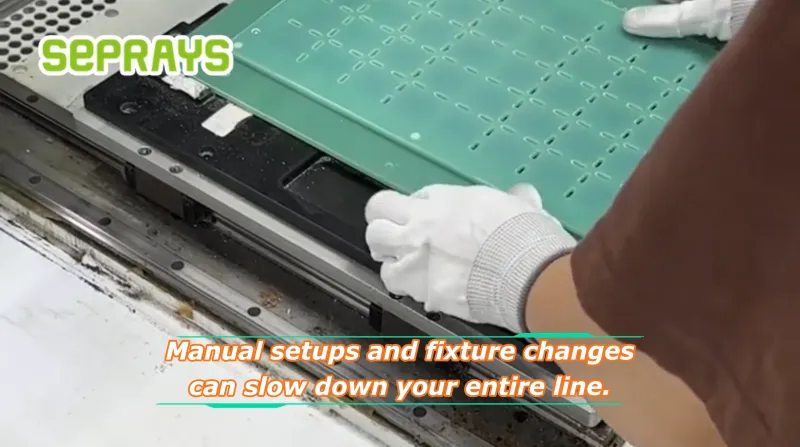
1. Manual Handling Bottlenecks
- Operators must load/unload boards
- Fatigue leads to inconsistency
- Throughput depends on human speed
2. Line Imbalance
- The SMT line runs faster than the depaneling
- Boards accumulate between processes
- Production flow becomes uneven
3. Higher Labor Cost
- More operators required
- Training and turnover impact efficiency
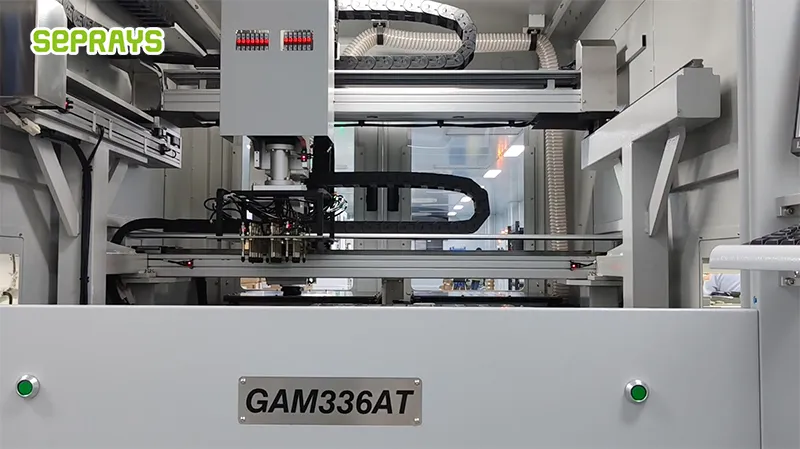
⚡ Why Inline Depaneling Gains Advantage
Inline systems are designed for flow.
Key benefits:
- Automatic board transfer
- No waiting between processes
- Reduced manual intervention
The result:
Stable and continuous production.
💡 A Counterintuitive Insight
Many assume:
“Offline is more flexible, so it’s safer.”
But in high-volume production:
- Flexibility without flow = inefficiency
Inline systems may seem less flexible.
But they often deliver better overall performance when volume is stable.
📊 Inline vs Offline — Practical Comparison
| Factor | Offline Depaneling | Inline Depaneling |
|---|---|---|
| Production Flow | Interrupted | Continuous |
| Labor Requirement | High | Low |
| Throughput Stability | Variable | Consistent |
| Flexibility | High | Medium |
| Initial Investment | Lower | Higher |
| Long-Term Efficiency | Medium | High |
🧩 When Inline Depaneling Makes the Most Sense
From real production scenarios, inline systems are ideal when:
1. High-Volume Production
- Large batch sizes
- Stable product models
2. Fully Integrated SMT Lines
- Conveyor-based workflow
- Minimal buffering
3. Tight Cycle Time Requirements
- Need for consistent takt time
- No room for delays
4. Labor Constraints
- Limited workforce
- High labor cost environment
🔄 When Offline Still Has an Advantage
Inline is not always the answer.
Offline systems are better when:
- High-mix, low-volume production
- Frequent product changes
- Prototyping or small batches
In these cases:
Flexibility matters more than speed.
🧪 Case Example — Transition to Inline Production
A manufacturer producing consumer electronics PCBs faced:
- Increasing order volume
- SMT lines running faster than the depaneling
- Operator fatigue and inconsistency
Initial setup:
- Offline routing machines
Problems:
- Bottlenecks at the depaneling stage
- Uneven production flow
- Rising labor costs
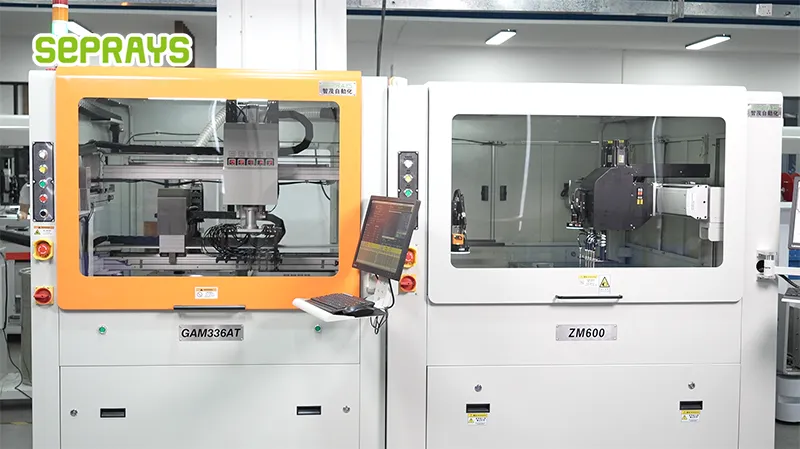
After working with Сепреи, they implemented inline depaneling systems:
- Integrated with the SMT conveyor
- Automated board transfer
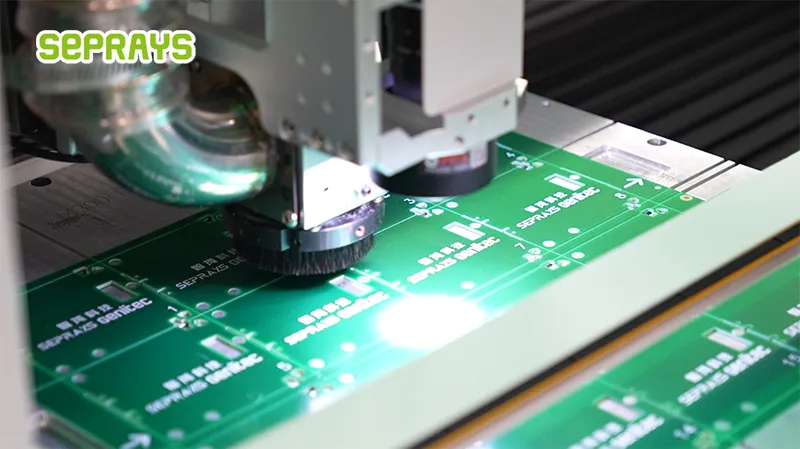
- Vision alignment for accuracy
Results:
- Continuous production flow
- Reduced labor dependency
- Improved output consistency
The key improvement was not just speed.
It was synchronization.
💰 Cost Perspective — What Really Matters
Inline systems require higher upfront investment.
But they reduce:
- Labor cost
- Downtime
- Production imbalance
- Scrap due to handling errors
In high-volume production, these savings add up quickly.
🛠️ Practical Decision Checklist
Before choosing online or offline, ask:
- Is your production volume stable?
- Are SMT lines already automated?
- Is depaneling a bottleneck today?
- How often do you change PCB designs?
The answers guide the right choice.
🚀 2026 Trend — Integration Over Isolation
Manufacturing is moving toward:
- Fully connected production lines
- Data-driven processes
- Reduced manual handling
Inline depaneling fits this trend.
Offline systems still exist.
But their role is shifting.
🚀Final Thought — Match the System to Your Flow
There is no universal “better” option.
- Inline = efficiency and stability
- Offline = flexibility and simplicity
For high-volume production,
Inline systems often deliver better long-term value.
🚀 Why Choose Seprays Group?
Seprays Group helps manufacturers choose between inline and offline depaneling solutions based on real production needs, ensuring the best balance between efficiency, flexibility, and cost.
With over 30 years of experience, Seprays Group has been dedicated to PCB/FPC depaneling technology, providing a full range of solutions—milling-cutter, laser, V-groove, and punching depanelers, as well as automated handling systems. Leading manufacturers, including Foxconn, Flextronics, State Grid, Luxshare, Compal, Wistron, China Electronics, Quanta, CRRC, China Aerospace, OPPO, ZTE, and Bosch, trust our equipment. It is used in factories across China and worldwide.
With strong application expertise, Seprays supports customers in designing efficient production lines, optimizing workflow, and improving long-term performance.
If you are evaluating in-line vs. offline depaneling for your production, feel free to contact us—we’re here to help.
WhatsApp: +8618929266433
Электронная почта: sales@seprays.com
❓ FAQ
1. Which is better for high-volume production, inline or offline?
Inline depaneling is generally better due to continuous production flow.
2. Is offline depaneling obsolete?
No, it is still useful for flexible, low-volume production.
3. Does inline reduce labor cost?
Yes, it significantly reduces manual handling.
4. Is inline more expensive?
Initial investment is higher, but long-term cost is often lower.
5. Can inline systems handle complex PCBs?
Yes, with proper configuration and process design.