.png)
 Russian
  English
  Spanish
  Japanese
  Korean
  Chinese
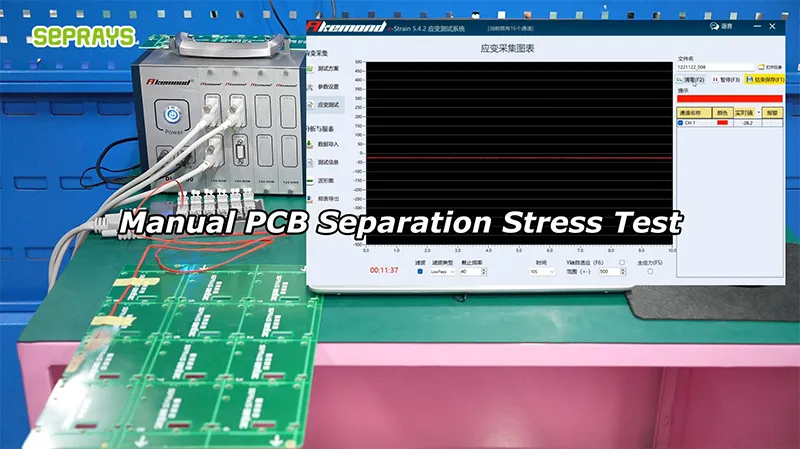
As the demand for faster, more precise, and cost-effective PCB production rises, the question of whether PCB router depaneling remains the most cost-effective method in 2026 has become increasingly relevant. In this post, we’ll explore how the PCB router depaneling method holds up in the current manufacturing landscape and compare it with newer technologies, helping you make an informed decision for your production line.
🔍 What is PCB Router Depaneling?
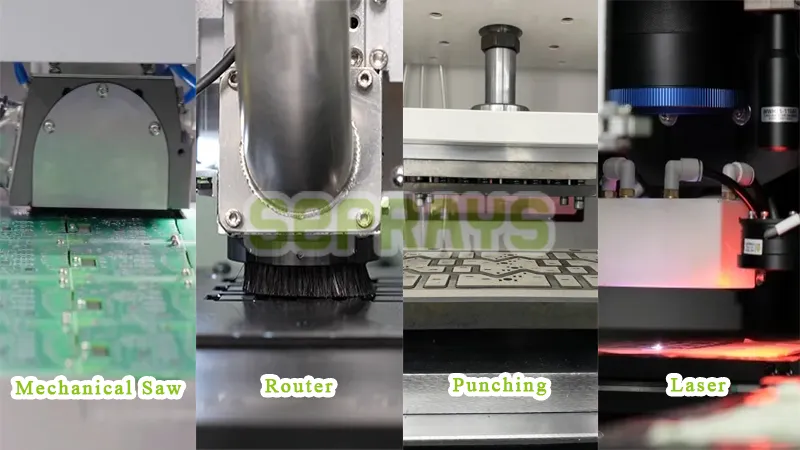
PCB router depaneling involves using a high-speed rotating cutter to separate individual PCBs from the larger panel. It’s been a staple in the industry for decades because of its versatility and cost-effectiveness for various applications, from low to medium-volume production runs.
- Process: The router bit cuts along the pre-scored lines or directly through the PCB material.
- Advantages: Low investment, relatively simple setup, and good for thick or high-density boards.
- Limitations: Can be slower compared to laser or other methods, with potential for mechanical stress.
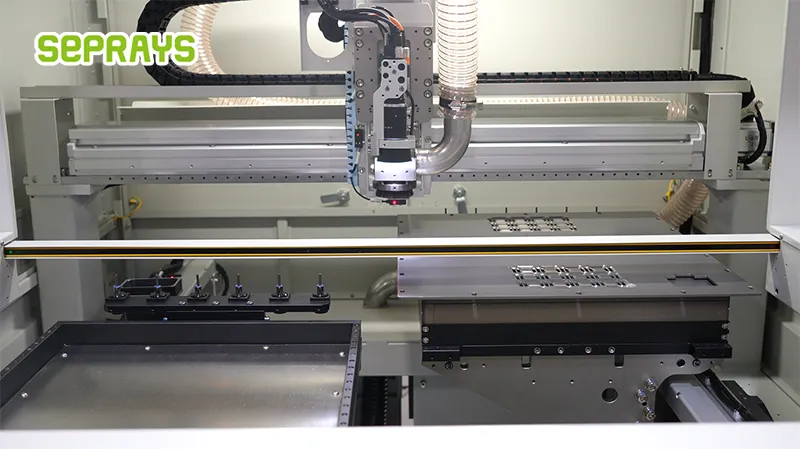
⚙️ The Cost-Effectiveness of PCB Router Depaneling in 2026
As we move into 2026, PCB router depaneling is still considered cost-effective, but the key question is, “Is it the most cost-effective?” Let’s break down its costs and compare it to other methods.
1. Initial Investment Costs
- PCB Router Depaneling: Generally requires a moderate initial investment compared to lasers or fully automated systems. However, its low-cost operation and straightforward setup keep the initial expenditure low.
- Other Methods: Laser systems, for example, have a higher upfront cost due to advanced technology, but the ROI can be higher with automation integration.
2. Operational Costs
- PCB Router Depaneling: Moderate operational costs, primarily due to the need for regular maintenance of the router bits and some downtime for tool changes.
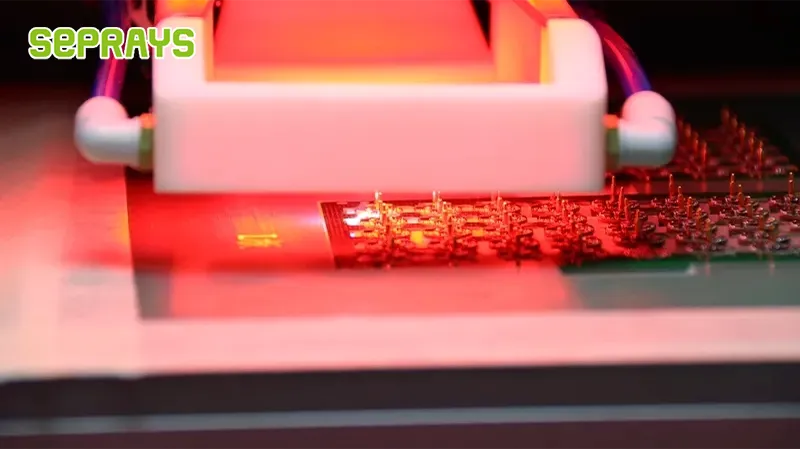
- Other Methods: Laser depaneling systems tend to have higher operational costs due to energy consumption and maintenance of the laser head, though there are no physical tools that wear out, reducing the frequency of downtime.
3. Labor Costs
- PCB Router Depaneling: Depending on the setup, labor can be a high cost. Some manual intervention may be required for setup or monitoring during the cutting process.
- Other Methods: Laser and inline automated systems typically reduce the need for manual labor, as they can operate autonomously with little oversight, making them more efficient in high-volume applications.
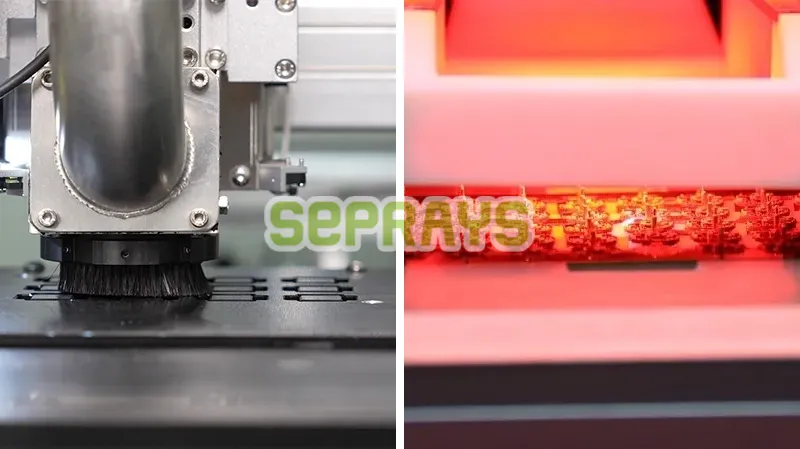
⚡ Advantages of PCB Router Depaneling in 2026
Although newer methods like laser depaneling are growing in popularity, PCB router depaneling still holds several advantages:
1. Flexibility
- PCB routers are highly versatile, capable of cutting through various PCB thicknesses and materials.
- Use Case: Whether it’s FR4 or other composite materials, routers handle a wide range of PCBs effectively, making them ideal for mixed production environments.
2. Proven Reliability
- This method has been used in the industry for years, with well-established workflows, making it a reliable choice for many manufacturers.
- Use Case: Many industries that require dependable depaneling, such as automotive or industrial electronics, still rely on PCB routers.
3. Affordable for Small to Medium Runs
- PCB routers are often the most cost-effective option for smaller-scale production or prototyping, where the investment in higher-end equipment isn’t justified.
- Use Case: Companies running small batches of custom PCBs or prototypes often choose routers for their affordability and ease of setup.
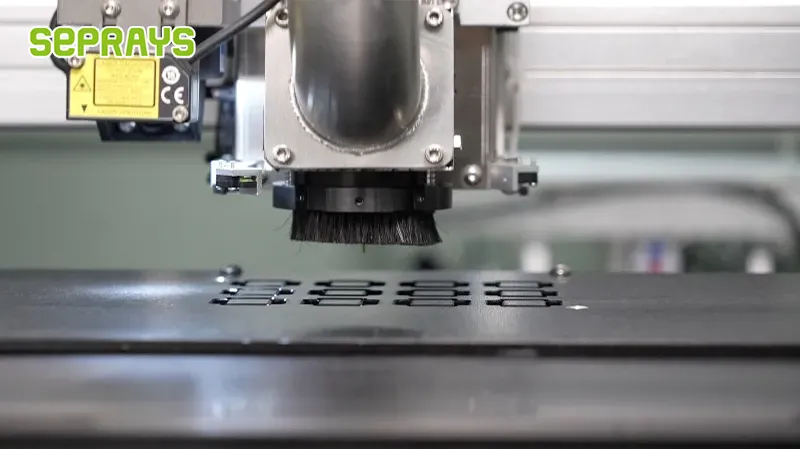
📊 Comparing PCB Router Depaneling with Laser and Other Methods
To understand whether PCB router depaneling is still the best option, let’s look at a side-by-side comparison with other popular depaneling methods in 2026.
| Feature | PCB Router Depaneling | Laser Depaneling | V-Groove Depaneling | Punching Depaneling |
|---|---|---|---|---|
| Initial Investment | Moderate | High | Low | Moderate |
| Operational Costs | Moderate | High | Low | Moderate |
| Throughput | Moderate | High | Low | High |
| Precision | High | Very High | Medium | Low |
| Best Use Case | Mixed production runs | High-density PCBs | Pre-scored PCBs | Simple designs |
💥 Is It Still the Most Cost-Effective Option?
While PCB router depaneling still offers a high ROI for certain applications, it’s not necessarily the most cost-effective for all situations, especially when considering:
- Scale: For high-volume production runs, laser depaneling or automated inline systems might provide a lower cost per unit in the long run.
- Precision: Laser systems offer greater precision, especially for high-density, fine-pitch, or flex PCBs, reducing scrap and improving yields.
🧩 Case Study — Real-World Impact of Router Depaneling
A leading electronics manufacturer producing automotive control systems faced challenges in keeping production costs down while ensuring high-quality outputs.
Challenges:
- The need for precision cutting
- High labor costs associated with manual processes
- Production bottlenecks
Solution:
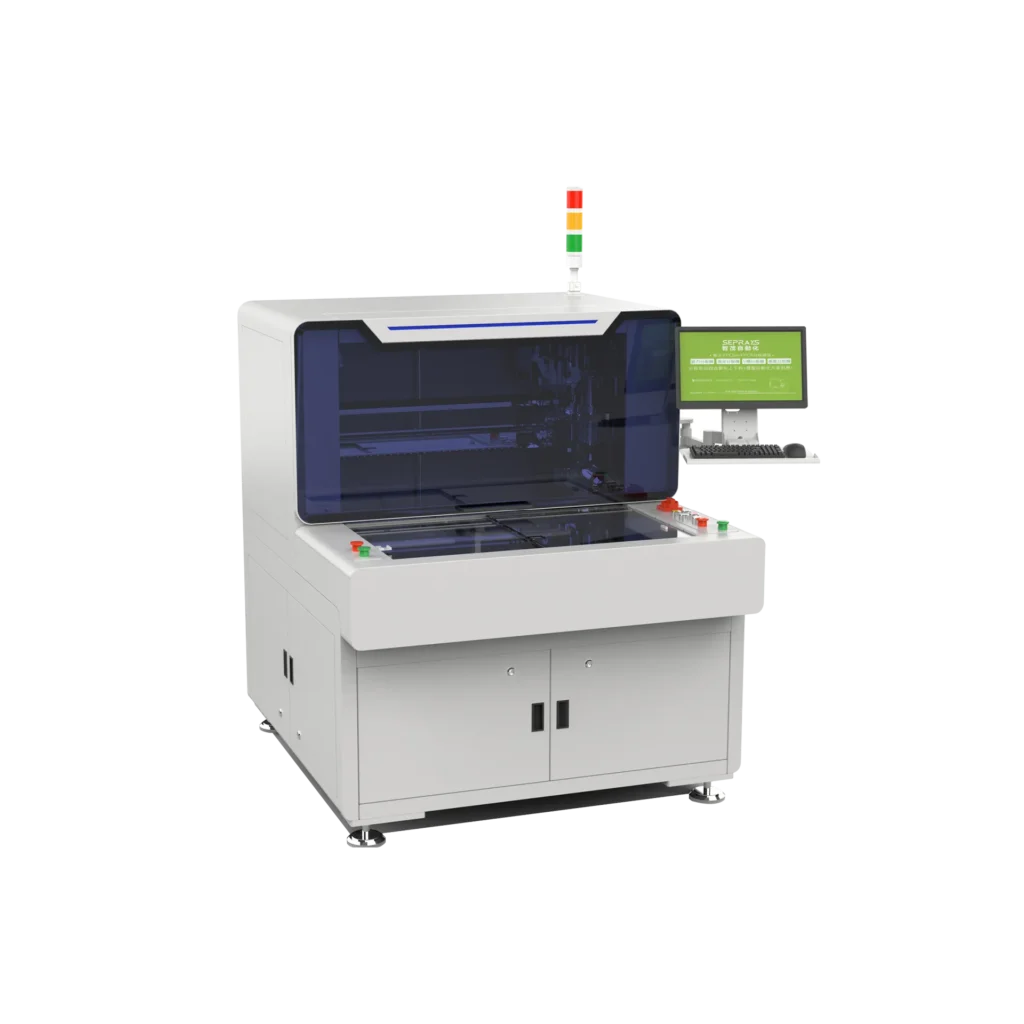
They implemented Seprays’ PCB router depaneling solution, optimizing tool paths and automating most of the manual processes.
Results:
- 20% reduction in labor costs
- Consistently high-quality PCBs
- Improved throughput despite high-mix production
💰 Cost vs. Value: When to Choose PCB Router Depaneling
PCB router depaneling remains the most cost-effective method when:
- Production is mixed: If you’re dealing with a variety of designs, router depaneling offers flexibility without requiring complex setups.
- Small to medium volumes: The initial investment for routers is relatively low, making them ideal for companies not yet ready to commit to more expensive laser systems.
- Precision isn’t the utmost priority: For most PCB types that don’t require laser-level precision, routers provide a reliable, cost-efficient solution.
🔄 Why Choose Seprays Group?
Seprays Group has been dedicated to PCB/FPC depaneling technology, providing a full range of solutions — including milling cutter depanelers, laser depanelers, V-groove depanelers, punching depanelers, and automated handling systems.
Our equipment is trusted by leading global manufacturers such as Foxconn, Flextronics, State Grid, Luxshare, Compal, Wistron, China Electronics, Quanta, CRRC, China Aerospace, OPPO, ZTE, and Bosch. Our commitment to quality and innovation ensures that Seprays is a trusted partner in helping manufacturers optimize their PCB depaneling processes.
Feel free to contact us for advice on which depaneling method best suits your needs in 2026.
WhatsApp: +8618929266433
Электронная почта: sales@seprays.com
❓ FAQ
1. What is PCB router depaneling?
It is a method of separating individual PCBs from the panel using a high-speed rotating cutter.
2. Is PCB router depaneling still cost-effective in 2026?
Yes, it remains a cost-effective option, particularly for small to medium-volume production, though other methods like laser depaneling are gaining popularity for larger volumes.
3. What are the main advantages of PCB router depaneling?
Flexibility, low initial investment, proven reliability, and versatility for various PCB types are key advantages.
4. Can PCB routers handle high-density PCBs?
Yes, but for extremely fine-pitch and high-density boards, laser depaneling might be a better option for greater precision.
5. How do I decide between router depaneling and laser depaneling?
Consider production volume, required precision, and budget. Routers are better for mixed production runs, while lasers excel in high-density, fine-pitch applications.