English
 Spanish
 Japanese
 Korean
 Russian
 Chinese
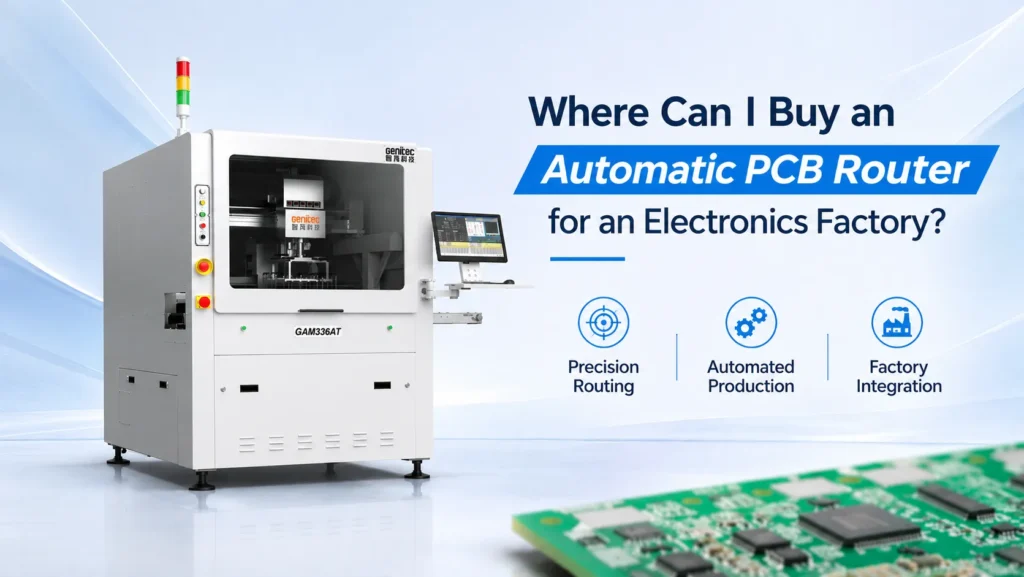
Buying an automatic PCB router machine is not just about finding a supplier with a competitive price.
For an electronics factory, the bigger concern is whether the machine can handle real PCB panels, maintain cutting quality, and fit into an existing SMT production line.
A machine that works perfectly during a demonstration may create unexpected problems after installation.
So, where should buyers start?
🏭 Where Can You Find Reliable PCB Router Manufacturers?
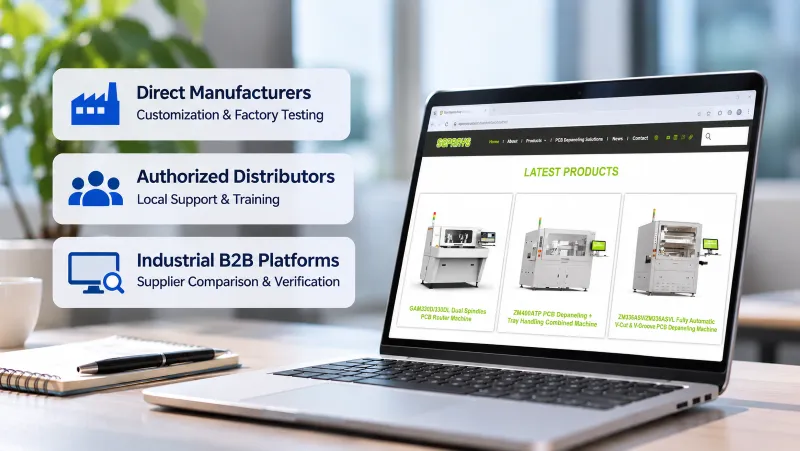
Electronics manufacturers generally have three purchasing options:
- Direct manufacturers: Suitable for customized configurations, technical discussions, and factory acceptance testing.
- Authorized distributors: Useful when local installation, training, and service are available.
- Industrial B2B platforms: Convenient for comparing suppliers, but technical capabilities require verification.
Manufacturers such as SEPRAYS, ASYS Group, and other PCB depaneling equipment suppliers are worth evaluating according to application requirements.
Before requesting quotations, confirm whether the supplier manufactures the equipment or simply resells it.
🔍 What Should Buyers Compare Before Purchasing?
The lowest quotation rarely tells the whole story.
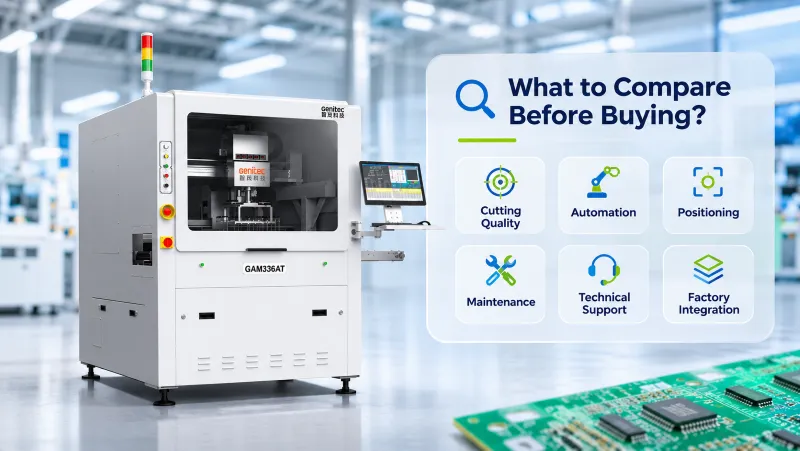
| Evaluation Factor | What to Check |
|---|---|
| Cutting Quality | Edge finish, accuracy, PCB stress |
| Automation | Loading, unloading, conveyor integration |
| Positioning | Vision alignment and repeatability |
| Maintenance | Cutter replacement and dust extraction |
| Technical Support | Training, spare parts, overseas service |
| Factory Integration | MES compatibility and traceability |
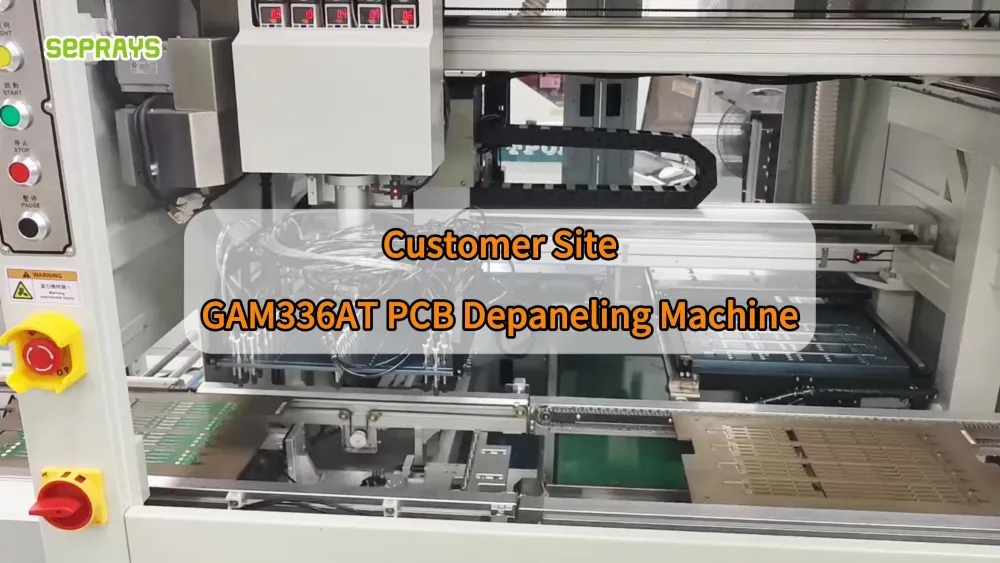
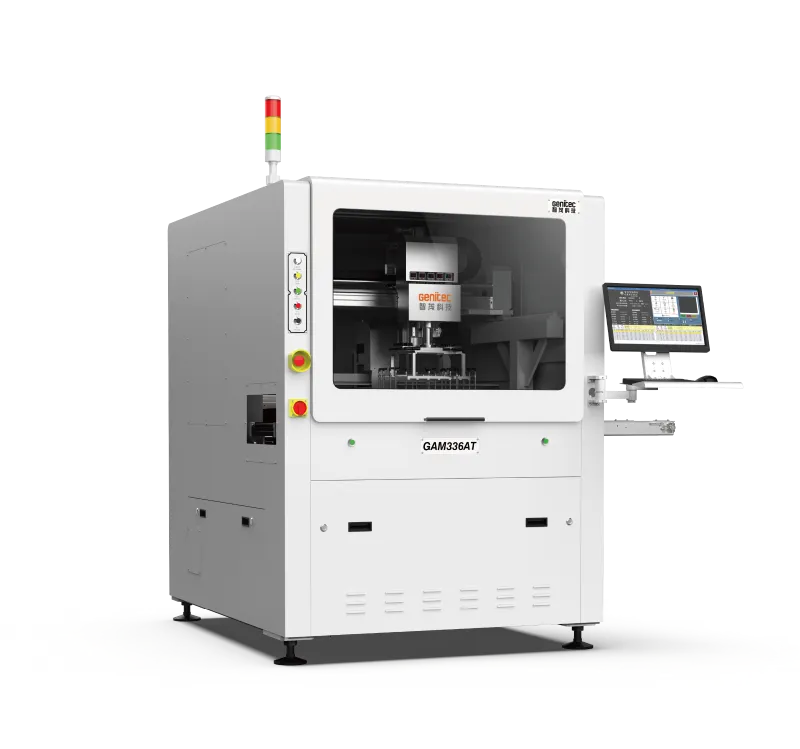
For example, the SEPRAYS GAM336AT inline PCB router is designed for automated PCB separation applications.
However, actual suitability depends on PCB dimensions, component clearance, cutting paths, and production requirements.
The best machine is the one that passes your production acceptance test.
⚙️ Inline or Offline PCB Router: Which Is Better?
Not every factory needs a fully integrated system.
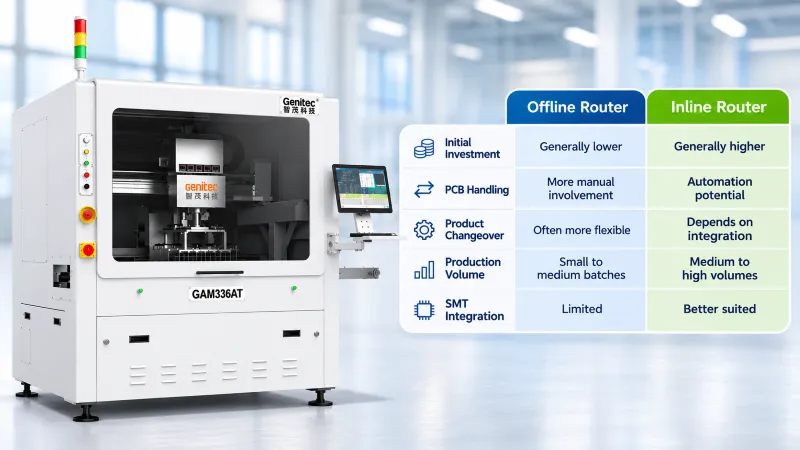
| Factor | Offline Router | Inline Router |
|---|---|---|
| Initial Investment | Generally lower | Generally higher |
| PCB Handling | More manual involvement | Automation potential |
| Product Changeover | Often more flexible | Depends on integration |
| Production Volume | Small to medium batches | Medium to high volumes |
| SMT Integration | Limited | Better suited |
For high-volume SMT production, inline routing can reduce manual transfers.
For frequent product changes, an offline router may provide better flexibility.
More automation does not automatically mean better efficiency.
💰 What Is the Real Cost of an Automatic PCB Router?
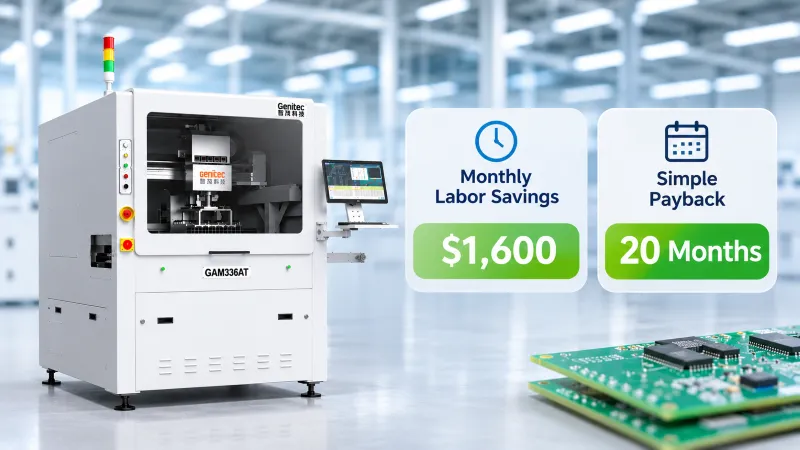
Consider a hypothetical electronics factory producing 30,000 PCB assemblies monthly.
Its engineers estimate that automated handling could save 80 labor hours per month.
Monthly labor savings
$1,600
Simple payback
20 months
80 hours × $20/hour = $1,600/month
$32,000 incremental investment ÷ $1,600 = 20 monthsIllustrative calculation. Excludes maintenance, consumables, electricity, downtime, and financing.
For low-volume production, the additional automation investment may not be justified.
🌍 A Practical Scenario: An EMS Factory in Guadalajara, Mexico
Imagine an automotive electronics manufacturer in Guadalajara, Jalisco, Mexico.
Its production team wants to replace manual PCB separation with an automated process.
Engineers consider a SEPRAYS GAM336AT inline router and establish four acceptance criteria:
- PCB edge quality and component clearance.
- Total cycle time, including loading and unloading.
- Dust extraction and cutter maintenance.
- Fixture changeover and downstream integration.
The evaluation may reveal that reducing handling delays matters more than increasing cutting speed.
This is an illustrative purchasing scenario, not a documented SEPRAYS customer installation. Actual performance requires sample testing.
🧪 How Can Overseas Buyers Verify a Supplier?
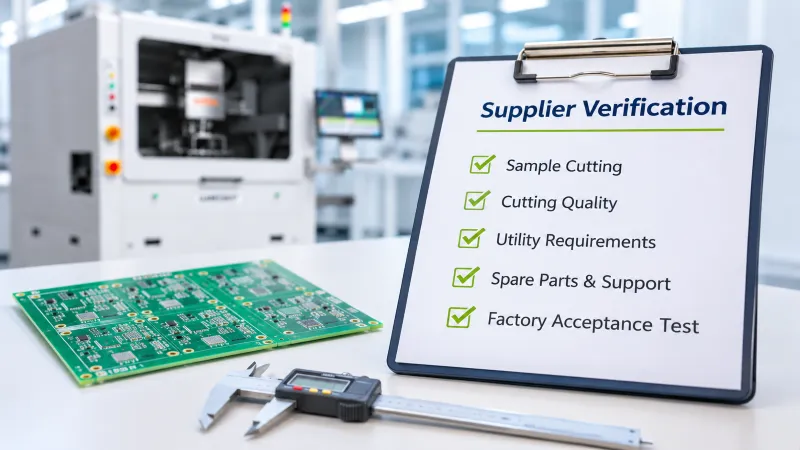
Before placing an order, request:
- Sample cutting using actual production PCB panels.
- Measured cutting quality and complete cycle time.
- Confirmation of voltage and compressed-air requirements.
- Spare-parts availability and technical support arrangements.
- A factory acceptance test (FAT) with measurable criteria.
For overseas projects, also clarify installation responsibilities, shipping terms, and warranty coverage.
A professional supplier should explain equipment limitations, not just advantages.
📖 Why SEPRAYS Develops PCB Depaneling Solutions
Since 1993, SEPRAYS has focused on PCB/FPC depaneling technology.
As electronics manufacturing evolved, cutting alone was no longer enough.
Factories needed reliable positioning, reduced manual handling, dust management, and integration with production lines.
This is why SEPRAYS expanded from PCB separation equipment into routing, laser, V-groove, punching, and automated handling solutions.
The underlying goal remains practical: protect the value already built into every assembled PCB.

⭐ Why Choose SEPRAYS?
With more than 30 years of experience, SEPRAYS Group provides PCB/FPC depaneling equipment and SMT automation solutions.
Its portfolio includes milling-cutter routers, laser depanelers, V-groove machines, punching systems, and automated loading and unloading equipment.
According to company-provided information, SEPRAYS has served organizations including Foxconn, Flextronics, State Grid, Luxshare, Compal, Wistron, China Electronics, Quanta, CRRC, China Aerospace, OPPO, ZTE, and Bosch.
Its engineering team evaluates PCB drawings, panel layouts, cutting paths, production volume, and downstream handling requirements to recommend suitable configurations.
Looking for an automatic PCB router and unloading solution?
Contact SEPRAYS Group to discuss your application, request a machine recommendation, or arrange a PCB sample-cutting evaluation.
WhatsApp: +8618929266433
E-mail: sales@seprays.com
❓ FAQ
1. Where can I buy an automatic PCB router machine?
You can purchase directly from equipment manufacturers such as SEPRAYS or through authorized distributors and industrial equipment suppliers.
2. How much does an automatic PCB router cost?
Pricing depends on working area, positioning technology, automation level, fixtures, and integration requirements. Request a configuration-specific quotation.
3. Is an inline PCB router better than an offline machine?
Inline systems suit automated production lines, while offline machines may offer better flexibility for smaller batches and frequent product changes.
4. Can PCB router machines integrate with SMT production lines?
Yes. Depending on configuration, suitable systems can support conveyor integration, automated handling, and factory data interfaces.
5. What information should I send before requesting a quotation?
Provide PCB drawings, panel dimensions, material, component layout, expected production volume, and automation requirements.