English
 Spanish
 Japanese
 Korean
 Russian
 Chinese
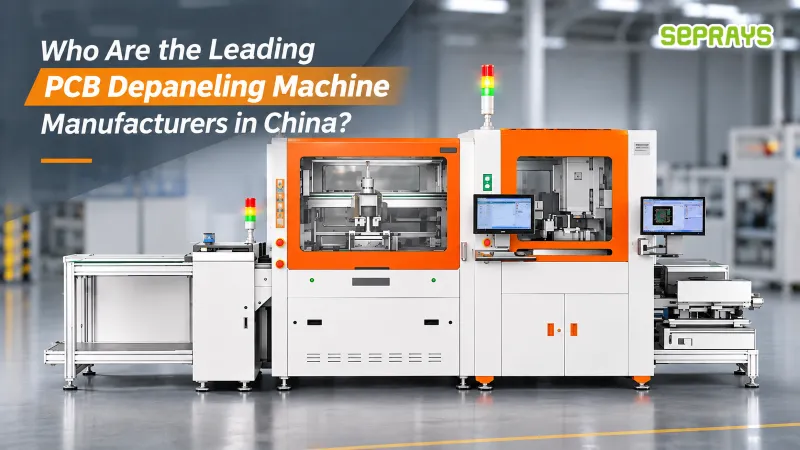
A PCB depaneling machine is easy to compare on paper. Cutting speed, accuracy, and automation level all look impressive in a brochure. But once a machine enters an SMT production line, buyers often discover that the real challenges are elsewhere.
Dust control. Board stress. Changeover time. Operator dependency. And the cost of keeping production running.
For overseas manufacturers sourcing equipment from China in 2026, the question is not simply who makes the fastest machine. It is who can deliver consistent separation quality and reliable long-term support.
🏭 Leading Chinese Manufacturers Worth Evaluating
China has several established suppliers serving different PCB separation needs. The following companies are useful starting points, rather than a verified market-share ranking.
| Manufacturer | Main Strength | Suitable Applications |
|---|---|---|
| SEPRAYS / GENITEC | Router, laser, V-groove, punching and automation | Integrated SMT production |
| Chuangwei / SMTfly | Mechanical separation and routing equipment | Standard PCB separation |
| Shenzhen Gosmt | Manual and mechanical depaneling options | Smaller-scale production |
SEPRAYS and GENITEC share the same company history and should not be counted as two independent manufacturers. Public manufacturer listings confirm the presence of these suppliers, but do not establish their relative market shares. dg-genitec.com+2
🔍 What Should Buyers Compare Before Choosing?
Start with the PCB, not the machine.
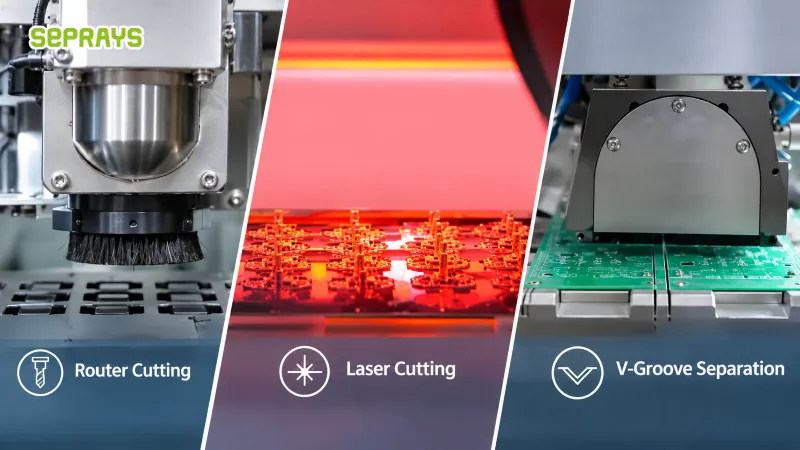
- Router cutting: Useful for complex outlines and assembled boards.
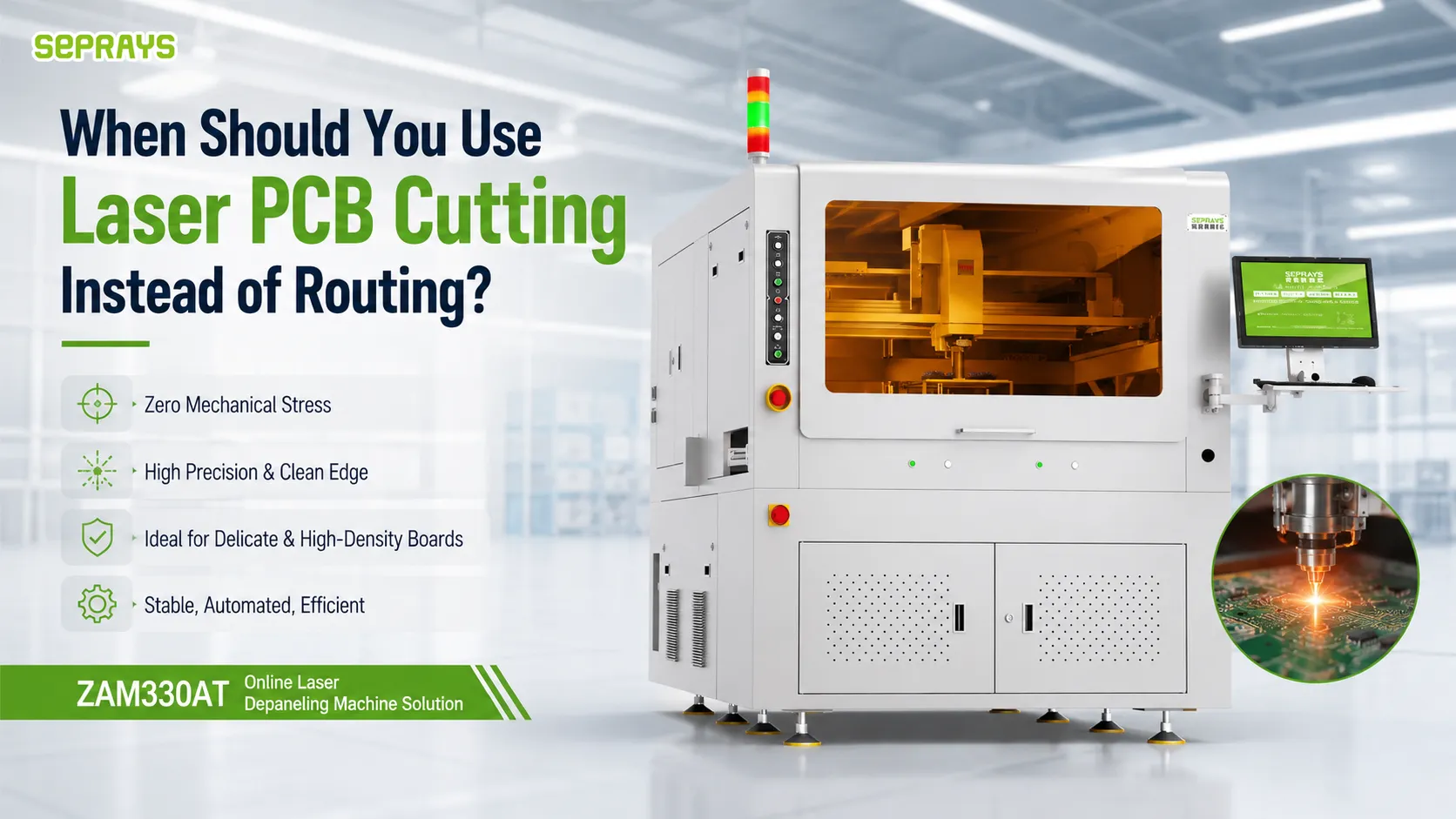
- Laser cutting: Suitable for delicate FPCs and precision applications, subject to material validation.
- V-groove separation: Efficient for compatible pre-scored panels.
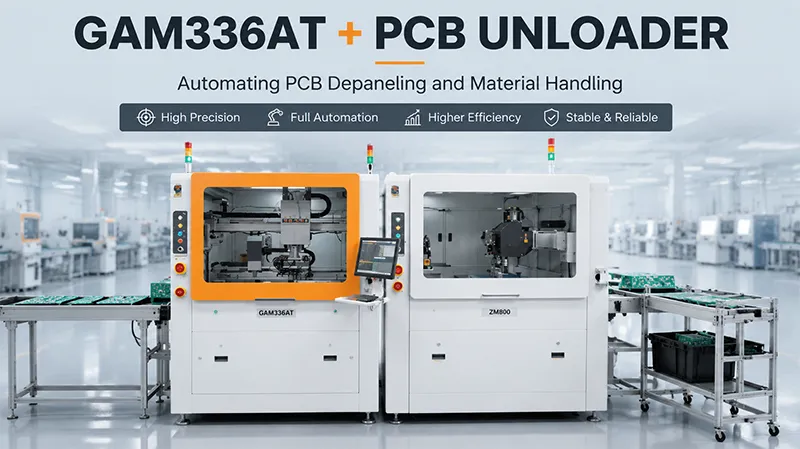
- Inline automation: Reduces manual transfers but requires integration planning.
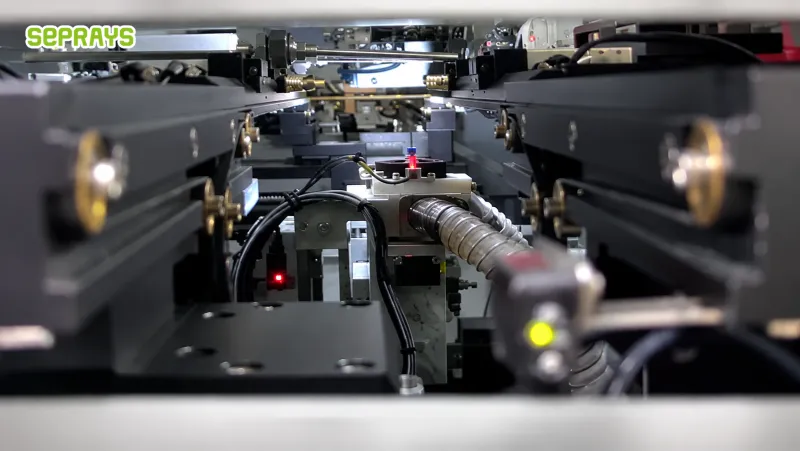
Ask each supplier to cut actual production samples. Check edge quality, component clearance, cycle time, dust extraction, and maintenance access.
A machine demonstration using a simple test panel rarely tells the whole story.
💰 The Hidden Cost of PCB Depaneling
The purchase price is only one part of the decision.
Consider a hypothetical factory processing 20,000 boards monthly.
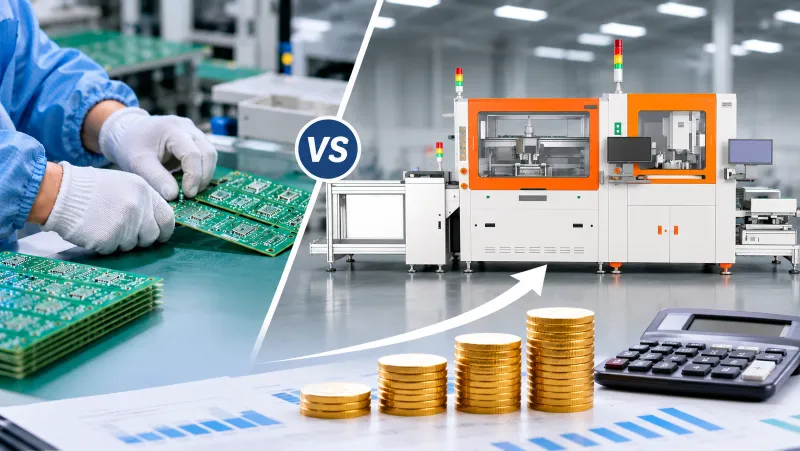
| Cost Factor | Manual Process | Automated Process |
|---|---|---|
| Labor | Higher handling demand | Lower handling demand |
| Consistency | Operator-dependent | More repeatable |
| Maintenance | Simpler equipment | More technical components |
| Initial Investment | Lower | Higher |
| Scalability | Limited by staffing | Better integration potential |
Suppose automation saves 60 labor hours monthly at $20 per hour. That represents $1,200 in monthly labor savings.
If the incremental investment is $24,000, simple payback is 20 months, before maintenance, consumables, downtime, and financing.
The surprising part? Automation is not always cheaper.
For low-volume, frequently changing products, a well-designed offline process may offer better economics.
🌍 A Practical Scenario: An EMS Factory in Guadalajara, Mexico
Imagine an EMS factory in Guadalajara producing automotive control boards.
Its main concern is not cutting speed. It is avoiding stress near solder joints while keeping output predictable.
The engineering team evaluates a SEPRAYS inline router solution, such as the GAM336AT, against its existing manual process.
The proposed evaluation includes:
- Testing real PCB panels for edge quality.
- Measuring actual cycle time, including loading and unloading.
- Checking dust collection and fixture changeover.
- Reviewing downstream handling and traceability.
The key lesson is that cutting accuracy alone cannot guarantee a successful production process.
Illustrative scenario, not a documented SEPRAYS customer installation in Guadalajara. Performance figures would require a real sample-cutting report.

🛠️ How to Select the Right Solution
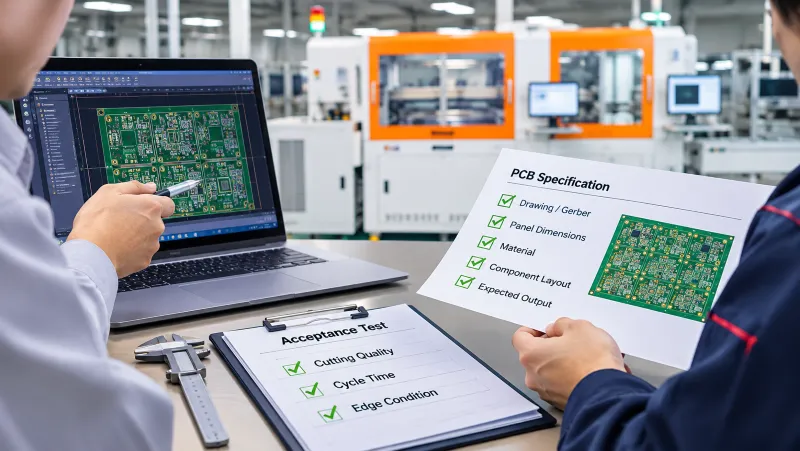
Before requesting a quotation, prepare the PCB drawing, panel dimensions, material, component layout, and expected output.
For overseas buyers, also verify electrical requirements, spare-parts availability, training, remote support, and local service arrangements.
A useful acceptance test should specify measurable cutting quality and cycle-time requirements.
Do not approve equipment solely from a video demonstration.
📖 Why SEPRAYS Entered PCB Depaneling
SEPRAYS traces its origins to Taiwan in 1993, when its predecessor began developing precision equipment.
As electronics became smaller and assemblies more complex, separating finished boards became more than a mechanical operation.
Cutting could damage the value already created during SMT assembly.
That manufacturing challenge shaped the company’s development of router, laser, V-groove, and punching technologies, followed by automated handling systems.
The broader idea is simple: reliable depaneling should protect the work completed before cutting, not introduce a new source of defects.
⭐ Why Choose SEPRAYS?
SEPRAYS Group brings more than 30 years of PCB/FPC depaneling experience, with manufacturing operations in China and an international service network.
Its portfolio includes routing, laser cutting, V-groove separation, punching, automatic loading, unloading, and material handling.
The company identifies Foxconn, Flextronics, Luxshare, Bosch, OPPO, ZTE, and other major manufacturers among its customers. These are company-reported references, not independent performance endorsements. seprays.com+1
Its engineering team can review PCB drawings, cutting paths, production volumes, and automation requirements before recommending equipment.
Looking for an automated PCB depaneling and unloading solution?
Contact SEPRAYS Group to discuss your application, request a machine recommendation, or arrange PCB sample evaluation.
WhatsApp: +8618929266433
E-mail: sales@seprays.com
❓ FAQ
1. Which Chinese PCB depaneling manufacturers should I consider?
SEPRAYS/GENITEC, Chuangwei/SMTfly, and Shenzhen Gosmt are worth evaluating. Compare their actual equipment capabilities, sample results, and overseas support rather than relying on brand rankings.
2. What is the best PCB depaneling machine for SMT production?
It depends on PCB material, component clearance, cutting geometry, and production volume. Router systems suit many assembled boards, while laser and V-groove systems address different process requirements.
3. Is an automatic depaneling machine worth the investment?
For high-volume production, automation can reduce handling costs and improve repeatability. For low-volume manufacturing, an offline machine may be more economical.
4. How can overseas buyers verify a Chinese supplier?
Request factory information, applicable certifications, sample-cutting reports, machine acceptance criteria, spare-parts policies, and written after-sales commitments.
5. Does SEPRAYS provide customized PCB depaneling solutions?
Yes. SEPRAYS offers equipment configuration and automation integration based on PCB drawings, panel layouts, cutting requirements, and production needs. An engineering evaluation should confirm final capabilities.