.png)
 Chinese
  English
  Spanish
  Japanese
  Korean
  Russian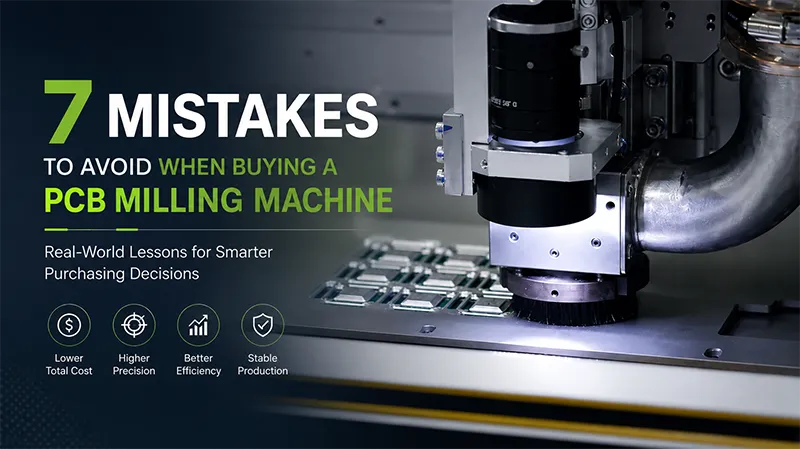
Buying a PCB milling machine can look straightforward on paper. Compare cutting speed, working area, spindle power, price, and automation level. Pick the machine that appears to offer the most.
In practice, that approach often leads to expensive surprises.
A machine may be fast but poorly matched to the board design. A cheaper model may require more manual work. A highly automated system may be unnecessary for a factory running only a few hundred panels a day.
The better question is not, “Which machine has the best specifications?”
It is, “Which machine fits the way we actually produce PCBs?”
Here are seven mistakes worth avoiding before making that decision.
🔎 1. Choosing the Machine Before Checking the PCB
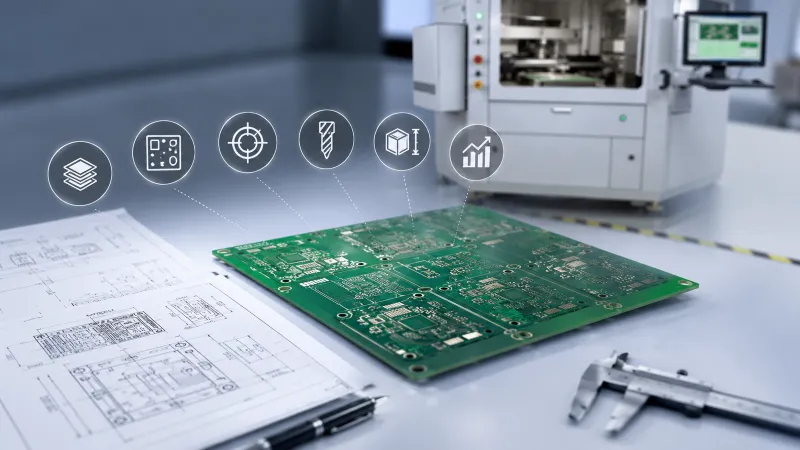
The first mistake is starting with the equipment instead of the board.
PCB shape, thickness, material, component height, cutting path, panel size, and production volume all affect the process.
A router-based solution is usually useful for irregular outlines and internal cutouts. But if your boards have long, straight V-grooves, another depaneling method may be more practical.
Before requesting quotations, prepare:
- PCB and panel drawings
- 分板厚度
- Material information
- Cutting path
- Component clearance
- Panel dimensions
- Daily production volume
Practical lesson: send real samples whenever possible. A supplier’s standard test board cannot represent every production condition.
⚠️ 2. Looking Only at the Purchase Price
The cheapest quotation is not always the lowest-cost solution.
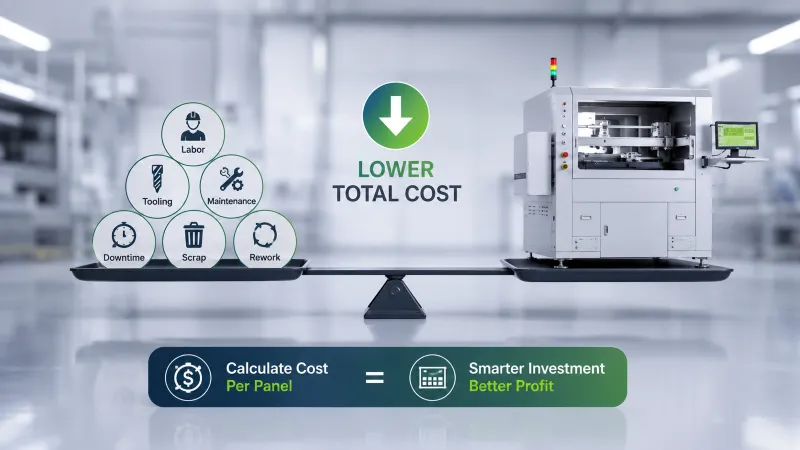
Consider the total operating cost:
Machine price + labor + tooling + maintenance + downtime + scrap + rework
For example, a machine that costs less but requires an operator to load and unload every board may become expensive on a three-shift production line.
On the other hand, full automation may not make financial sense for a small factory running limited batches.
This creates an important boundary condition:
Automation pays off when machine utilization and production volume are high enough.
Calculate the cost per panel instead of comparing quotations alone.
🛠️ 3. Assuming Cutting Speed Equals Production Speed
A specification such as “high-speed cutting” looks impressive.
But cutting is only one part of the cycle.
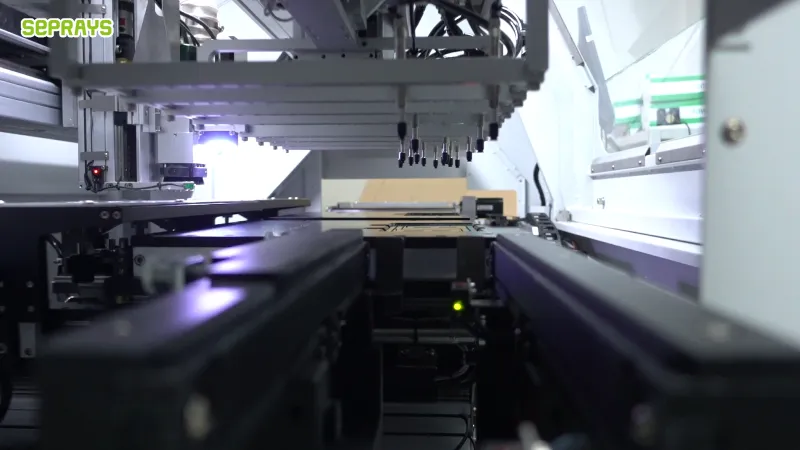
The real production cycle may include:
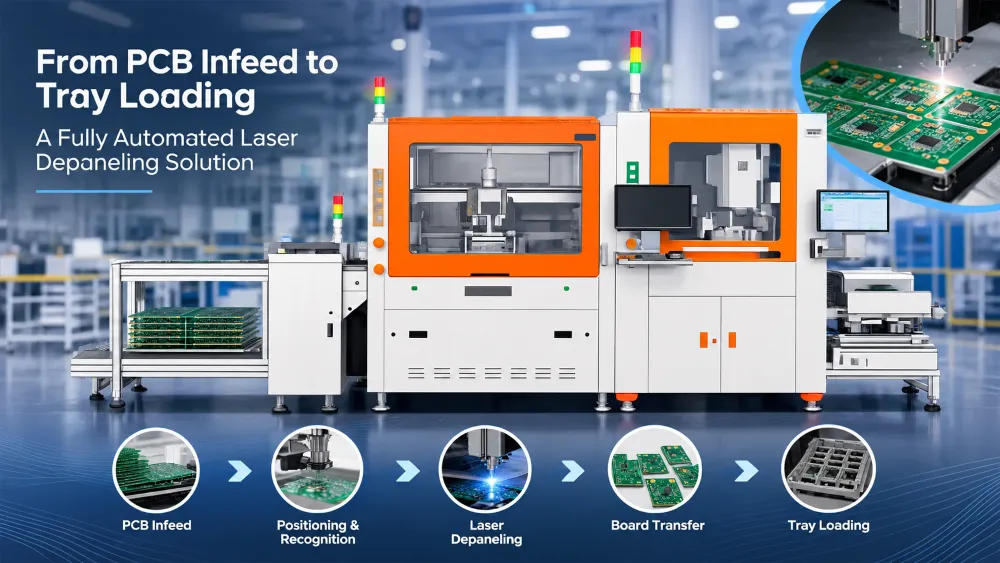
Loading → positioning → cutting → board handling → unloading → waste removal
If cutting takes 8 seconds but loading and unloading take another 15 seconds, increasing the cutting speed will not transform the line.
Ask suppliers for the complete cycle time, not just spindle speed or feed speed.
This is especially important for high-volume electronics manufacturing.
🧩 4. Ignoring Dust, Tooling, and Maintenance
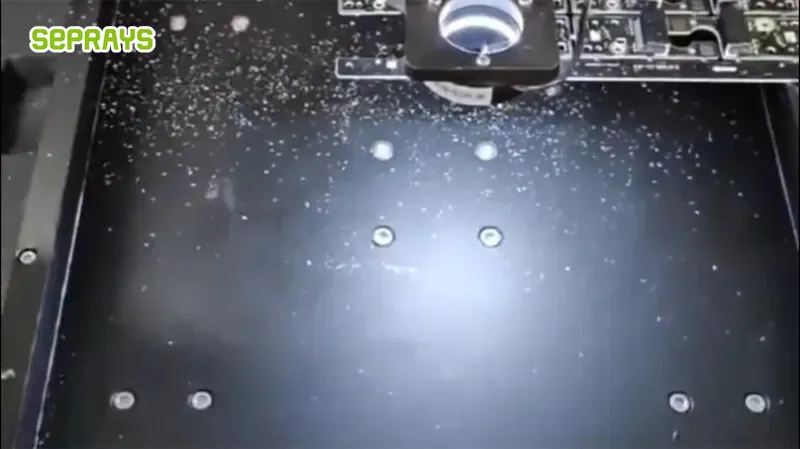
Milling creates dust. Tool wear is also unavoidable.
If these issues are ignored during equipment selection, they can become daily production problems.
Ask:
- How is cutting dust collected?
- What extraction system is recommended?
- How often does the tool normally require replacement?
- How easy is tool changing?
- Can the machine monitor abnormal conditions?
- What maintenance is required?
A clean cutting environment is not just about housekeeping. Dust management can affect equipment reliability, operator conditions, and downstream processes.
Tool cost should also be included in the long-term calculation.
📐 5. Buying for Today’s PCB Only
PCB designs change.
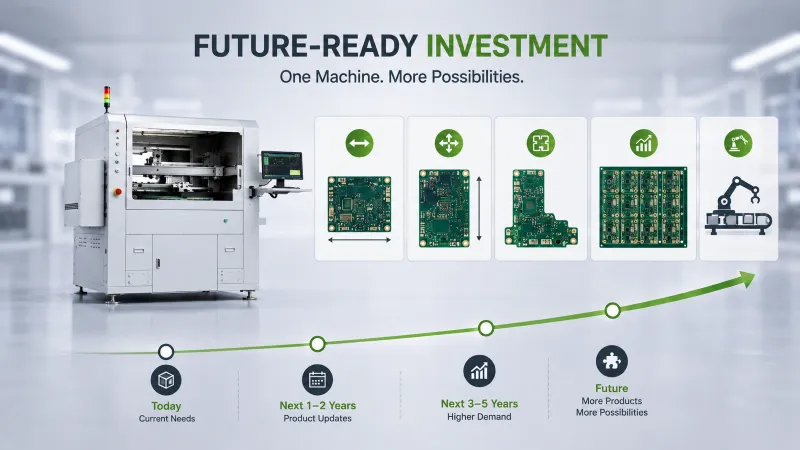
A machine that fits today’s largest panel may become restrictive after a product redesign.
Before purchasing, look at your expected product mix over the next few years.
For example:
| Factor | Short-Term Thinking | Better Approach |
|---|---|---|
| Panel size | Current maximum | Expected future range |
| Board shape | Current model | Product family |
| Production | Current output | Peak demand |
| 自动化 | Current labor | Future line integration |
| Tooling | One product | Multiple product types |
There is no need to overbuy.
But leaving zero room for change can make an expensive machine obsolete sooner than expected.
🧪 6. Skipping a Real Production Test
This is one of the easiest mistakes to avoid.
Do not rely only on a demonstration video.
Ask for a test using your actual PCB or a representative production sample.
Check the results yourself:
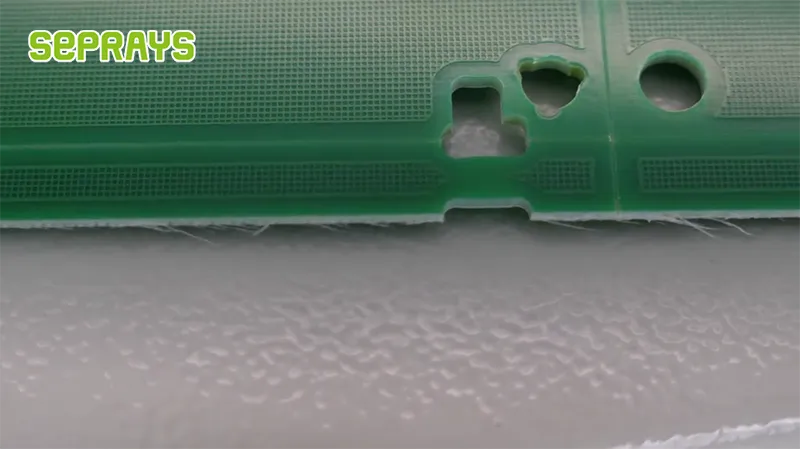
- Edge quality
- Burrs
- Component damage
- Board movement
- Cutting accuracy
- Repeatability
- Dust generation
- Cycle time
- Operator workload
A machine that performs well for one board may behave differently with another material, thickness, or component layout.
Experience matters here: the more unusual the PCB design, the more important sample testing becomes.
💡 7. Choosing the Most Automated Machine by Default
This may sound strange, but more automation is not always better.
A fully automated system can be an excellent choice for stable, high-volume production. But if your factory frequently changes products, runs small batches, or has limited floor space, a simpler solution may provide a better return.
For example:
| Production Situation | Possible Priority |
| High-volume, stable products | 自动化 |
| Many product changes | Flexible setup |
| Complex PCB outlines | Router flexibility |
| Straight V-grooves | V-groove separation |
| Sensitive boards | Low-stress process evaluation |
| Prototypes / low volume | Manual or offline equipment |
The counterintuitive conclusion is simple:
The best machine is not necessarily the most advanced one. It is the one that removes your biggest production problem.
🏭 A Practical Example: Semiconductor Electronics Production
Consider an overseas semiconductor equipment manufacturer producing control and interface boards in wzklaw- kx blpt-uvivwz pxuchlflza.
The company initially focused on the machine price. During production evaluation, however, its bigger concerns became board handling, repeatability, dust control, and operator dependency.
Instead of comparing machines solely on cutting speed, the engineering team evaluated the entire process.
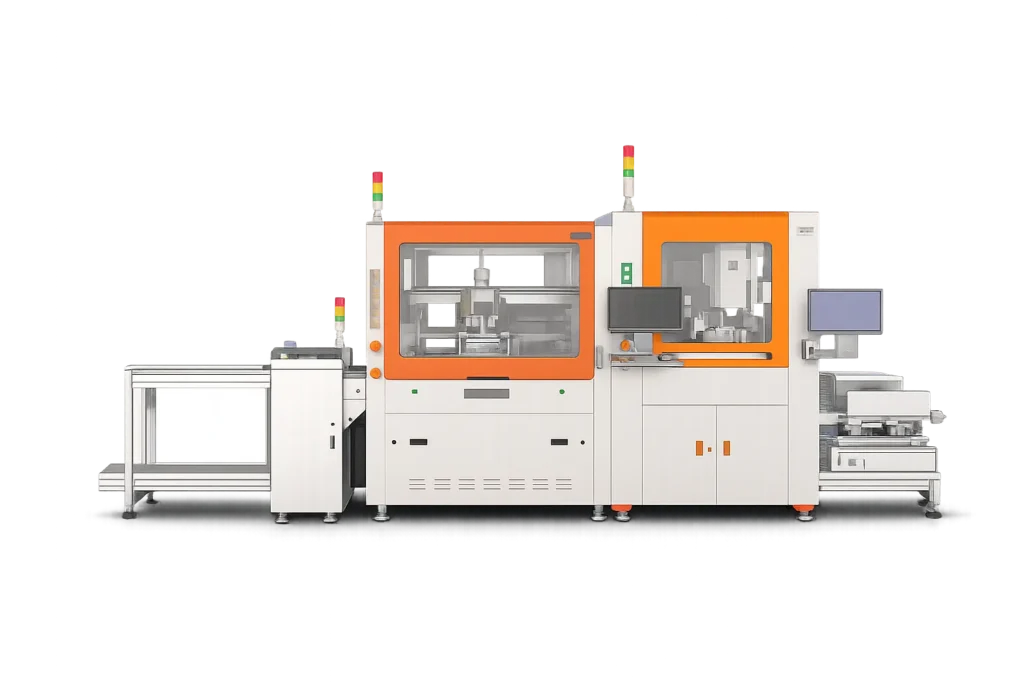
A Seprays solution was considered as part of this evaluation, with attention given to the PCB design, cutting method, tooling, dust collection, and downstream handling.
The important lesson is not that one machine automatically solves every application.
It is that process matching should come before equipment selection.
For semiconductor-related electronics, where board value can be much higher than the cost of the depaneling step itself, preventing one damaged board can sometimes be more valuable than saving a small amount on machine price.
📊 A Simple Buying Checklist
Before signing a purchase order, ask these questions:
- Has the machine been tested with our PCB?
- What is the actual complete cycle time?
- What is the expected tooling cost?
- How will dust be collected?
- What happens when the tool wears?
- Can the machine handle our future panel sizes?
- Can it connect with our existing production line?
- What support is available after installation?
If several answers are unclear, the quotation is probably not enough to make a sound decision.
🌍 Why Choose Seprays Group?
With more than 30 years of experience in depaneling technology, Seprays Group has focused on PCB/FPC separation solutions since its establishment in 1993.
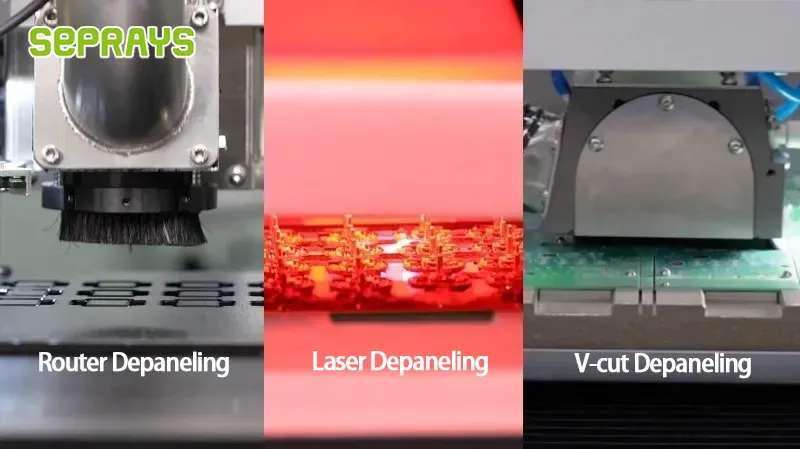
Seprays Group provides a broad range of solutions, including milling-cutter depanelers, laser depanelers, V-groove depanelers, punching depanelers, and automated loading, unloading, and handling systems.
Its equipment has been trusted by leading manufacturers and organizations, including Foxconn, Flextronics, State Grid, Luxshare, Compal, Wistron, China Electronics, Quanta, CRRC, China Aerospace, OPPO, ZTE, and Bosch. The equipment is used in factories across China and in international markets.
What matters is not simply having many machine models. It has enough application experience to understand that different PCB designs require different approaches.
If you are comparing depaneling options, Seprays Group can evaluate your PCB design, production requirements, and automation goals before recommending a suitable configuration.
Have a PCB application you are unsure about? Contact Seprays Group and share your panel drawing or production requirements for a practical discussion.
WhatsApp: +8618929266433
❓ FAQ
1. How do I know which depaneling method is right for my PCB?
Start with the board geometry, material, thickness, cutting path, component sensitivity, and production volume. Complex outlines often favor routing, while straight scored boards may be better suited to V-groove separation.
2. Is a more expensive depaneling machine always better?
No. The right machine depends on utilization, production volume, automation requirements, and PCB characteristics. A less expensive machine can provide better ROI when the application is simple.
3. Why should I test my actual PCB before purchasing?
Because cutting results can vary with board material, thickness, component layout, tooling, and cutting paths. A production sample provides much more useful information than a standard demonstration board.
4. How should I calculate the real cost of a depaneling machine?
Include the purchase price, labor, tooling, maintenance, dust collection, downtime, scrap, rework, and expected production output. Comparing only the initial quotation can give a misleading result.
5. Can Seprays Group recommend a solution based on my PCB design?
Yes. Providing the panel drawing, PCB dimensions, material, thickness, cutting requirements, production volume, and automation expectations enables a more accurate evaluation of the application before equipment selection.