.png)
 English
  Spanish
  Japanese
  Korean
  Russian
  Chinese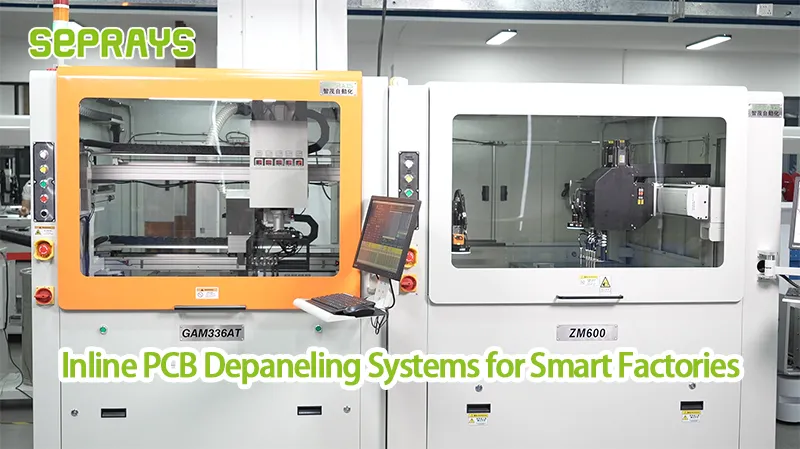
Inline PCB depaneling systems for smart factories are no longer just an upgrade option—they’re becoming a standard requirement. As production lines move toward full automation, the gap between SMT output and manual depaneling is increasingly difficult to ignore.
Many factories don’t notice the problem at first.
Until throughput drops.
Or labor costs rise.
Or quality becomes inconsistent.
That’s where inline systems start to make sense.
🏭 Why Inline Depaneling Matters in Smart Manufacturing
Smart factories are built on flow.
Every process is connected.
Every delay spreads downstream.
Traditional offline depaneling creates friction:
- Manual handling slows production
- Buffer zones increase WIP
- Operator variability affects consistency
Inline PCB depaneling systems remove these gaps.
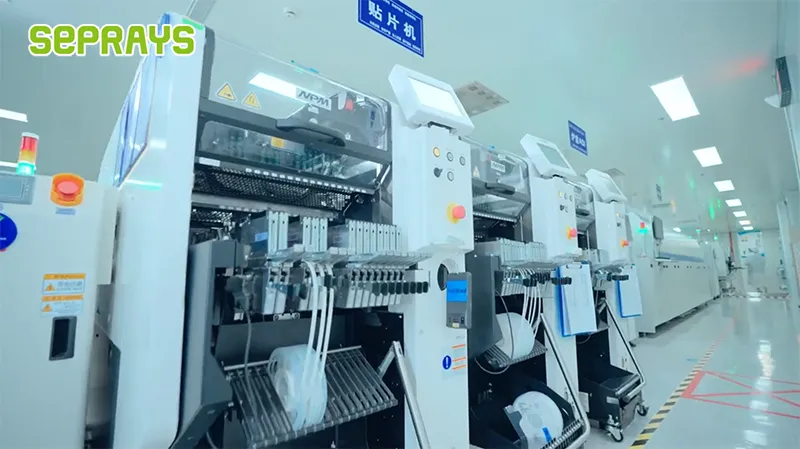
Boards move directly from SMT to separation.
No extra steps.
No unnecessary pauses.
⚙️ Key Benefits of Inline PCB Depaneling Systems
From real production environments, a few advantages stand out:
- Continuous operation
No need to stop the line for batch processing - Reduced labor dependency
Fewer operators required - Improved consistency
Automated control ensures repeatable results - Better traceability
Easy integration with MES systems
In short, it aligns depaneling with the logic of smart factories.
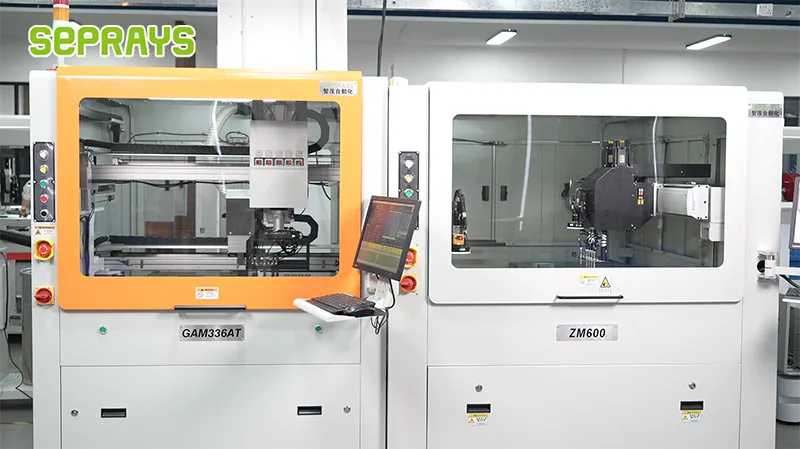
🚧 H2: Common Pain Points Before Going Inline
Before adopting inline systems, many manufacturers faced similar issues:
- Bottlenecks after reflow
- Handling damage during manual transfer
- Inconsistent cycle times
- Difficulty scaling production
These problems don’t always come from poor equipment.
They come from disconnected processes.
Inline depaneling addresses the root cause—lack of integration.
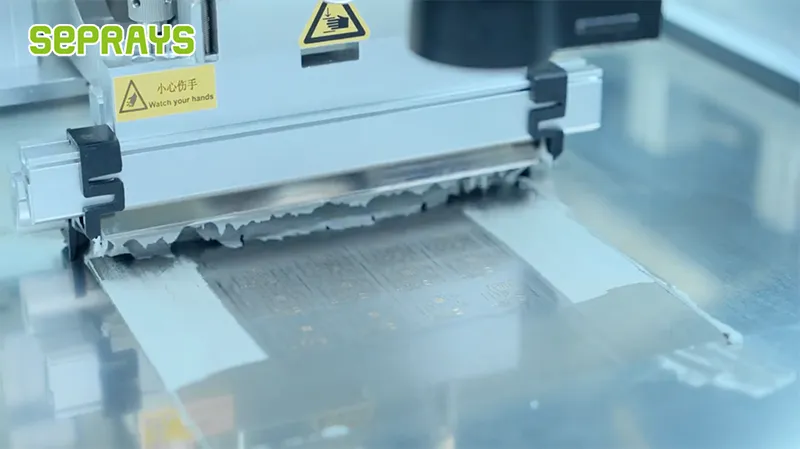
🔍 Types of Inline Depaneling Solutions
Not all inline systems are the same.
Choosing the right type depends on your PCB design and production goals.
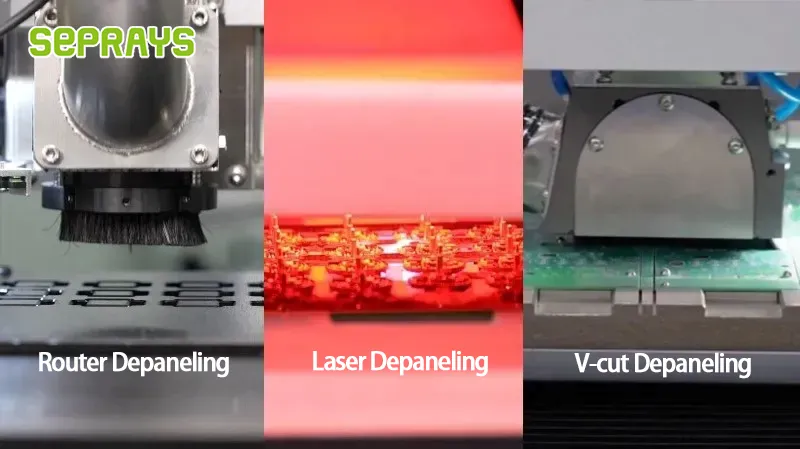
| Method | Stress Level | Flexibility | Speed | Typical Use |
|---|---|---|---|---|
| Inline Saw Blade | Medium | Low | High | Straight-line boards |
| Inline Router | Low-Medium | High | Medium | Complex PCB shapes |
| Inline Laser | Very Low | Very High | Medium | Sensitive, high-density boards |
| Inline V-Groove | Low | Medium | High | Pre-scored panels |
Each method can be integrated inline.
The difference lies in application fit.
💰 Cost Considerations in Smart Factory Upgrades
Inline systems require a higher initial investment.
That’s often the hesitation point.
But cost should be viewed differently:
- Reduced labor expenses over time
- Higher throughput per hour
- Lower defect rates from handling
- Better utilization of SMT capacity
When evaluated over months, not days, the return becomes clearer.
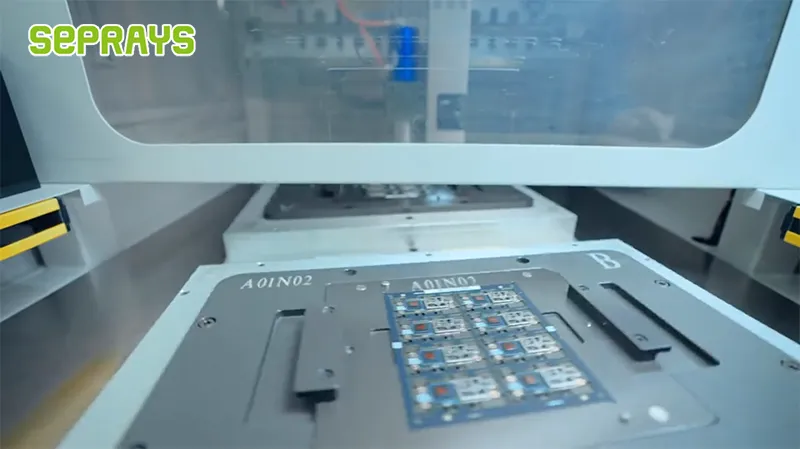
🧪 Case Insight from a Smart Factory Upgrade
A consumer electronics manufacturer transitioning to a smart factory setup faced a recurring issue:
Their SMT lines were fully automated.
But depaneling remained manual.
Result:
- Production imbalance
- Increased labor costs
- Inconsistent output
They partnered with Seprays to implement an inline router depaneling system.
After deployment:
- Line balance improved significantly
- Labor reduced by over 40%
- Output consistency stabilized
The key takeaway?
Automation only works when every step is connected.
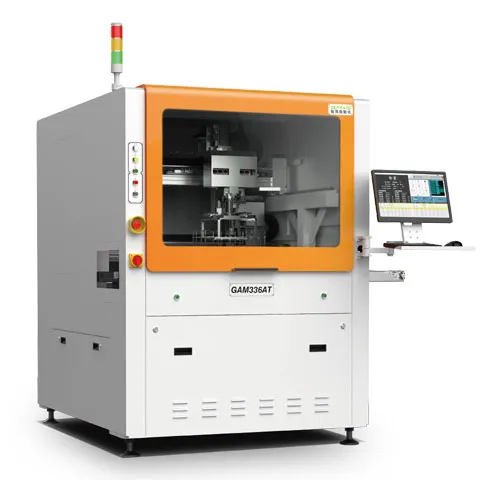
🔄 Integration with Smart Factory Systems
Inline PCB depaneling systems are not standalone machines.
They connect with:
- SMT lines (SPI, AOI, reflow)
- Conveyor systems
- MES and data tracking platforms
This allows:
- Real-time production monitoring
- Quality traceability
- Predictive maintenance
It’s not just about cutting boards.
It’s about data and control.
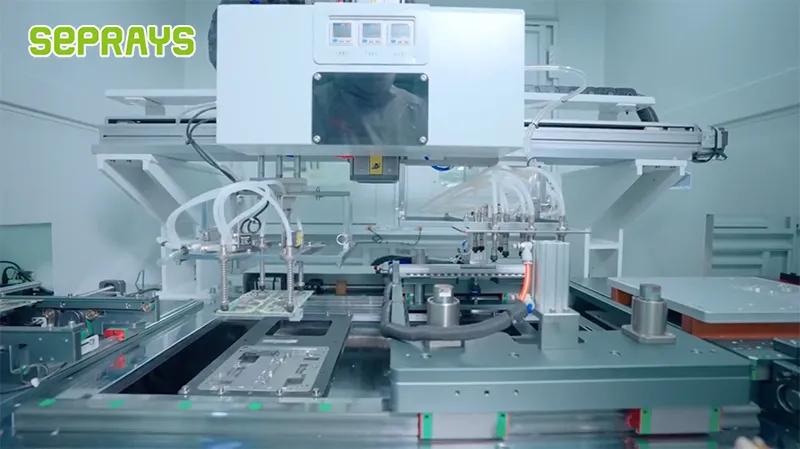
🛠️ Practical Implementation Tips
From real-world experience:
- Plan the line layout before installation
- Match the depaneling speed with the SMT output
- Ensure compatibility with conveyor standards
- Train staff on system monitoring, not manual operation
A smooth transition depends more on planning than equipment alone.
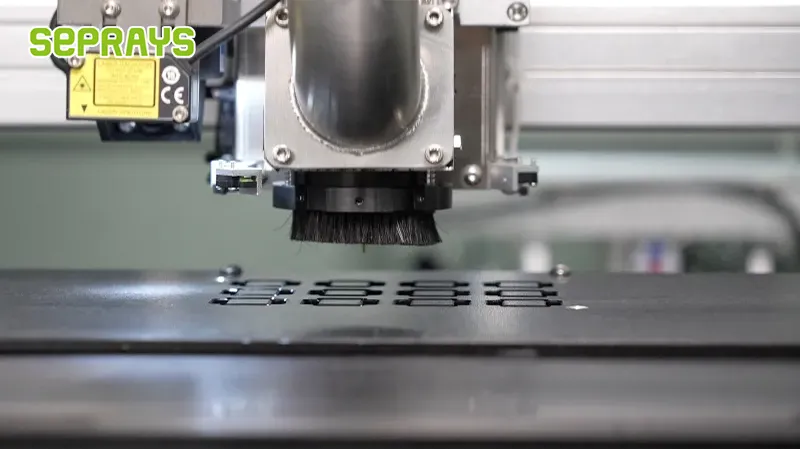
🚀 The Future of Inline Depaneling
As smart factories evolve, inline systems will become more intelligent:
- AI-based defect detection
- Adaptive cutting parameters
- Fully automated material handling
Depaneling will no longer be a separate process.
It will be part of a unified manufacturing ecosystem.
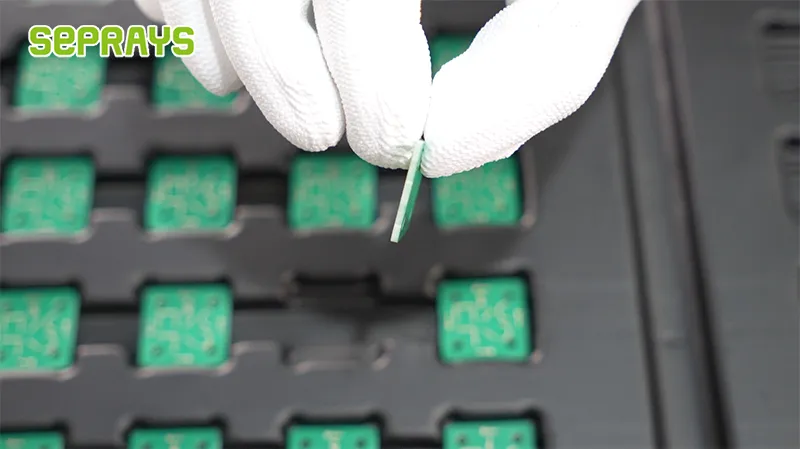
🚀 Why Choose Seprays Group?
Seprays Group focuses on delivering practical, production-ready depaneling solutions tailored for modern smart factories.
Seprays Group has been dedicated to PCB/FPC depaneling technology, offering a comprehensive portfolio — including milling cutter depanelers, laser depanelers, V-groove depanelers, punching depanelers, and fully automated inline handling systems.
Their solutions are trusted by global manufacturers such as Foxconn, Flextronics, State Grid, Luxshare, Compal, Wistron, China Electronics, Quanta, CRRC, China Aerospace, OPPO, ZTE, and Bosch. These collaborations reflect strong performance across high-volume and high-precision manufacturing environments.
With a focus on integration, efficiency, and reliability, Seprays helps manufacturers move toward true smart factory operations.
If you are considering upgrading to inline depaneling systems, feel free to contact us for tailored solutions.
WhatsApp: +8618929266433
E-mail: sales@seprays.com
❓ FAQ
1. What is an inline PCB depaneling system?
It is a depaneling solution integrated directly into the SMT production line for continuous operation.
2. Is inline depaneling suitable for all PCB types?
Yes, but the method (router, laser, saw) should match the PCB design.
3. Does inline depaneling improve efficiency?
Yes. It eliminates manual handling and reduces bottlenecks.
4. Is the investment worth it?
For medium to high-volume production, the long-term ROI is typically strong.
5. Can inline systems integrate with MES?
Yes. Most modern systems support data integration for smart factory environments.