.png)
 Korean
  English
  Spanish
  Japanese
  Russian
  Chinese
Best PCB Depaneling Machines are becoming a much bigger discussion in 2026 — especially for manufacturers working with high-density PCBA.
A few years ago, many factories mainly focused on:
- 절단 속도
- Machine price
- Basic throughput
Today, the situation is different.
Modern PCBAs are becoming:
- Smaller
- More complex
- More sensitive to stress
- More densely populated
That changes the entire depaneling equation.
In some cases, a cutting process that worked perfectly five years ago may now create hidden reliability risks.
And many manufacturers only discover those problems after products enter real-world use.
🔍 Why High-Density PCBA Is Harder to Depanel
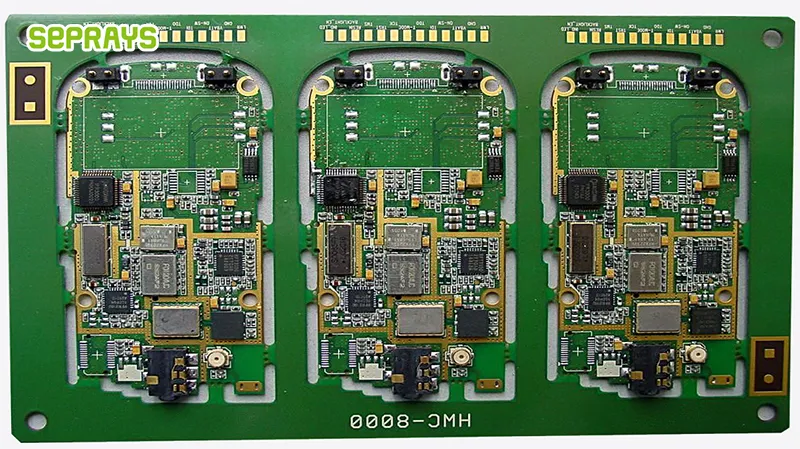
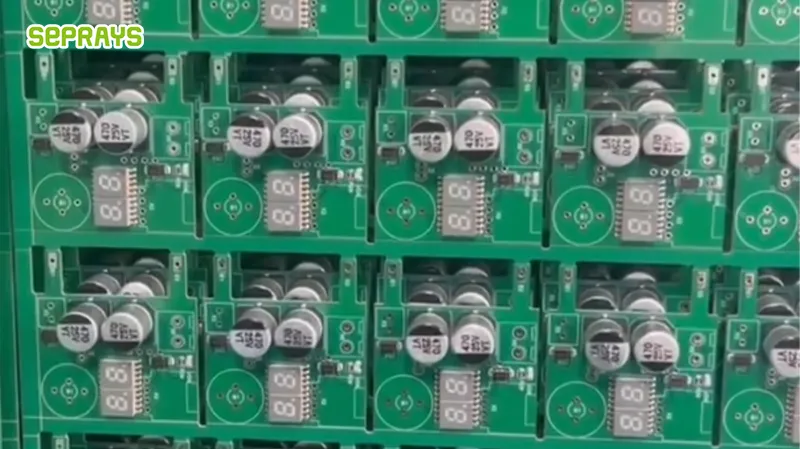
High-density PCBAs pose several challenges simultaneously.
Typical boards now include:
- Components placed close to edges
- Fine-pitch solder joints
- Thin substrates
- Multi-layer structures
- Sensitive IC packaging
This means even small mechanical stress can affect product reliability.
The difficult part?
Damage is not always visible immediately.
A board may pass functional testing, but later develop:
- Solder micro-cracks
- Delamination
- Signal instability
- Component failure
That is why depaneling quality matters more than many factories initially expect.
⚠️ The Hidden Cost of Using the Wrong Machine
One common mistake is choosing equipment based only on initial cost.
On paper, a lower-cost system may look attractive.
But for high-density PCBA, hidden costs appear quickly:
- Scrap increase
- Rework time
- Lower yield
- Customer complaints
- Reliability failures
In many factories, the actual production loss is not caused by machine downtime.
It is caused by unstable cutting quality.
🧩 What Engineers Really Want in 2026
Interestingly, most engineers are no longer asking:
“Which machine is the fastest?”
Instead, they ask:
- How much stress does it generate?
- Can it handle mixed production?
- Is the positioning accurate enough?
- Does it support automation?
- Can it protect sensitive components?
That shift reflects how electronics manufacturing is evolving.
📊 Main Depaneling Technologies for High-Density PCBA
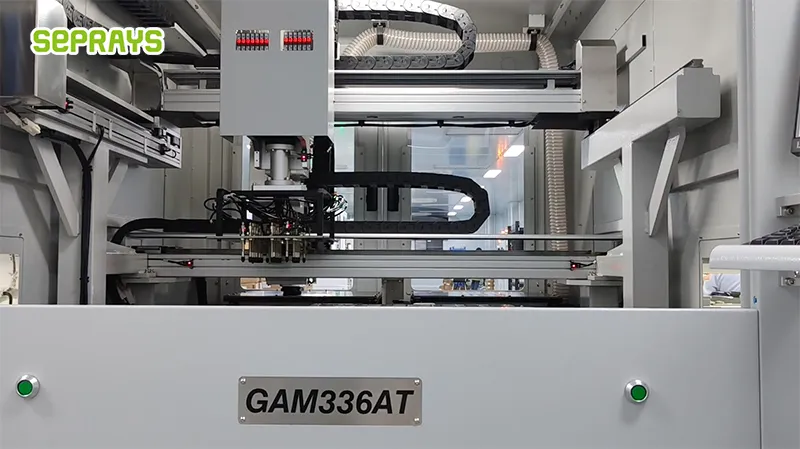
| Depaneling Method | Advantages | Limitations |
|---|---|---|
| 레이저 구분 | Ultra-low stress, high precision | Higher investment |
| 라우터 구분 | Flexible cutting paths, balanced performance | Tool wear exists |
| Saw Depaneling | Very fast for straight cuts | Higher mechanical stress |
| Punching | Fast for fixed products | Limited flexibility |
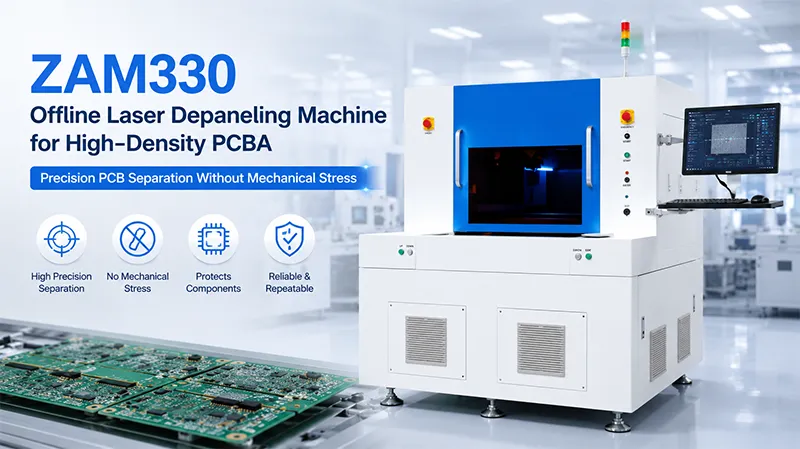
🚀 Why Laser Depaneling Is Growing Rapidly
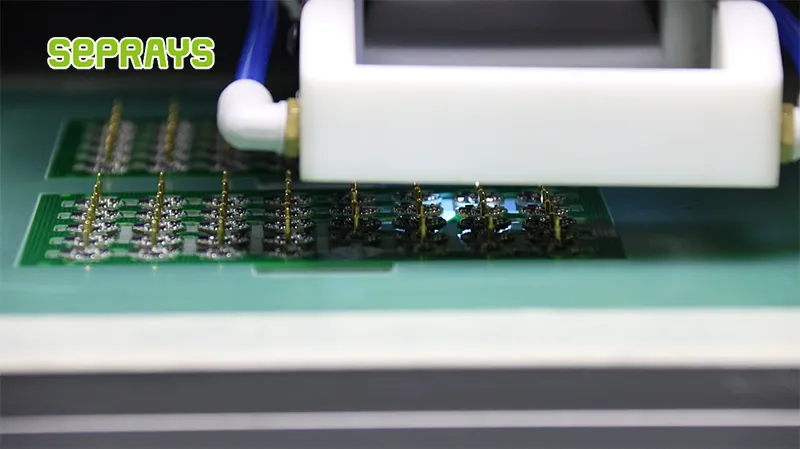
Laser depaneling is becoming increasingly popular for high-density boards.
The reason is simple.
It minimizes mechanical contact during cutting.
That helps reduce risks such as:
- Edge cracking
- Solder joint stress
- PCB deformation
- Component displacement
This becomes especially valuable in:
- Semiconductor electronics
- AI hardware
- Medical electronics
- High-frequency communication modules
- Flexible PCB production
Another important advantage is cutting precision.
As PCB spacing becomes tighter, positioning accuracy becomes critical.
🔧 Router Depaneling Is Still Extremely Important
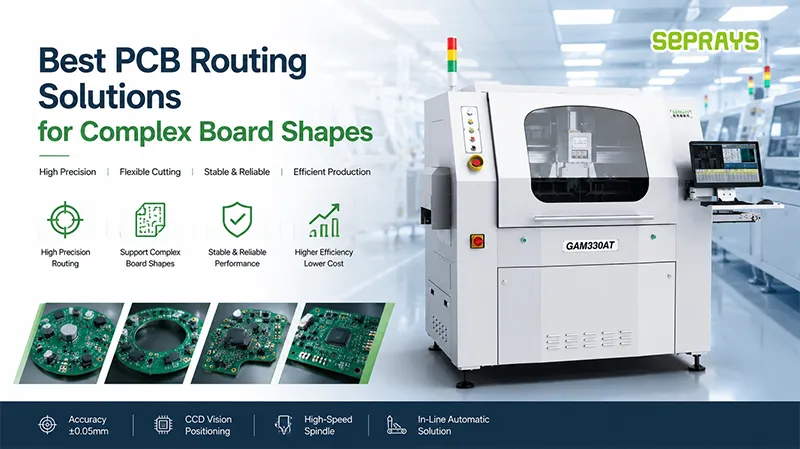
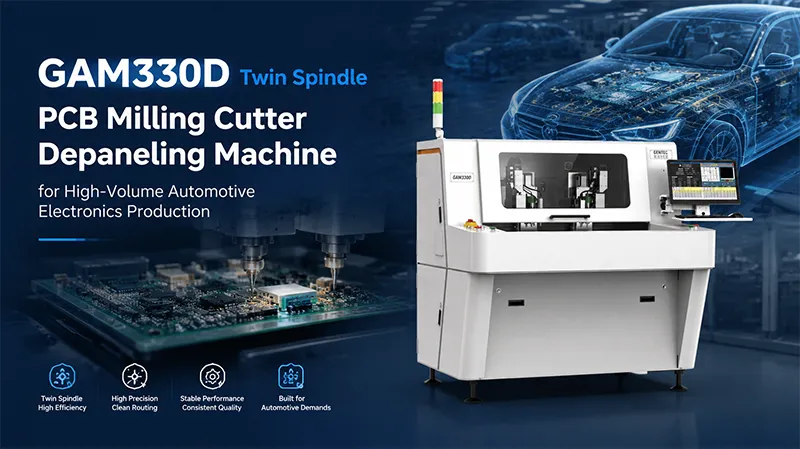
Despite the growth of laser systems, router depaneling remains widely used.
And for good reason.
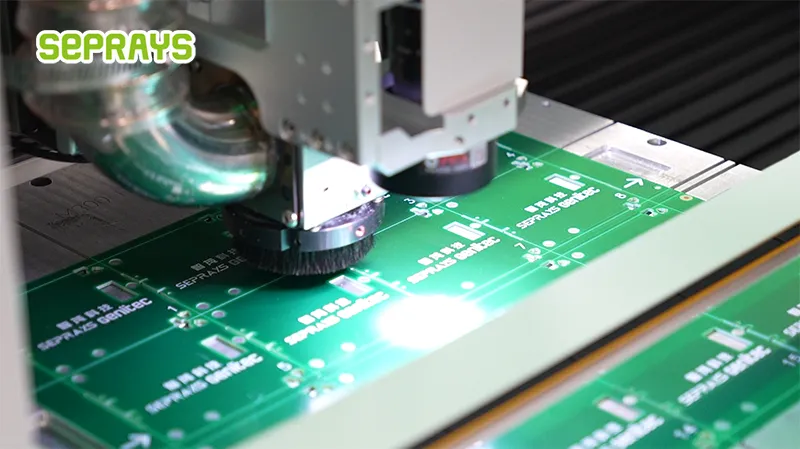
Modern router machines now integrate:
- CCD vision alignment
- Vacuum support systems
- High-speed spindles
- Automatic tool management
- 오프라인 프로그래밍
This significantly improves stability for complex boards.
Router systems are especially useful when manufacturers need:
- Flexible cutting paths
- Mixed production capability
- Moderate investment cost
- Complex PCB contours
In many factories, router depaneling still provides the best balance between cost and performance.
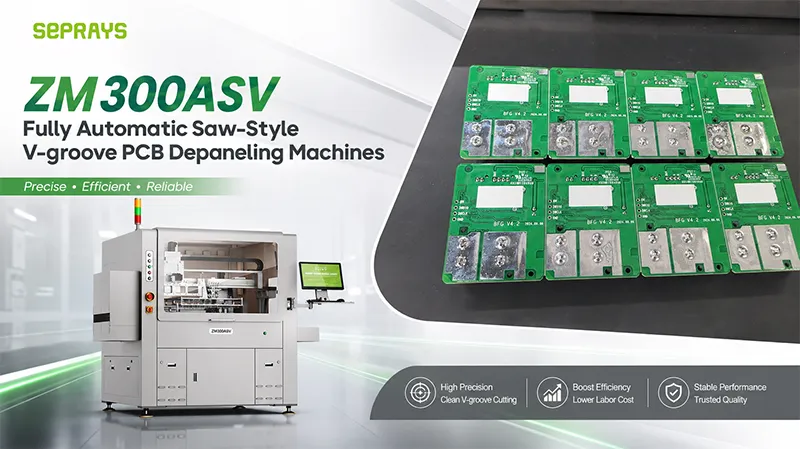
⚡ Saw Depaneling Still Has a Role
Some people assume saw depaneling is outdated.
That is not entirely true.
Saw systems remain highly effective for:
- Straight-line cutting
- Large-volume production
- Aluminum PCB
- LED boards
The key is matching the process to the PCB design.
Problems arise when factories try to use saw cutting on boards that require low-stress separation.
That mismatch creates reliability risks.
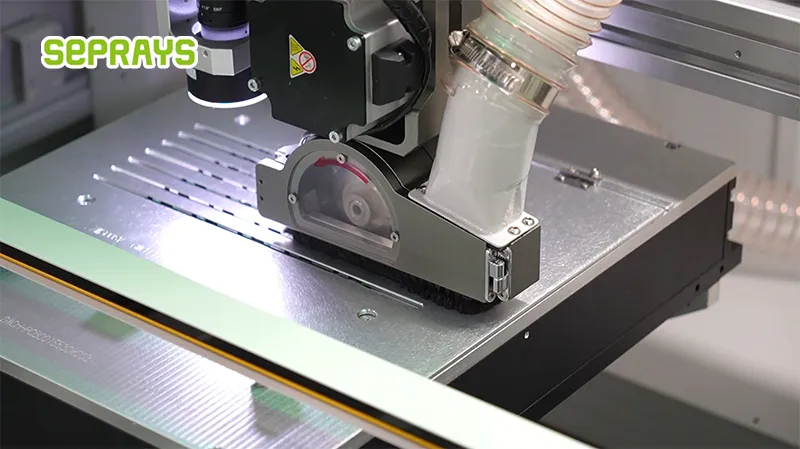
👀 Why CCD Vision Systems Matter More Than Before
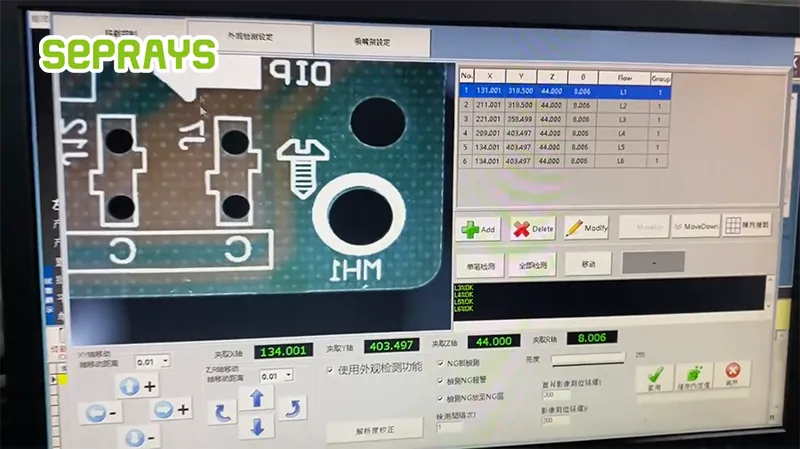
One trend becoming very clear in 2026 is the growing use of CCD vision systems.
Why?
Because manual alignment is no longer reliable enough for many high-density products.
Vision positioning helps improve:
- Cutting accuracy
- Repeatability
- Changeover efficiency
- Production consistency
Especially for:
- Small PCB units
- Irregular board shapes
- Tight component spacing
Without accurate alignment, even advanced cutting systems can produce unstable results.
🏭 Smart Factories Need Smart Depaneling
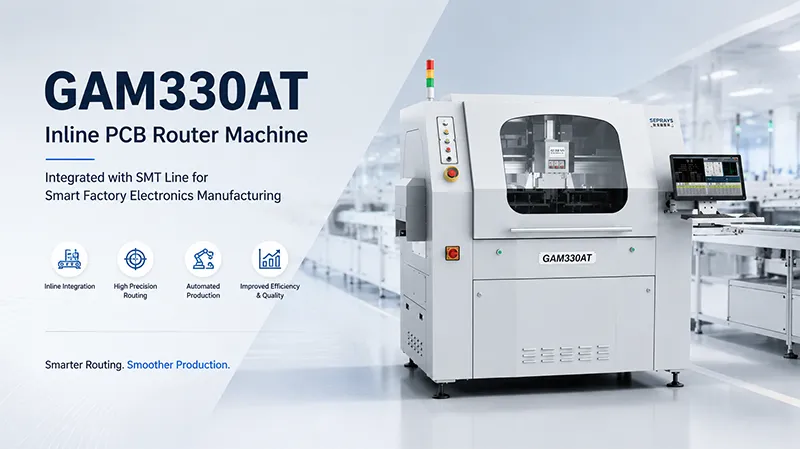
Depaneling is no longer treated as a standalone process.
Modern factories increasingly expect:
- Inline automation
- MES connectivity
- Robotic handling
- Data traceability
- Reduced manual intervention
This is especially true in automotive and semiconductor manufacturing.
Stable process flow matters as much as cutting quality itself.
🧪 Real Production Example
A manufacturer producing AI communication modules experienced unexpected yield fluctuations.
The SMT process looked stable.
AOI results were normal.
But field reliability problems continued appearing.
After process analysis, engineers discovered the issue came from the depaneling stress.
Their original system used mechanical cutting without vision correction.
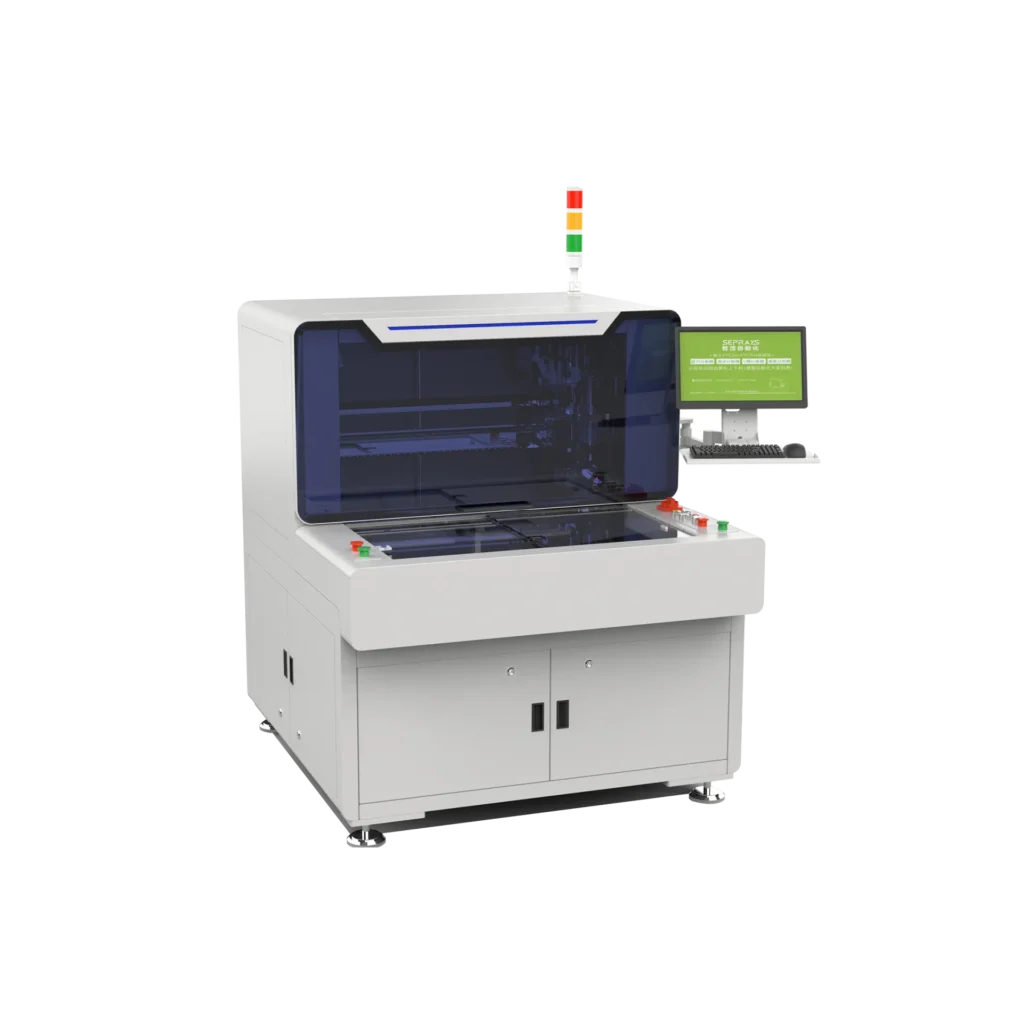
After working with Seprays Group, the factory upgraded to a CCD-guided low-stress router depaneling solution combined with vacuum support and optimized cutting parameters.
The result was not dramatic overnight.
But within several production cycles, they observed:
- More stable yield
- Lower micro-crack risk
- Reduced rework
- Better production consistency
Sometimes the biggest improvement comes from reducing invisible process instability.
💡 A Counterintuitive Reality About High-Density Boards
Many people assume:
“Smaller boards should be easier to process.”
Actually, smaller and denser PCBAs are often harder to depanel.
Because:
- Stress tolerance becomes lower
- Alignment requirements become stricter
- Component spacing becomes tighter
That is why process stability matters more than raw machine speed.
🔄 Hybrid Depaneling Is Becoming More Practical
Some manufacturers are now combining multiple cutting methods.
For example:
- Laser for sensitive areas
- Router for contour cutting
- Saw for straight sections
Hybrid solutions improve flexibility for mixed PCB production.
Especially where product diversity is increasing rapidly.
💰 Which Machine Is Most Cost-Effective?
There is no universal answer.
The best choice depends on:
- PCB structure
- Product value
- Production volume
- Reliability requirements
- Automation goals
General guidance:
- Laser → Best for ultra-sensitive and precision-critical products
- Router → Best overall balance for most high-density PCBAs
- Saw → Best for simple high-volume straight-line production
The real goal is not just reducing equipment cost.
It is reducing total manufacturing risk.
🌍 What Manufacturers Are Prioritizing in 2026
Across the industry, several priorities appear repeatedly:
- Lower stress
- Stable yield
- Faster changeovers
- Automation compatibility
- Reliable technical support
Interestingly, flexibility is becoming more important than extreme cutting speed.
Because product life cycles are becoming shorter.
🚀 Final Thoughts
High-density PCBA manufacturing is pushing depaneling technology into a new stage.
The industry is no longer focused only on cutting boards apart.
Now the focus is:
- Process stability
- Product reliability
- Automation integration
- Long-term manufacturing efficiency
In 2026, choosing the right depaneling machine is becoming a strategic production decision — not just a purchasing decision.
🚀 Why Choose Seprays Group?
With more than 30 years of experience in PCB/FPC depaneling technology, Seprays Group continues to support electronics manufacturers with reliable and low-stress depaneling solutions for modern SMT production environments.
Seprays Group has been dedicated to PCB/FPC depaneling technology, providing a full range of solutions—including milling-cutter depanelers, laser depanelers, V-groove depanelers, punching depanelers, hybrid depaneling systems, and automated handling equipment. Our solutions are trusted by globally recognized manufacturers such as Foxconn, Flextronics, State Grid, Luxshare, Compal, Wistron, China Electronics, Quanta, CRRC, China Aerospace, OPPO, ZTE, and Bosch. Seprays equipment is widely used in factories across China and worldwide.
By combining CCD vision positioning, low-stress cutting technology, smart automation, and practical process experience, Seprays helps customers improve yield, production consistency, and long-term manufacturing reliability.
If you are evaluating PCB depaneling solutions for high-density PCBA production, feel free to contact us. Our engineering team can help assess the most suitable process for your application.
WhatsApp: +8618929266433
이메일: sales@seprays.com
❓ FAQ
1. Which depaneling method causes the least stress for high-density PCBA?
Laser depaneling generally creates the lowest mechanical stress because it uses non-contact cutting.
2. Is router depaneling still suitable for high-density boards in 2026?
Yes. Modern router systems with CCD vision and optimized tooling remain widely used for complex PCBAs.
3. Why are CCD vision systems important in PCB depaneling?
They improve alignment accuracy, repeatability, and cutting consistency, especially for small and dense PCB layouts.
4. Are hybrid depaneling systems becoming more common?
Yes. Many manufacturers now combine laser, router, or saw cutting methods for different PCB structures.
5. How should manufacturers choose a depaneling machine?
The decision should consider PCB sensitivity, production volume, automation needs, reliability standards, and future scalability.