.png)
 Russian
  English
  Spanish
  Japanese
  Korean
  Chinese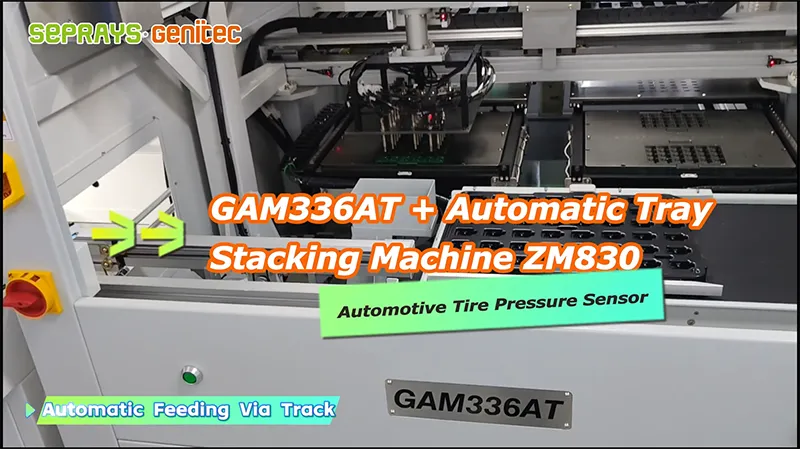
Automotive electronics manufacturers are under constant pressure in 2026.
Higher production volumes.
Smaller PCB designs.
Stricter quality requirements.
For products like Tire Pressure Monitoring System (TPMS) sensors, stable PCB depaneling and automated handling are becoming just as important as SMT placement accuracy.
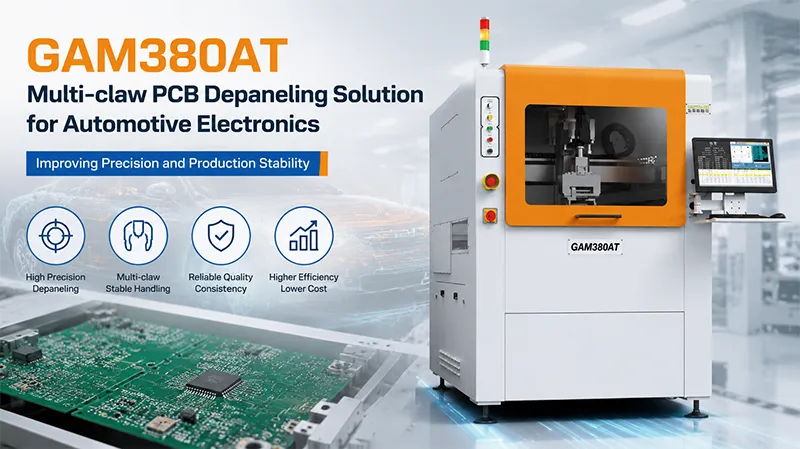
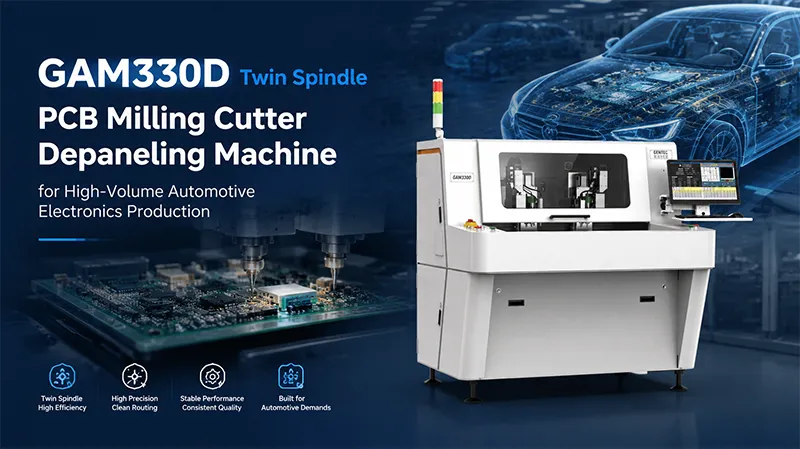
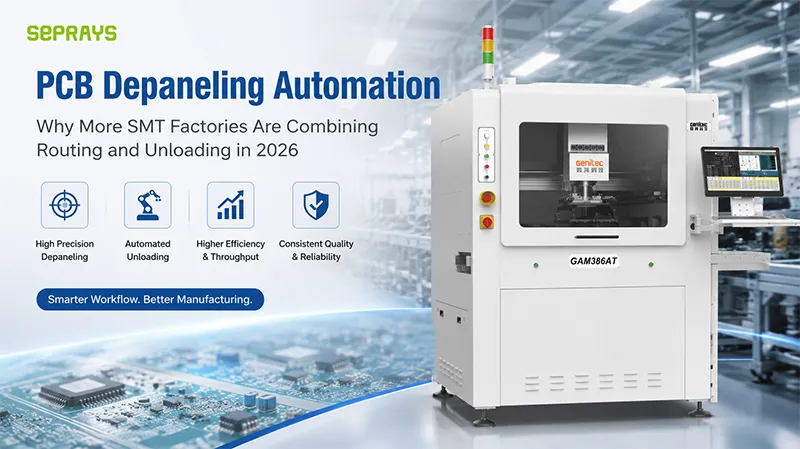
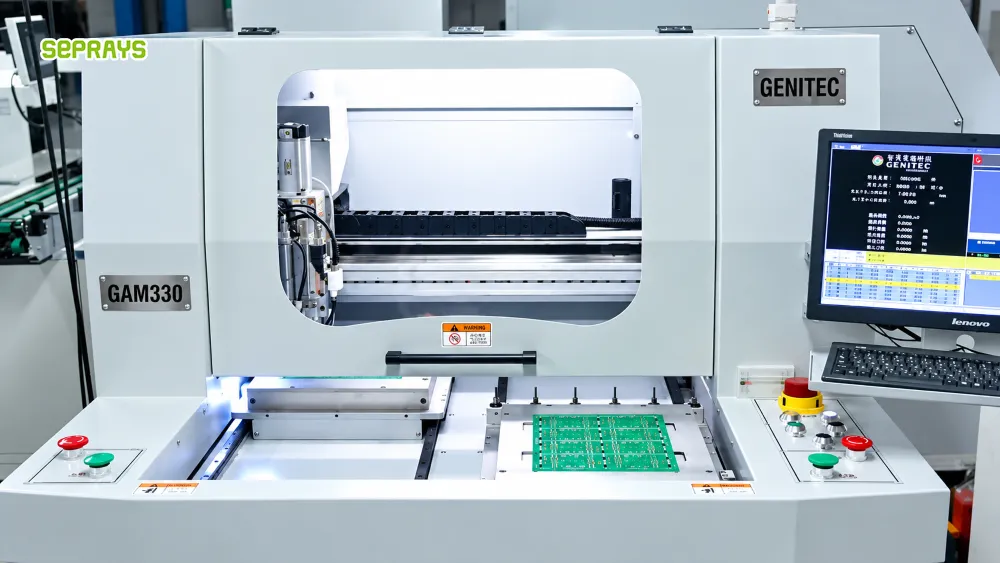
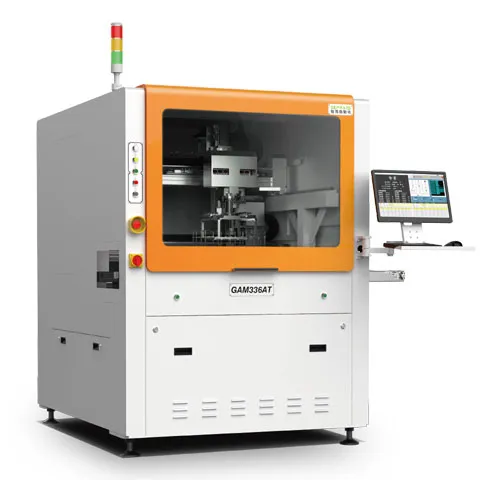
This is where the combination of the GAM336AT PCB depaneling machine and the ZM830 Automatic Tray Stacking Machine helps improve line efficiency.
🚗 Why TPMS PCB Production Needs More Automation
TPMS boards are small.
But production challenges are not.
Many factories still face problems such as:
- Manual pallet loading
- Inconsistent PCB transfer
- Scrap accumulation during cutting
- Production interruptions caused by operator handling
- Low throughput during multi-shift production
In automotive electronics manufacturing, even small interruptions can affect delivery schedules and yield rates.
Especially for high-volume sensor products.
⚙️ GAM336AT + ZM830 Integrated Production Workflow
The automated workflow combines PCB depaneling, pallet conveying, and tray stacking into one connected process.
Process Overview
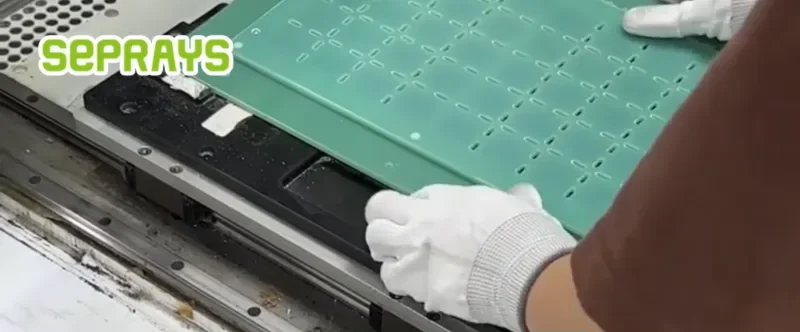
- Automatic feeding track transfers PCB pallets
- PCB pallets enter the GAM336AT depaneling system
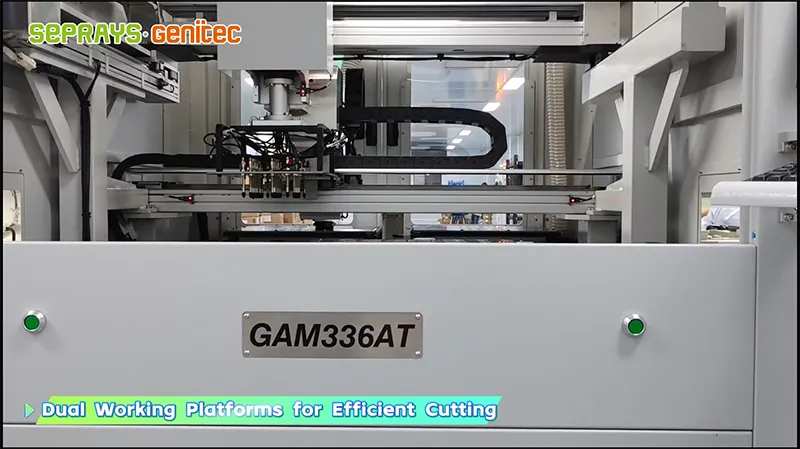
- Dual working platforms perform high-efficiency cutting
- Scrap edges are removed automatically
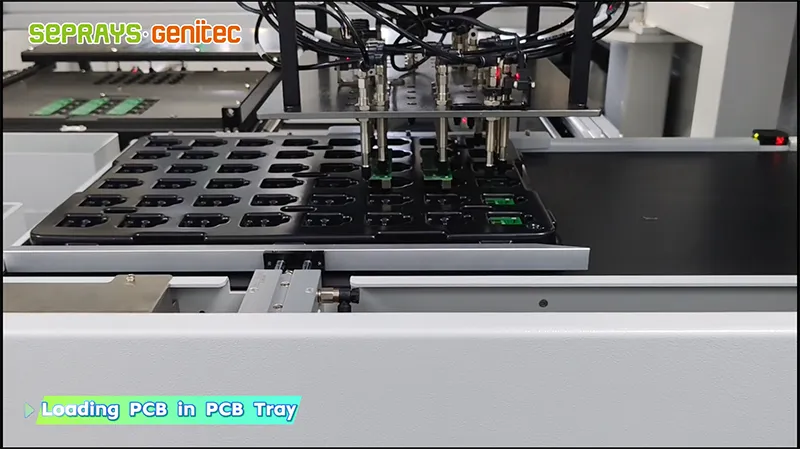
- Finished PCBs are loaded into pallets
- PCB pallets connect automatically to the ZM830 guide rail
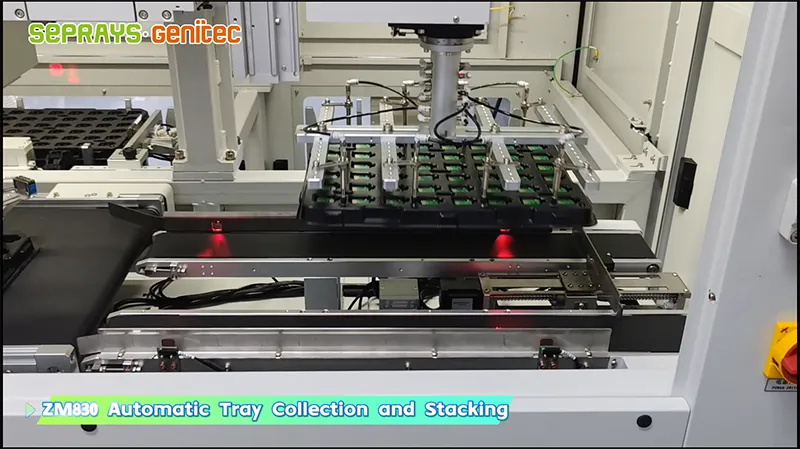
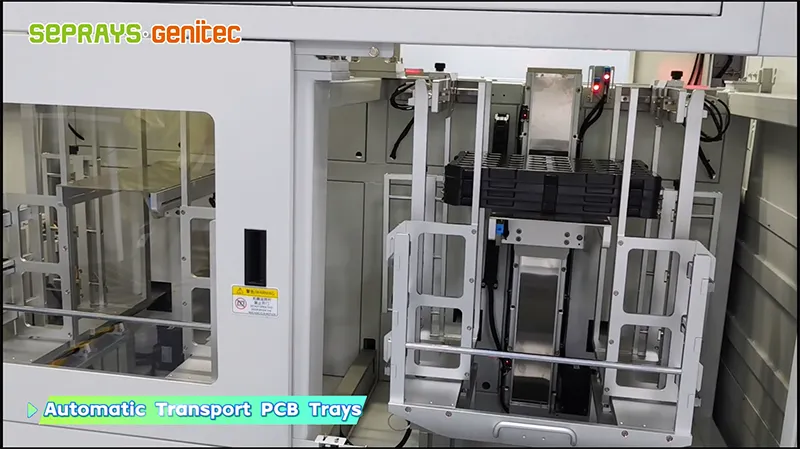
- ZM830 performs automatic pallet collection and stacking
- Pallets are conveyed back through the guide rail system
The result is a smoother inline production flow with less manual intervention.
🔍 Why Dual Working Platforms Improve Efficiency
In many SMT factories, machine idle time becomes a hidden production cost.
Traditional single-platform systems often require waiting time during loading and unloading.
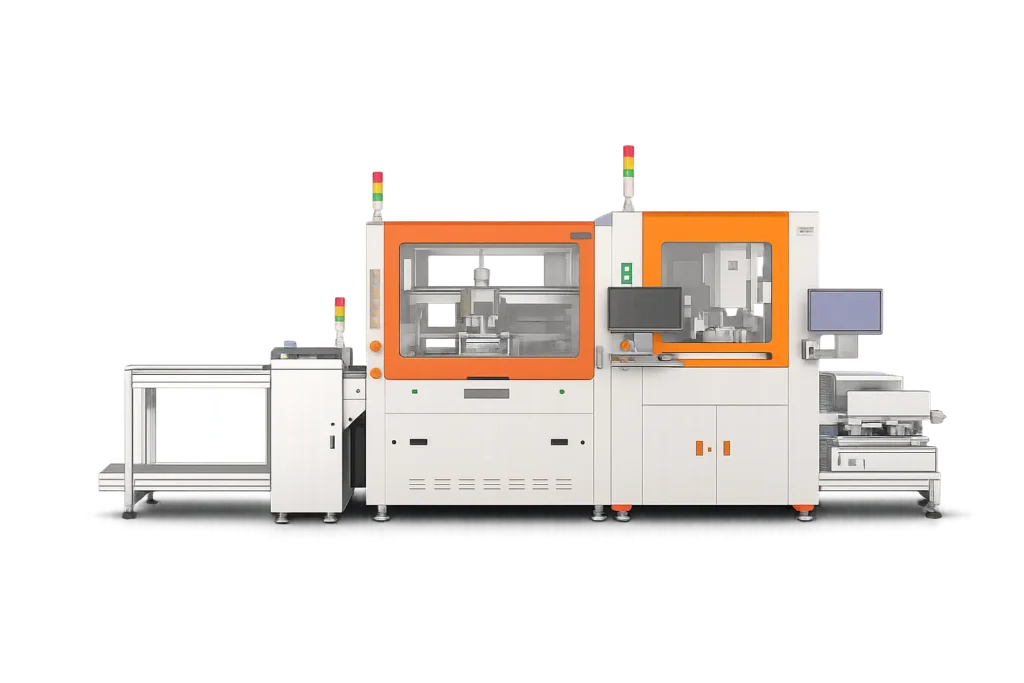
Dual-platform designs help reduce this bottleneck.
Key Advantages
| Function | Production Benefit |
|---|---|
| Dual working platforms | Continuous cutting operation |
| Automatic pallet transfer | Reduced operator handling |
| Guide rail connection | Stable inline integration |
| Automatic scrap removal | Cleaner production area |
| Tray stacking automation | Lower labor dependency |
For automotive suppliers producing thousands of TPMS modules daily, these small efficiency gains quickly add up.
🧩 Common Problems in Automotive PCB Depaneling
Many engineers focus only on cutting speed.
But in real production, stability matters more.
Typical Issues Seen in Factories
- PCB edge burrs are affecting assembly
- Stress damage near sensitive components
- Pallet mismatch during conveying
- Manual sorting errors
- Production stoppages caused by scrap accumulation
One interesting trend in 2026:
Factories are no longer evaluating depaneling equipment as standalone machines.
They now evaluate the entire automation workflow.
That includes:
- Feeding
- Cutting
- Transfer
- Collection
- MES compatibility
- Operator dependency
🏭 Real Production Scenario
A Tier-1 automotive electronics supplier producing TPMS boards experienced frequent delays caused by manual pallet handling.
Their original process required:
- Two operators
- Manual pallet transfer
- Separate collection stations
After introducing an automated depaneling and pallet stacking solution similar to the GAM336AT + ZM830 configuration, the factory achieved:
- More stable production flow
- Reduced manual handling
- Cleaner PCB separation quality
- Improved production consistency during night shifts
Interestingly, the biggest improvement was not in cutting speed.
It was process continuity.
This is something many factories underestimate before automation upgrades.
📈 Why Inline Automation Is Growing in 2026
Labor costs continue to rise globally.
At the same time, automotive PCB designs are becoming:
- More compact
- More sensitive
- More production-intensive
Inline automation helps manufacturers improve:
- Throughput
- Traceability
- Consistency
- Operator efficiency
Especially in:
- Automotive electronics
- EV control systems
- Sensor modules
- BMS production
- High-volume SMT lines
Factories are increasingly looking for depaneling systems that connect directly with conveyors, pallet systems, and robotic handling units.
🛠️ What Engineers Usually Look for
When selecting automated PCB depaneling equipment, engineers often focus on:
Important Evaluation Factors
- Cutting stability
- Stress control
- Automation compatibility
- Easy maintenance
- Changeover efficiency
- Inline communication capability
- Scrap handling design
- Long-term operating cost
One practical lesson from production lines:
A fast machine is not always the most efficient machine.
If manual pallet handling slows down the line, the real throughput drops significantly.
💡 Why Automated Pallet Handling Matters
Many depaneling discussions focus only on the cutting process.
But pallet handling is often the hidden bottleneck.
Automatic tray stacking systems help reduce:
- Operator fatigue
- Product collision risk
- Pallet misalignment
- Transfer delays
For high-volume automotive production, this becomes critical.
Especially during 24/7 operation.
🌍 Why More Manufacturers Are Upgrading Depaneling Lines
Electronics factories in 2026 are moving toward:
- Smart factories
- Inline automation
- Reduced labor dependency
- Stable high-mix production
Depaneling is no longer just a cutting step.
It is now part of the entire SMT automation strategy.
Why Choose Seprays Group?
With more than 30 years of experience in PCB/FPC depaneling technology, Seprays Group continues to support global electronics manufacturers with reliable and automation-ready solutions.
Seprays Group provides a full range of depaneling technologies, including:
- Milling-cutter depanelers
- Laser depanelers
- Съемники с V-образными пазами
- Punching depanelers
- Automated handling and pallet conveying systems
Our equipment is trusted by leading manufacturers such as Foxconn, Flextronics, State Grid, Luxshare, Compal, Wistron, China Electronics, Quanta, CRRC, China Aerospace, OPPO, ZTE, and Bosch.
These systems are widely used across automotive electronics, consumer electronics, EV manufacturing, communication equipment, and industrial automation factories worldwide.
If you are evaluating automated PCB depaneling solutions for your SMT production line, Seprays Group can help you assess the right configuration for your process requirements.
Please feel free to contact us for technical discussion or solution recommendations.
WhatsApp: +8618929266433
Электронная почта: sales@seprays.com
Вопросы и ответы
1. What is the advantage of dual-platform PCB depaneling systems?
Dual-platform systems reduce idle time by allowing loading and unloading while the second platform continues cutting. This improves production efficiency.
2. Why is pallet automation important in automotive PCB production?
Automated pallet handling reduces manual errors, improves production consistency, and supports continuous inline manufacturing.
3. Can automated depaneling systems reduce labor costs?
Yes. Inline conveying and automatic tray stacking help reduce manual handling and operator dependency, especially in high-volume production.
4. What types of products commonly use automated PCB depaneling?
Common applications include TPMS sensors, BMS boards, EV control modules, automotive ECUs, and communication electronics.
5. How do I know if my SMT line is ready for inline depaneling?
If your production line faces bottlenecks due to manual transfers, inconsistent output, or high labor involvement, inline depaneling automation may significantly improve efficiency.